 Life & Style

Top leader urges deeper, higher-value economic ties with EU, Belgium
1.
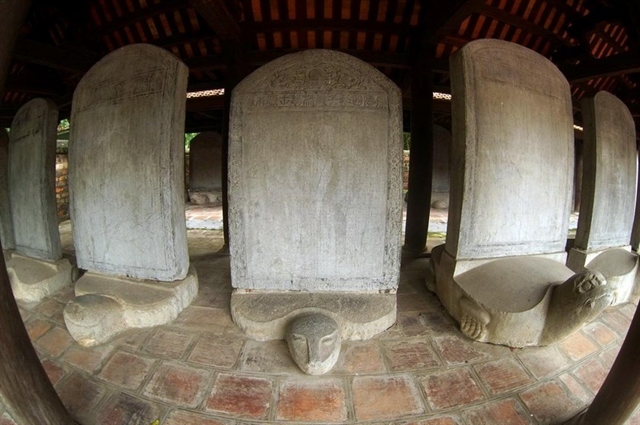 |
| The exhibition Sử Đá Lưu Danh introduces documents and artefacts drawn from the historical, ideological and artistic values of the 82 doctoral steles at Văn Miếu – Quốc Tử Giám. — Photo baovanhoa.vn |
HÀ NỘI — In the quiet courtyards of Văn Miếu – Quốc Tử Giám, where generations of scholars once walked under tiled roofs in pursuit of knowledge, history carved in stone is now being illuminated in a new way.
Guided by The Politburo’s Resolution 57-NQ/TW on breakthroughs in science, technology, innovation and national digital transformation, the exhibition Sử Đá Lưu Danh (History Carved in Stone) is opening a fresh chapter for the 82 doctoral steles – one of Việt Nam’s most treasured documentary heritages.
Opening on February 6 at the Special National Relic Site, the exhibition is organised by the Centre for Cultural and Scientific Activities at Văn Miếu – Quốc Tử Giám. The event also celebrates the success of the 14th National Party Congress, welcomes the Year of the Horse 2026, and looks ahead to the 950th anniversary of Quốc Tử Giám – the country’s first national university.
Where stone meets screen
For centuries, the stone steles, each resting on the back of a carved stone turtle, have recorded the names of successful candidates in royal examinations, reflecting the Confucian scholarly tradition that shaped Việt Nam’s intellectual history.
But in this exhibition, visitors encounter more than static relics.
Ancient rubbings, calligraphic texts and historical documents are 'awakened' through digital projection technologies. Archival materials are transformed into dynamic images, layered with light, motion and sound, allowing audiences to feel as if the inscriptions are unfolding before their eyes.
Digital solutions are applied alongside traditional display methods to reconstruct both tangible and intangible cultural heritage spaces. Interactive visual presentations, digitised texts and multimedia storytelling create new entry points into the history of Việt Nam’s imperial examination system.
Rather than replacing the original artefacts, technology acts as a bridge – helping today’s public, especially younger generations, connect emotionally with stories once confined to stone surfaces and classical Chinese characters.
Four stories from a scholarly civilisation
The exhibition is structured around four main themes, sketching a broad portrait of Confucian education and the examination system. Visitors are introduced to royal policies on talent selection, recognition and the use of scholars in state governance.
At the same time, the exhibition highlights exemplary historical figures whose contributions extended beyond education into many spheres of national life. Through digital visualisations, family lineages of scholars, renowned 'scholarly villages' and major examination milestones are mapped in a way that is easy to grasp and visually engaging.
Beyond documentary value, each doctoral stele is presented as a work of art. Close-up projections and detailed imagery reveal the refined carving techniques, soft yet precise lines and decorative motifs that make the steles masterpieces of stone sculpture.
A dialogue of materials, a journey of learning
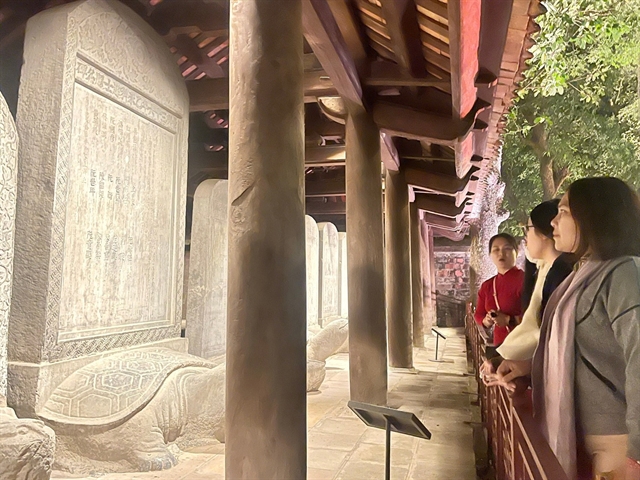 |
| Visitors listen to information about the inscriptions on the doctoral steles, part of an exhibition that combines traditional displays with digital technology. — Photo daibieunhandan.vn |
The exhibition space itself is designed as an artistic dialogue between two primary materials: paper and stone. Paper symbolises the long journey of study and self-cultivation, while stone represents the final honour - the moment when a name is etched into history.
The transition from paper to stone also reflects the aspiration of feudal dynasties to 'eternalise' the recognition of intellectual elites. Through spatial design and digital staging, this symbolic journey becomes a visual and emotional experience, inviting visitors to 'touch history, explore heritage'.
The content is closely connected with existing exhibitions at the site, such as Quốc Tử Giám – The First National University and The Origin of the Scholarly Tradition, forming a coherent narrative within the heritage complex. Together, they help the public gain a more systematic and in-depth understanding of the site’s history and the achievements of Việt Nam’s Confucian education under the monarchy.
Digital transformation in heritage storytelling
The exhibition is also a vivid example of how digital transformation can reshape the way heritage is interpreted and shared. Instead of a one-way flow of information, visitors engage with layered content - visual, textual and sensory - that turns historical data into lived experience.
By digitising historical materials, applying projection mapping and creating multimedia installations, the organisers have made complex historical knowledge more accessible. The approach not only preserves documents in digital form but also expands their communicative power in contemporary cultural life.
According to Lê Xuân Kiêu, Director of the Centre for Cultural and Scientific Activities at Văn Miếu – Quốc Tử Giám, the exhibition was carried out by the centre’s staff with professional support from Vietnamese and French experts.
“Through this collaboration, we have retold the story of the 82 doctoral steles – from the kings who initiated their erection, the examination sessions, scholarly families and villages, to outstanding figures associated with education, examinations and state governance during the monarchy,” Kiêu said.
He emphasised that Sử Đá Lưu Danh is not merely an exhibition but a visual and emotional journey, recreating the long and challenging path through which knowledge was cultivated, talent was tested, and the names of worthy individuals were engraved in stone for posterity.
Kiêu added: “From strokes of ink on paper to deeply carved lines on stone, the exhibition conveys a timeless message: the tradition of valuing learning and respecting talent is the enduring source that nourishes the vitality of culture and the nation’s future.”
In this renewed space, ancient steles no longer stand silently. Through the lens of digital innovation, they speak again - not only of past glory, but of how heritage can continue to live, adapt and inspire in the digital age. — VNS
Life & Style
 Life & Style
 Life & Style
 Life & Style
 Life & Style
 Life & Style
 Life & Style
 Life & Style
 Life & Style
 Life & Style
.jpeg) Life & Style
Life & Style
 Life & Style
 Life & Style
 Life & Style
 Life & Style