Arts festival gives young people stage to tell their stories
1.
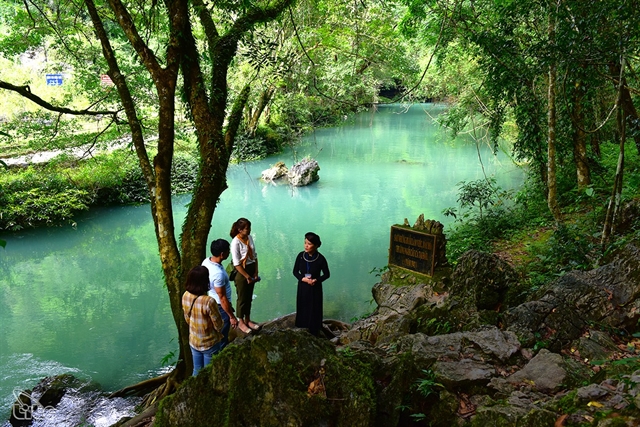 |
| Lenin Stream at the Pác Bó Historical Site in Cao Bằng Province. Once called Khuổi Giàng, meaning “Heavenly Stream” in the Tày ethnic language, it was renamed Lenin in 1941 when President Hồ Chí Minh returned to Việt Nam and chose Pác Bó as his revolutionary base. – Photo vietnamtourism.gov.vn |
HÀ NỘI – History is coming full circle in the northern border province of Cao Bằng, where a cultural space dedicated to President Hồ Chí Minh’s legacy will be established as part of activities marking the 85th anniversary of his return to lead the Vietnamese revolution (January 28, 1941 – January 28, 2026).
After three decades abroad in search of a path to national salvation, Nguyễn Ái Quốc, the name by which President Hồ Chí Minh was then known, crossed the Việt Nam–China border in Cao Bằng on January 28, 1941, setting foot in his homeland for the first time. Pác Bó, now part of Trường Hà Commune in Hà Quảng District, became the revolutionary base from which he guided the Vietnamese struggle to victory between 1941 and 1945.
Deputy Secretary of the Provincial Party Committee and Chairman of the Cao Bằng People’s Committee Lê Hải Hòa emphasised that Hồ Chí Minh’s return 85 years ago was a turning point of historic importance, marking a decisive stage in the revolution. Cao Bằng, he noted, is honoured to have been chosen as the starting point for the national liberation movement and as a vital revolutionary base during those early challenging years.
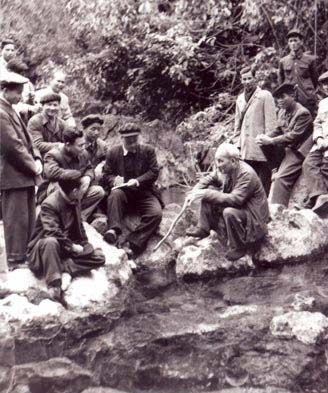 |
| An archived photo shows President Hồ Chí Minh sitting by Lenin Stream, surrounded by close comrades. – Photo baocaobang.vn |
Among heritage sites linked to President Hồ Chí Minh, four localities hold special significance: Nghệ An, his birthplace and the cradle of his patriotic spirit; Hồ Chí Minh City, where he embarked on his journey to seek national salvation; Cao Bằng, where he returned to prepare forces, bases and strategies for the August Revolution; and Hà Nội, where he devoted his life and now rests.
Hồ Chí Minh City was the first locality to pioneer the Hồ Chí Minh Cultural Space model, an initiative of deep political and social meaning that integrates his ideology, ethics and style into everyday life, workplaces and education. Cao Bằng’s project will inherit and expand this model, creating a seamless heritage axis that connects the origin, the journey and the pinnacle of his career.
The cultural space will be rooted in Trường Hà Commune, the revolutionary homeland and gradually extend to other areas of the province. It will serve as a hub for heritage preservation, traditional education and the dissemination of Hồ Chí Minh’s values to the people of Cao Bằng, the Việt Bắc region, the wider nation and international visitors.
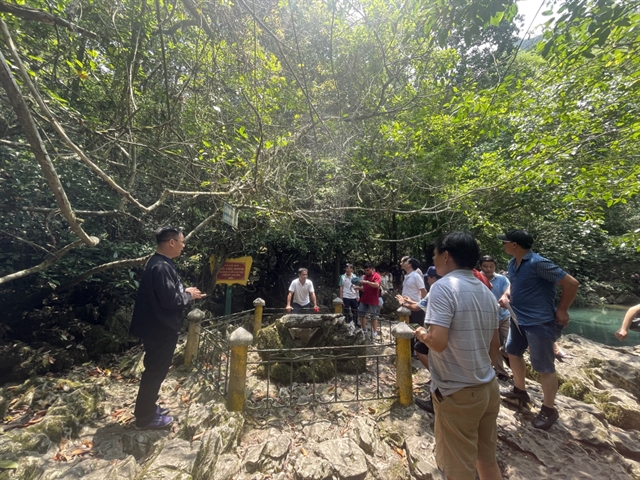 |
| Tourists explore a stone ‘working table’ at the Pác Bó Historical Site in Cao Bằng Province. President Hồ Chí Minh used this table regularly between 1941 and 1945 while leading the Vietnamese revolution toward independence. – Photo baocaobang.vn |
Central to the project will be exhibitions of documents, photographs and artefacts tracing Hồ Chí Minh’s journey back to Việt Nam through Jingxi City, Longzhou County (Guangxi, China), Border Marker 108 and Pác Bó. Modern technologies such as VR and AR, interactive spaces, digital heritage maps and multimedia narration will be used to enhance the visitor experience.
Annual events will be held alongside major national holidays, featuring artistic performances, film screenings and book exhibitions about President Hồ Chí Minh. Educational and experiential programmes will be expanded for young people, students, the armed forces and visitors, together with the Following in Uncle Hồ’s Footsteps initiative, which links tourism in the Việt Bắc region with the special national relic site of Pác Bó.
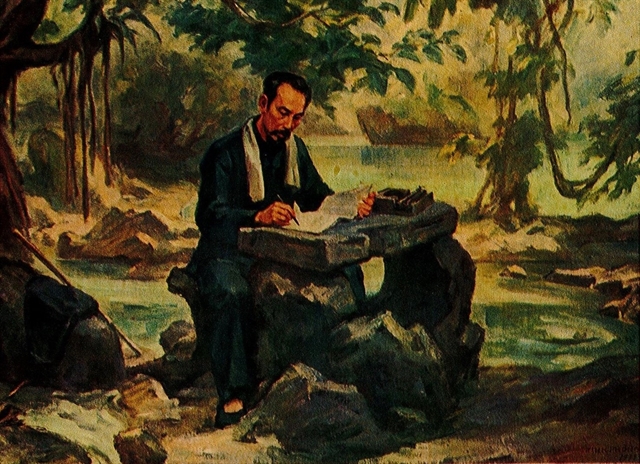 |
| An oil painting by Trịnh Phòng, completed in 1971, portrays President Hồ Chí Minh working at Pác Bó. – Photo laodong.vn |
This project is not only a commemoration of Hồ Chí Minh’s return but also a strategic vision, safeguarding and promoting his legacy, renewing traditional education, boosting cultural tourism, driving socio-economic growth and elevating Cao Bằng’s role within the national Hồ Chí Minh cultural system. It marks a crucial step towards making Cao Bằng a centre of education, culture and Hồ Chí Minh heritage experiences in the Việt Bắc region, while laying a strong spiritual foundation for sustainable development in the new era.
“For the officials, Party members and people of Trường Hà, the creation of the Hồ Chí Minh Cultural Space at the very place where President Hồ Chí Minh returned after 30 years of tireless journeys in search of national salvation is both a source of pride and a constant reminder. It inspires us to preserve and promote the priceless heritage entrusted to us by President Hồ Chí Minh and history, living up to the trust of the Party, the State and the people of the entire nation,” said Trường Hà Commune Secretary Dương Mạc Kiên. – VNS
Life & Style
 Life & Style
 Life & Style
 Life & Style
 Life & Style
 Life & Style
 Life & Style
 Life & Style
 Life & Style
 Life & Style
 Life & Style
 Life & Style