 Society

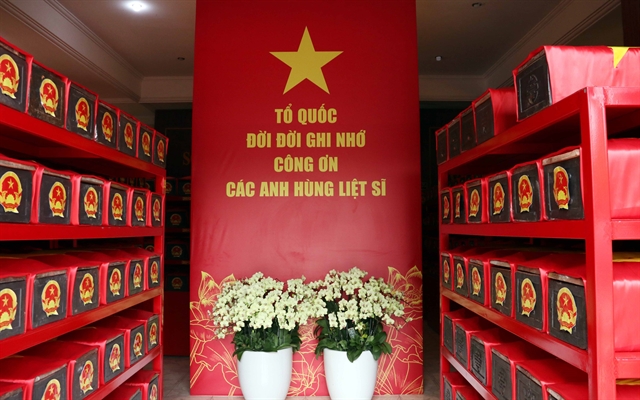
PM attends memorial service for 731 fallen soldiers in Hồ Chí Minh City
1.
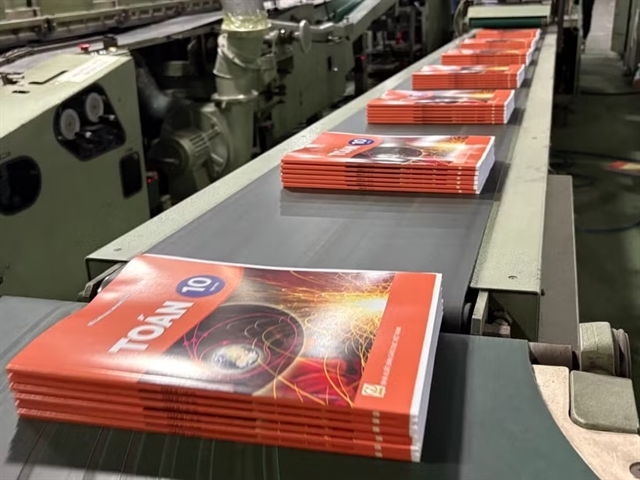 |
| The Việt Nam Education Publishing House continues to replenish textbook supplies. — VNA/VNS Photos |
HÀ NỘI — The Việt Nam Education Publishing House (VNEPH) has pledged to complete the supply of all remaining supplementary printed textbooks, after a report revealed that the whole country is short of more than 3.9 million copies as of September 14.
The publisher said it was continuing to supply more than 7.5 million textbooks to distributors.
By September, total supplies had reached nearly 240 million copies, compared with more than 224 million copies distributed to localities by July 16.
The publisher also said it had prepared a plan to print an additional 12 million copies if authorities placed orders.
Prime Minister Lê Minh Hưng on Monday urged the Ministry of Education and Training (MoET) to resolve a current textbook shortage by the end of the week.
The MoET had previously asked localities to review textbook shortages by grade, student and title. The review found that more than 3.9 million copies were still needed nationwide as of September 14.
The shortage has affected a number of localities since the start of the new school year. In some areas, schools had to photocopy textbooks or parents had to print copies from electronic versions for temporary use.
The ministry has acknowledged responsibility for shortcomings in forecasting and analysing textbook demand under the new conditions.
It also said its assessment of VNEPH's production capacity, management and distribution network had not been comprehensive enough, while measures to address supply and coordination problems had not been implemented quickly or flexibly enough.
The ministry said responsibility for addressing the shortages lay with the ministry, the VNEPH and local authorities.
The publisher, meanwhile, attributed the disruption largely to delays and procedural problems at the local level.
As a State-owned single-member limited liability company, the publisher said it could not print and stockpile books beyond approved levels without confirmed orders or verified demand. Such inventories could result in losses and raise concerns under regulations governing State capital.
The printing and tendering process takes six to seven months, meaning late orders can have a significant impact on supply.
VNEPH said it had no authority or organisational system to independently forecast student numbers at every school nationwide. Its printing, reprinting and distribution plans rely on data and official orders compiled by local education authorities and schools.
When local data is inaccurate or submitted late, the entire supply chain is affected, it said.
For the 2026-27 school year, the publisher said actual demand rose by nearly 69.9 million copies, or 39.7 per cent, compared with its initial forecast.
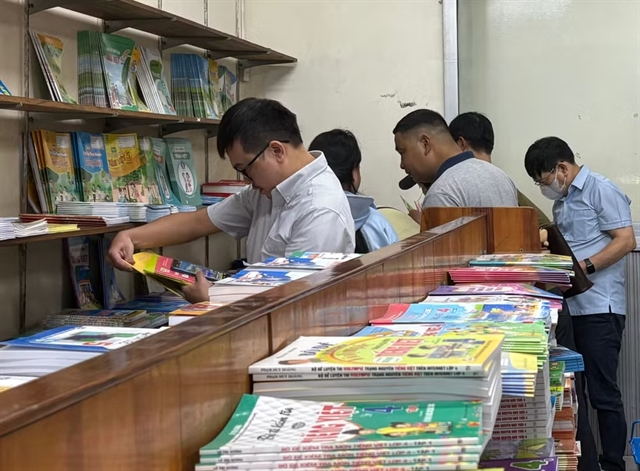 |
| Parents buy textbooks after the start of the new school year. |
The publisher also pointed to disruptions in the school-based registration system, which normally helps regulate textbook demand in June and July. This year, administrative restructuring, school mergers and changes in school management delayed or disrupted the collection of orders in many areas.
In HCM City, for example, 197 schools had still not collected textbook orders by August 25, according to the publisher.
Free textbook policies
VNEPH also raised concerns over the late introduction of free textbook policies in some localities.
Under Decree 271/2026/NĐ-CP, issued on July 3, 2026, free textbooks are to be introduced nationwide from the 2029-30 school year. Provincial authorities are required to approve annual textbook plans by October 30, providing a basis for budget planning and distribution.
However, the publisher said ten localities announced plans to provide free textbooks during the 2026-27 school year after 80 per cent of the planned textbook output had already been printed and distributed.
As of September 12, none of the ten localities had been able to implement the plans.
The publisher said it had warned MoET and local education departments in July that tendering, printing and finishing textbooks required at least six months. Late orders could therefore not be fulfilled immediately.
Some procurement plans were issued only weeks before the school year began.
Huế City, for instance, issued a plan on August 10 and cancelled the tender on August 29 to revise the package value. The south-central coastal province of Khánh Hòa issued its plan on August 27, while HCM City and the Central Highlands province of Gia Lai issued plans in mid-August.
The publisher said such late decisions made timely supply impossible.
In Khánh Hòa, the provincial People's Council approved a free-textbook policy for students in disadvantaged areas on August 27, generating additional demand for nearly 343,000 copies.
VNEPH said it had already supplied more than two million copies under the province's original order. However, the additional books would require a new tendering, printing and transportation process estimated to take three months.
The case, it said, illustrated the difficulty of responding to large, unexpected orders shortly before the start of a school year.
Measures to improve supply
MoET has established a 24/7 rapid-response task force to monitor shortages and coordinate the redistribution of textbooks between localities with surpluses and shortages.
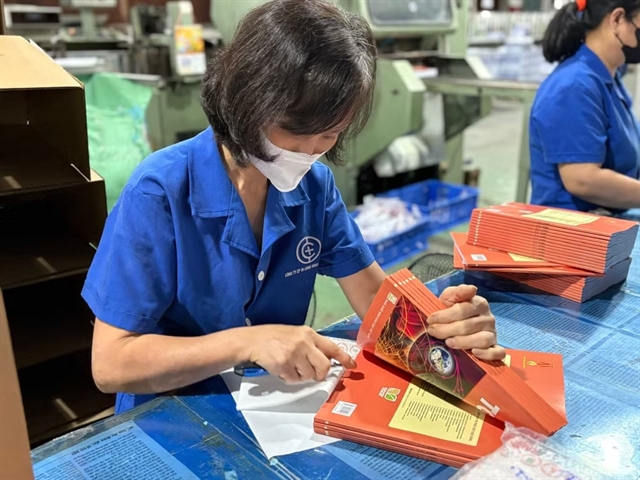 |
| Workers label textbooks at a printing facility. |
The publisher said it had mobilised its printing partners to increase output and had made its electronic textbook system available free of charge for temporary use by teachers and students.
It has pledged to complete the supply of remaining textbooks by September 30.
For future school years, it has called for clearer responsibilities for local authorities, stronger regulations governing textbook supply and tighter inter-agency monitoring.
It said provincial and municipal authorities should take responsibility for the accuracy of student numbers and textbook demand forecasts in their areas.
Localities wishing to introduce free-textbook or support programmes ahead of the national roadmap should also follow the required procedures and deadlines for budget planning and demand approval, it said.
VNEPH has further proposed classifying textbooks as essential public products and services, arguing that this would give authorities and publishers greater flexibility in ordering, budgeting, maintaining reserves and responding to sudden changes in demand.
MoET and other relevant agencies should strengthen oversight of textbook-support policies to ensure that funding and implementation plans are assessed before they are introduced, the publisher said. — VNS
Society
 Society
 Society
 Society
 Society
 Society
 Society
 Society
 Society
 Society
 Society
 Society
 Society
 Society
 Society