 Society

PM attends memorial service for 731 fallen soldiers in Hồ Chí Minh City
1.
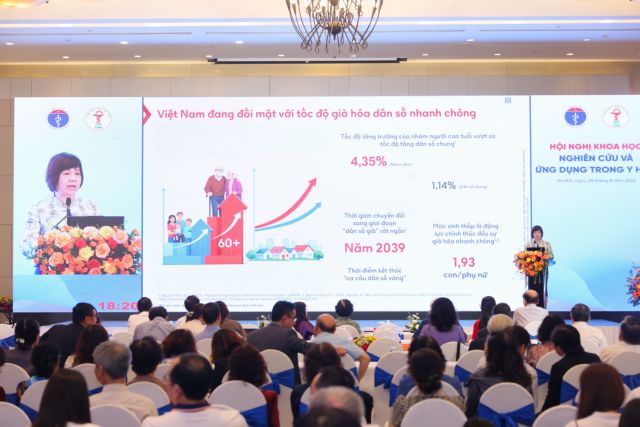 |
| Associate Professor Dr Phan Thu Phương, Head of the Department of Endocrinology, speaks at the conference – Musculoskeletal. — Photo courtesy of the organiser |
HÀ NỘI — Proactive disease prevention and personalised treatment are becoming increasingly important as Việt Nam faces the combined challenges of infectious diseases, population ageing and a growing burden of non-communicable diseases, experts said at a recent medical conference.
At the 2026 Scientific Conference themed 'Research and Application in Medicine', organised by the Vietnam Medical Association, specialists discussed updates in disease prevention and treatment, including life-course immunisation, care for older adults with chronic conditions and biologic therapies for severe asthma.
Experts highlighted life-course immunisation as an important tool for preventing infectious diseases across age groups. Among adolescents and young adults, invasive meningococcal disease remains a concern because it can progress rapidly and cause meningitis or sepsis.
Adolescents aged 15-24 are among the groups in which the disease is commonly reported. About 25-32 per cent of adolescents and young adults carry N. meningitidis in the nasopharynx, making them an important reservoir for transmission.
According to data from the infectious disease surveillance system under Circular No 54/2015/TT-BYT, Việt Nam had recorded 53 meningococcal infection cases as of July 30, 2026, with 20 cases reported in HCM City, accounting for 37.7 per cent. Testing by the Pasteur Institute in HCM City found that meningococcal cases in southern Việt Nam in 2025 belonged to serogroup B.
The conference also examined disease prevention among older adults as the country enters a period of rapid population ageing.
Assoc. Prof. Dr. Vũ Thị Thanh Huyền, head of the Department of Endocrinology and Musculoskeletal Medicine at the National Geriatric Hospital, said the older population is growing much faster than the overall population. Nearly two-thirds of people aged over 60 have at least one chronic condition, while about half have multiple conditions.
Chronic diseases can increase the risk of infectious diseases, including respiratory syncytial virus (RSV), shingles, influenza and pneumococcal disease, she said, highlighting the importance of preventive healthcare for older adults and people with underlying conditions.
Meanwhile, advances in personalised treatment are opening new options for patients with severe asthma.
Associate Professor Dr Phan Thu Phương, deputy head of the Department of General Internal Medicine at Hanoi Medical University and director of the Bạch Mai Respiratory Centre, said biologic therapies are increasingly being used for patients with severe asthma who do not respond adequately to standard treatment.
Such targeted therapies can help reduce asthma exacerbations and reliance on oral corticosteroids, while improving patients’ physical and social functioning, she said.
The discussions underscored the need for a more comprehensive healthcare approach that combines disease prevention throughout the life course with increasingly personalised treatment for patients with chronic and severe conditions. — VNS
Society
 Society
 Society
 Society
 Society
 Society
 Society
 Society
 Society
 Society
 Society
 Society
 Society
 Society
 Society