 Society

Bắc Ninh hosts international badminton tournament
1.
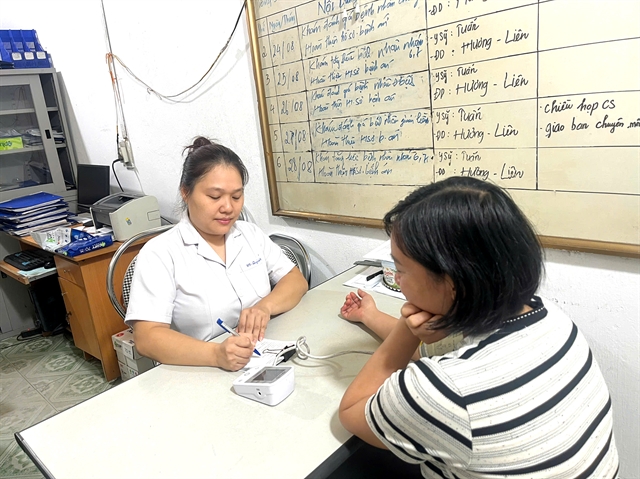 |
| Trần Thị Quỳnh Trang, from the Disease Prevention and Food Safety Unit at Phổ Yên Ward Health Station, gives a health examination to a resident. — VNS Photo Thu Trang |
Thu Trang
THÁI NGUYÊN — Instead of waiting for people to come to hospital when their illness has reached serious levels, a new model in Thái Nguyên is bringing prevention, screening and management of cardiometabolic diseases closer to communities.
Digital technology, community health workers and primary health care facilities are being connected to identify risks early, link people to appropriate care and support long-term follow-up appointments.
Physician Hoàng Tuấn Du, from the Hợp Thành Commune Health Station, feels his work is now much more effective than in previous years.
“Back then, we usually managed patient records on paper, with a very large volume of documentation,” he said.
Now, health workers like Du are using the Sức Sống Mới (New Vitality) app – a practical, user-friendly digital system that allows health staff to enter health indicators, screen residents’ risk levels, refer high-risk individuals to higher-level facilities and link data with other health data platforms.
This ensured health workers have full, accurate information on each patient’s condition in their area, Du said.
Dương Thị Hiến, a village-based health worker in Na Tủn Village, Hợp Thành Commune, said that in previous years, they had to visit every household without knowing who was ill and who was not.
“After the Sức Sống Mới app was introduced, we could identify who needed treatment first and who needed to be referred to higher-level facilities," Hiến said.
"Reports are submitted via mobile phone, and residents can also check their own health status.”
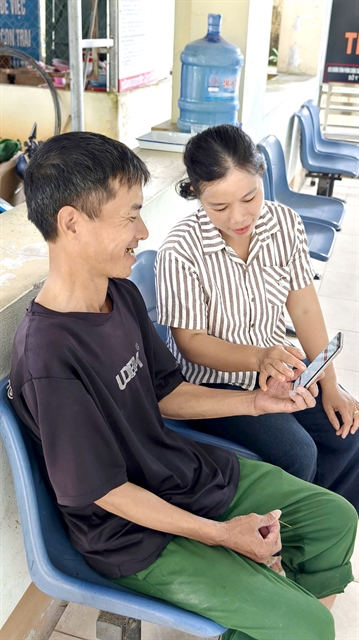 |
| Dương Thị Hiến, a village-based health worker in Na Tủn Village, Hợp Thành Commune, instructs a resident on how to use the Sức Sống Mới app. — VNS Photo Thu Trang |
After training sessions, village health workers went door-to-door to measure blood pressure, provide lifestyle counselling and guide residents on installing the Sức Sống Mới app on their phones.
The app is not only for health workers.
Community members can complete a short risk-screening questionnaire, enter their blood pressure readings, and immediately receive information on their risks of cardiometabolic diseases. If they are at risk, they are directly connected to a health facility, and can also read disease-prevention guidance on their phones to adjust their daily habits.
Phạm Ngọc Tân, 71, a hypertension patient from Phú Nam Village, Vô Tranh Commune, said the app is very useful for people like him, because today is the information age and almost everyone has a mobile phone.
“Just by turning on our phones, we can see everything we need to do, how to prevent illness, and how to live in a healthier way,” he said.
Noncommunicable diseases
Thái Nguyên – a province known for its vast tea hills and expanding industrial zones – was facing a growing threat.
Lê Ái Kim Anh, deputy director of the Thái Nguyên Provincial Centre for Disease Control (CDC), said that non-communicable diseases (NCDs), including cardiovascular diseases, diabetes and metabolic disorders, are now the leading causes of death in Việt Nam, accounting for about 81 per cent of all deaths each year.
Worryingly, access to local screening programmes in provinces such as Thái Nguyên remains limited, and many cases are only detected at late stages.
The biggest challenge is the gap between residents and the health system as people live far from facilities, health workers are overburdened and there are no systematic tools to connect them.
The key question for the province is how to shorten that distance.
Bringing primary health care closer to communities via an interoperable digital platform and community engagement.
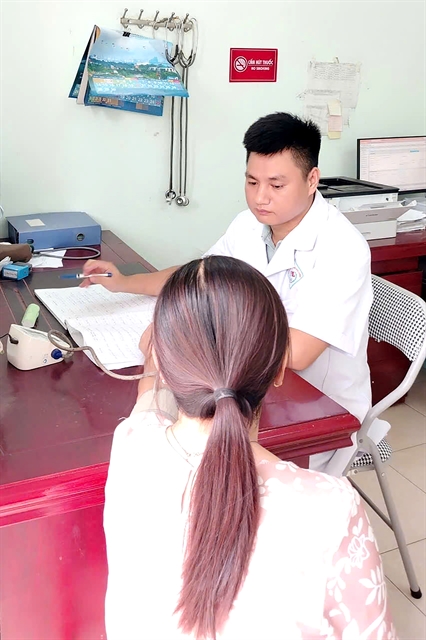 |
| Physician Hoàng Tuấn Du, from the Hợp Thành Commune Health Station, feels his work is now more effective with the new model. — VNS Photo Thu Trang |
Du, Hiến and Tân are among those benefiting from the project 'Strengthening the primary healthcare system in preventing cardiovascular and metabolic disorders (CMDs) through community engagement' – a solution to Thái Nguyên’s challenge.
Since 2024, the project has been implemented in 32 health facilities across two districts in Thái Nguyên Province, covering around 300 villages.
So far, 32 primary healthcare facilities strengthened in managing and caring for patients with cardiovascular and metabolic disorders.
As many as 168,000 adults (aged 40 and above) have been provided with information and health education on risks of cardiovascular and metabolic disorders.
About 39,000 residents have been monitored for blood pressure control, blood glucose control and weight management.
A total of 450 community health workers trained on the app.
Nearly 87 doctors and health staff trained clinically on diagnosis, treatment, integrated management and psychosocial support for people with cardiovascular and metabolic disorders.
Nguyễn Hải Thượng, deputy director of the Primary Health Care Programme at PATH, said that PATH, together with the provincial CDC and the provincial Department of Health, initially designed a community- and health-system-based model for cardiometabolic diseases management and care.
The model is built on three strategic pillars, including comprehensive integration of services and the grassroots health system, strengthened community engagement through a network of community health collaborators, and digital health innovation via two mobile applications – one for health workers and one for community residents.
Messages on NCDs prevention are broadcast regularly over the loud speaker system, helping village health workers reach residents more easily and invite them to participate in follow-up community activities.
Trần Thị Quỳnh Trang, from the Disease Prevention and Food Safety Unit at Phổ Yên Ward Health Station, said health screening sessions had shown clear, significant effectiveness. Participation rates are very high.
“Screening has been highly effective thanks to project support in terms of supplies, equipment, communication materials, and the app, which helps residents track and manage their health. Residents receive structured, comprehensive counselling and support,” she said.
Phạm Thị Lệ Thu, head of the NCDs Prevention Division at Thái Nguyên CDC, said the NCDs management had seen very practical changes, particularly through community participation. Residents can now proactively assess their risk, monitor their health, and access information on cardiometabolic diseases prevention and control.
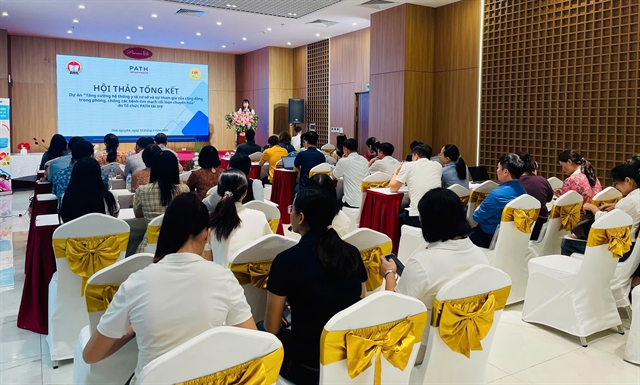 |
| Delegates attend the project conclusion workshop. — VNS Photo Thu Trang |
Looking ahead
Lê Ái Kim Anh, deputy director of Thái Nguyên CDC, said: “The project’s outcomes have been very positive for both the community and the health system.
"In the future, our CDC will strive to coordinate with relevant units to sustain the achievements supported by the project and PATH.”
Nguyễn Hải Thượng, deputy director of PATH’s Primary Health Care Programme, noted that the project also faced some difficulties.
“Geographic conditions in some areas affect access to health services," he said.
"Integration of cardiometabolic diseases management and care into provincial health programmes has so far been implemented in only 10 out of 92 communes, so the ripple effect remains limited.”
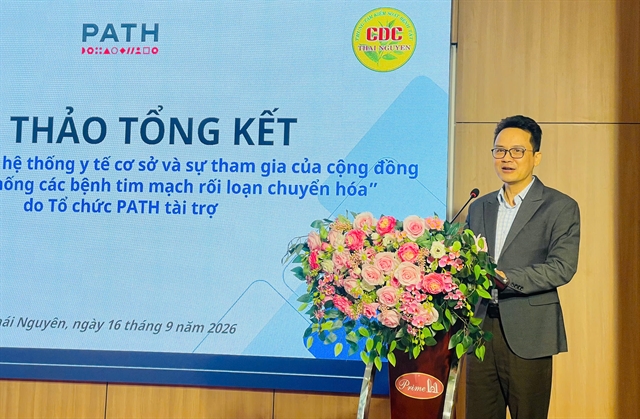 |
| Nguyễn Hải Thượng, deputy director of the Primary Health Care Programme at PATH, speaks at the project wrap-up workshop. — VNS Photo Thu Trang |
The data management system initially supports continuous patient monitoring across different levels, but still needs to be standardised and its usage capacity strengthened to ensure interoperability and effectiveness.
This shows that the key factors for the model’s success are synchronous, continuous implementation with supervisory support and the use of data in management, he said.
Residents are gradually changing the way they care for their health. As a result, healthcare no longer starts at hospitals, but in every household.
What is happening here is a scalable health model, in which primary healthcare is equipped with tools to proactively manage community health earlier, remotely and more sustainably. — VNS
Society
 Society
 Society
 Society
 Society
 Society
 Society
 Society
 Society
 Society
 Society
 Society
 Society
 Society
 Society