 Society

ZTE Expert David AN Shares TCO-Optimized AI Factory Vision at Data Centre World Singapore 2026
1.
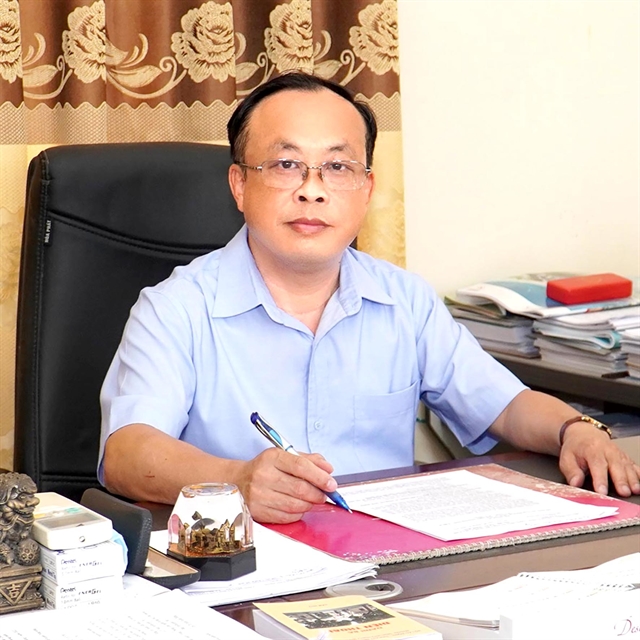 |
| Lương Ngọc Cương, director of the Việt Trì Psychiatric Nursing and Rehabilitation Centre. — Photo trungtamdieuduongtamthanviettri.vn |
By Bảo Linh & Đức Sơn
PHÚ THỌ — For 35 years, Lương Ngọc Cương has cared for patients the world had given up on — and where he can, he has helped them find the family members they lost along the way.
As the director of the Việt Trì Psychiatric Nursing and Rehabilitation Centre in the northern province of Phú Thọ, Cương has worked to help those in his care for nearly four decades.
Nguyễn Thị Thu Hà was two years old when her father left. She grew up without a single memory of him. She had one photograph, so old that his face had dissolved into a blur.
Her family searched for years. At one point, they heard he had come back looking for his wife and children, found that they had moved away, and set off again. By the 2000s, their hope had worn thin, and they set up an altar in his name.
For about twenty years, incense burned in front of it.
Then, one night in November 2022, the phone rang. Staff at Việt Trì were trying to trace the relatives of a patient whose details sounded very much like her father's. He was in poor health, the caller said.
Hà barely slept. The family reached the centre as fast as they could.
"My mother told me he left when I was just two. I had never seen him. But the moment I saw him, I knew. Nobody had to tell me," she said.
His name was Nguyễn Văn Hạnh. Born in 1948, he had worked at a rubber factory in Hà Nội until 1982, when he fell ill with psychosis, left home and wandered until he lost all sense of where he was.
Authorities eventually placed him at the centre, where staff could do little but write down whatever patients remembered and hope the scraps would one day add up to an address.
With treatment and care, fragments began to surface. By late 2022, Cương had two details that Hạnh kept repeating: Can Lộc District in the central province of Hà Tĩnh, and the Sao Vàng Rubber Factory.
Cương phoned officials in Hà Tĩnh and began checking, one link at a time. The answer came back later that year. The man in their care was the father of a family that had lost him forty years earlier.
When Hạnh was brought home, neighbours packed the house, and people who had watched the family wait for decades wept openly. He lived less than a year more, dying in September 2023.
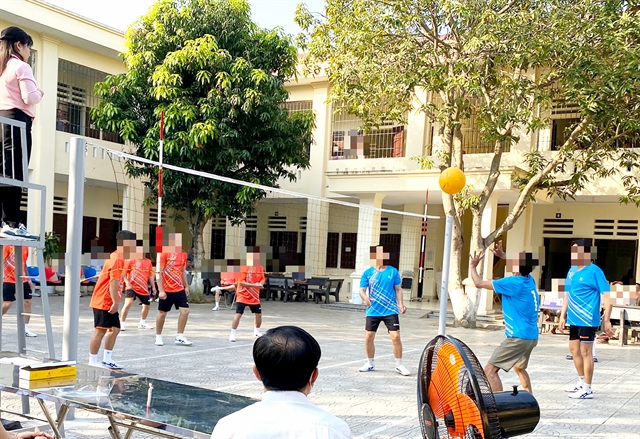 |
| A volleyball match between patients at the centre. — Photo suckhoedoisong.vn |
It was a cruelly short time against four decades of waiting, but his children consider it priceless.
"For forty years, people with no blood ties to my family quietly did deeply humane work. They looked after so many lives here — my father's among them," Hà said.
When shown the photographs of that reunion, Cương still grows misty-eyed. The staff who had cared for Hạnh wept that day, too.
The centre's grounds are green and orderly, the paths shaded. Behind that calm, more than 50 staff look after some 500 patients, many of them veterans or the children of veterans, some carrying other legacies of war that make their illness heavier.
Cương, who holds the title of People's Physician, has spent 35 years here. When he started, he said he had no idea what the work would demand: illnesses that are complex and erratic, sudden bouts of agitation, the stigma, the shortages, the struggles of patients' families.
"If everyone chooses to leave, who will the patients have to lean on?" he said.
He has taken leave exactly once in 35 years, and only because he fell ill and ended up in the emergency room. The rest of the time, he has always been there. What keeps him is rarely dramatic. One patient arrives frantic and slowly steadies. Another, cast out by their family, breaks into a smile. A third, once reliant on others, begins to eat, wash and work unaided.
The regimen goes well beyond medication. Staff supervise meals, sleep and pills. Patients read newspapers, watch television and exercise, and on holidays there are volleyball matches played with a soft, air-filled ball, as well as concerts. Work is therapy too, on the centre's farm and around the grounds.
All of it is meant to give patients back the sense of being useful, connected and part of a community. For Cương, treatment means more than stabilising an illness. It means keeping someone's place in the world.
He jokes that after so many years among his patients, he may end up as one himself in retirement. The joke carries a creed: you cannot care for someone who lives in another world while judging from outside. You have to come closer, listen and find common ground.
"To live with the mentally ill, you have to blend in with them. Patients may not control their behaviour, but they know exactly who loves them and who treats them with respect," he said.
Sometimes patients return to a workplace as well as to a family.
In a sawmill in Phú Thọ, 39-year-old Nguyễn Thị Anh stands beside her mother at the saw, lifting finished planks onto a trolley and wheeling them away to stack. Sawdust clings to her clothes. She is shy with strangers. Few would guess what the family lived through.
Anh developed a serious mental illness in 2007, in her second year at a medical university. Over the following years, she wandered from Hà Nội to Lạng Sơn to Bắc Ninh, sometimes with no idea where she was.
When she was admitted to the centre, she weighed about 40kg, and her mother had almost stopped hoping.
"I'd wake the children at two in the morning, and we'd split up to look," said Nguyễn Thị Long, 62.
"I was afraid that one day she would go and not come back."
The changes were small at first. Anh ate, slept and stopped wandering. Recovery was not a straight line: after she married, the pressures of daily life brought a relapse, and her mother took her back to the centre. Today Anh works, takes her small daughter to school and lives with her mother.
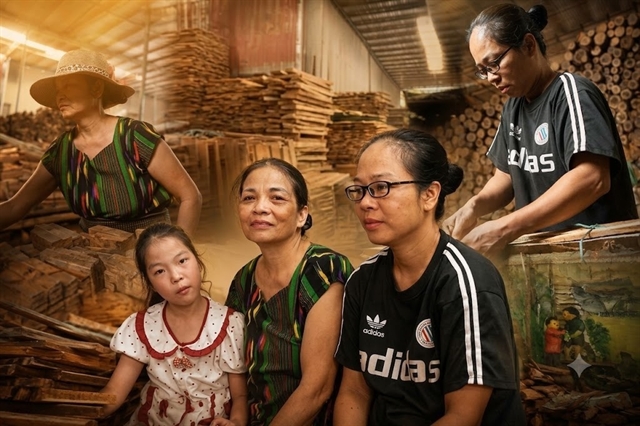 |
| From right: Anh, a former patient of the centre now back home; her mother, Long; and Anh's daughter. — Photo suckhoedoisong.vn |
"I can't say she's completely well. But to me, that is precious enough," Long said.
Colleagues at the centre describe a director rarely at his desk. Cao Thị Hải Dương, the centre's chief of office, says Cương goes down to the wards and steps in on the hardest cases. On days off, he is there by 6am.
Nguyễn Thị Hồng Phương, who runs the women's ward, remembers during COVID when nearly 500 patients — most with no family nearby — depended entirely on the staff.
"Cương didn't just organise and run things. He was the person who kept us steady," she said.
Behind the doctor is someone who waited at home. Đào Thị Minh Tâm, his wife, worked at the centre for 30 years before retiring, so she understands night shifts and urgent calls.
She remembers a night when an agitated patient threatened to harm himself. Cương was off duty but was summoned, and he came home at one or two in the morning smelling of liniment and medicine.
Over a dozen years and more, there have been many New Year's Eves when she has seen the year turn in a house without him. To her, sacrifice is the wrong word. She simply chose to keep the home front, so that he could give his mind to the work.
Some patients return to their families. Some return to work. And some have nowhere to go. When they die, the centre arranges the funeral and tends the grave.
At Tết (Lunar New Year) and on other holidays, when Vietnamese families visit their dead, sweeping the tombs and burning incense, staff go to the cemetery on behalf of patients who have no one left to go.
It is the last, quiet act of a long refusal: not to let illness take a person entirely, nor a name slip out of the world. – VNS
Society
 Society
 Society
 Society
 Society
 Society
 Society
 Society
 Society
 Society
 Society
 Society
 Society
 Society
 Society