 Life & Style

MSM chooses AWS to accelerate next-generation technology solutions for agribusiness value chain
1.
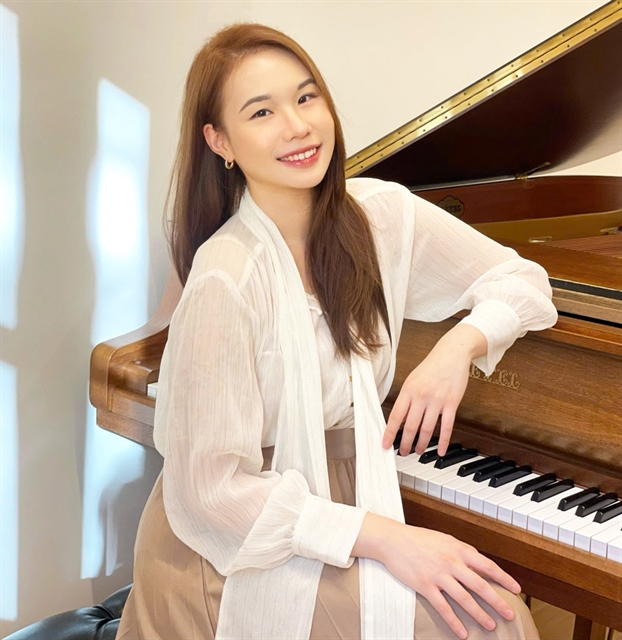 |
| Pianist Nguyễn Mỹ Anh. Photo hanoimoi.vn |
Pianist Nguyễn Mỹ Anh, a recipient of a full scholarship from the Vietnamese and Hungarian governments, has made history as the first Vietnamese music teacher in Hungary’s public education system.
Mỹ Anh spoke to the media about her aim to use music to bring together the global Vietnamese community, promote Vietnamese culture and elevate Việt Nam’s international standing.
How did your journey towards becoming the first Vietnamese educator to teach music in Hungary's public school system?
I began playing the piano when I was four. No one in my family was a professional musician, but they all loved music and could play a few instruments. It was probably because of that environment that music felt so natural and familiar to me right from childhood.
In 2008, I began my studies at the Việt Nam National Academy of Music. Nine years there gave me an invaluable foundation.
In 2016, I received a full scholarship from the Vietnamese Ministry of Education and Training and the Hungarian government to major in piano performance at the Faculty of Music, University of Szeged.
I was the only music student enrolled in the programme, which was taught entirely in Hungarian, requiring me to use the language like a native speaker. Looking back, that decision opened up a new path for me, allowing me to study deeply, gain a clearer understanding of the profession and shape the artistic path I wished to pursue.
Could you share your experience and the challenges you faced while learning Hungarian?
Language was my biggest hurdle. Out of nearly 70 students in my class, I was the only foreigner. But once I made the commitment, I knew I had to see it through. So I studied relentlessly, actively engaged in conversations and pushed myself to stay connected with everyone.
In June 2022, I graduated with my bachelor’s degree and went on to pursue a master’s. Once again, I was the only international student in the faculty to complete the entire programme in Hungarian.
I often think that learning a language is much like mastering a complex piece of music – you can't play it right away, but with patience, practice and a willingness to learn, success will come.
You were invited to teach at two public music schools in Hungary after graduation. What does that mean to you?
When I received the invitations to teach piano at the Szeged Music School and the Kiskunhalas Music School, I felt deeply honoured and filled with pride.
Later, I was recognised for my contributions to education and granted special approval under Hungary's National Interest status.
Currently, I teach piano at the Kiskunhalas City Music School while continuing my advanced studies and research. I truly love teaching and enjoy working with children. Alongside my Hungarian students, I continue to teach piano to students in Việt Nam and offer online lessons to young Vietnamese learners around the world.
Working in Hungary, which has one of Europe’s richest music education traditions, what aspects do you think Việt Nam could learn from?
In Hungary, children are exposed to music at a very young age – some even perform on stage as early as three or four years old.
Music education becomes an integral part of daily life, whether or not these children pursue it professionally later on. I believe this is something Việt Nam can truly learn from. Creating an environment where children are exposed to music early helps build a strong foundation and a lifelong love for the arts.
You have performed at numerous Việt Nam-Hungary cultural exchange and diplomatic events. Do you enjoy your role as a performer?
During my time studying and working in Hungary, I have performed in professional concerts as a soloist and participated in numerous Việt Nam-Hungary cultural exchange programmes.
Most notably, in 2024, I had the honour of performing at a Hungary-Việt Nam diplomatic event marking then Prime Minister Phạm Minh Chính's official visit to Hungary.
Participating in those programmes filled me with immense pride. I always wear the traditional áo dài when performing, taking great pride in bringing the voice of a Vietnamese artist to international audiences.
I often select pieces by both Hungarian and Vietnamese composers for my performances and cultural exchanges. To me, music is like a bridge, allowing me to tell the story of Việt Nam in a way that feels completely natural and is warmly received.
What plans do you have to showcase Vietnamese music in Hungary and around the world?
I want to continue expanding my knowledge, advancing my professional expertise and taking the stage more frequently. I also hope to have opportunities to return to Việt Nam and participate in artistic and educational programmes to share my experience.
Through my teaching career, I have trained numerous students who have gone on to win national and international awards. That success drives me to do even more so that Vietnamese talent gains greater representation on the global music stage.
I am currently developing a programme to connect my students across Việt Nam, Hungary and several other countries. Sometimes, I organise small gatherings where students from different nations can meet, talk and perform both Vietnamese and international musical pieces together.
I always consider myself first and foremost Vietnamese, and no matter where I am, I can contribute to my country in my own way. Performing, teaching and establishing myself in an international environment are how I promote the image of Việt Nam. I hope my story inspires young people to pursue their dreams with confidence and perseverance, helping to strengthen Việt Nam's presence in the world. — VNS
Life & Style
 Life & Style
 Life & Style
 Life & Style
 Life & Style
 Life & Style
 Life & Style
 Life & Style
 Life & Style
 Life & Style
 Life & Style
 Life & Style
 Life & Style
 Life & Style
 Life & Style