 Sci-Tech

Police bust Phú Quốc hotel booking scam with over $231m in transactions
1.
 |
| MobiFone Cần Thơ is expanding its 5G network with 120 additional stations at urban centres and industrial parks while upgrading transmission infrastructure to meet the needs of about 100,000 high-speed broadband subscribers. — VNA/VNS Photo Thu Hiền |
HÀ NỘI — Việt Nam’s telecommunications infrastructure made significant strides in the first nine months of 2026, with fixed broadband speeds rising by more than 20 per cent, mobile broadband speeds by around 45 per cent and the number of 5G subscriptions nearly doubling compared to last year.
Together with the shutdown of 2G services, the expansion of 5G, wider adoption of IPv6 and efforts to eliminate remaining mobile coverage gaps, the developments are helping the country shift from simply expanding connectivity towards building modern, high-quality and more inclusive digital infrastructure.
Infrastructure gathers pace as technology shifts
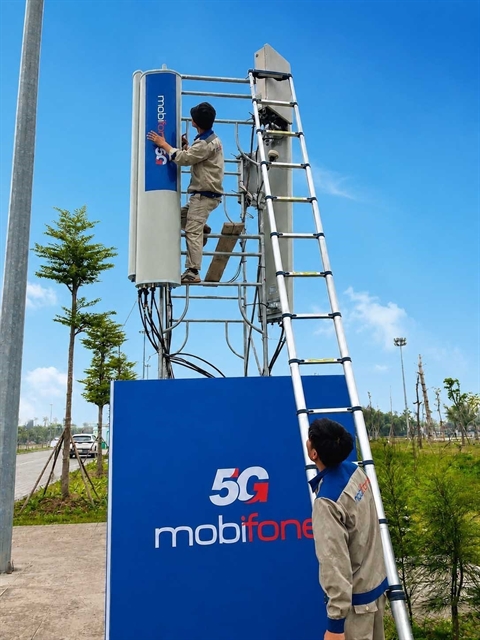 |
| Hải Phòng has accelerated the development of telecommunications infrastructure, particularly its 5G network. By mid-July 2026, the city had 1,636 5G base stations, covering 100 per cent of its industrial parks and 98 per cent of its population. — VNA/VNS Photo Hoàng Ngọc |
One of the clearest indicators of the telecommunications sector’s progress in 2026 is Internet speed.
As of August, Việt Nam’s fixed broadband speed reached 301.48 Mbps, ranking eighth among 149 countries and territories, while mobile broadband reached 219.93 Mbps, ranking ninth among 102.
The figures marked a substantial improvement from the same period in 2025, when fixed and mobile broadband speeds stood at 250.45 Mbps and 151.69 Mbps, respectively, ranking 13th and 18th globally.
Fixed broadband speeds increased by about 20.4 per cent in a year, reflecting continued investment in fibre-optic networks, transmission infrastructure and access networks.
Mobile broadband speeds, meanwhile, rose by as much as 45 per cent, reflecting the growing impact of 5G commercialisation.
The number of 5G subscriptions also increased sharply. From more than 14 million in September 2025, the figure reached 27.2 million by August 2026, representing growth of at least 94 per cent.
The development of telecommunications in 2026, however, is not simply a story of rising subscriber numbers. It increasingly reflects improvements in network quality and technological capacity.
The rapid expansion of 5G and the growing number of subscriptions are creating greater room for services requiring high speeds, low latency and the simultaneous connection of large numbers of devices.
These capabilities can support the wider deployment of the Internet of Things, smart factories, digital logistics, telemedicine, online education and AI applications that require large volumes of data to be transmitted.
This direction is closely aligned with Resolution No. 57-NQ/TW, under which the Politburo identifies science, technology, innovation and digital transformation as a major driver of development and places digital infrastructure among the core areas requiring investment. The resolution calls for digital infrastructure to be developed in a modern, integrated, secure, safe and efficient manner.
Another important milestone came on September 16, when mobile telecommunications operators in Việt Nam shut down 2G networks, except in specific areas such as the Trường Sa (Spratly) and Hoàng Sa (Paracel) archipelagos and the DK1 offshore platforms, freeing the 900MHz and 1,800MHz spectrum bands for the development of 4G and 5G networks.
The shutdown of 2G is more than the retirement of an older technology. At its core, it represents a reallocation of infrastructure resources from lower-efficiency technology to newer generations of mobile networks, particularly 4G and 5G.
As users move to broadband-enabled devices, more space is created for the development of digital services. People can gain better access to online public services, digital payments, healthcare, education, e-commerce and other digital platforms.
The modernisation of the national network infrastructure is also reflected in IPv6 adoption.
The proportion of IPv6 usage in Việt Nam rose from 65 per cent in September 2025 to 67 per cent in September 2026, keeping the country in second place in ASEAN and seventh globally.
At the same time, 703,236 '.vn' domain names were in use, up 5.7 per cent year-on-year, reflecting the growing online presence of organisations, businesses, household businesses and individuals.
The Vietnam Internet Network Information Center (VNNIC) identifies '.vn' domain names as an important component of the national Internet ecosystem, supporting the development of trusted online identities.
Expanding access to digital opportunities
 |
| In remote mountainous communities in western Đà Nẵng, officials and teachers are working to build digital skills and keep pace with the country’s digital transformation. — VNA/VNS Photo Xuân Quý |
The first nine months of 2026 show that Việt Nam’s telecommunications sector is entering a new phase — one focused not only on expanding connectivity, but also on improving quality, upgrading technologies and increasing the sector’s capacity to serve the digital economy.
One of the sector’s key tasks in the final months of the year is to complete the nationwide coverage of telecommunications infrastructure.
After years of investment, 273 villages remain without adequate mobile coverage. While this is considerably smaller than the number of coverage gaps recorded in the past, these locations are among the most difficult to address, often because of challenging terrain, scattered populations or inadequate electricity infrastructure.
Completing coverage in these areas will be important to ensure that the benefits of telecommunications infrastructure are distributed more widely, rather than concentrated in cities and economically advantaged areas.
Narrowing gaps in access to infrastructure will give people in remote and mountainous areas greater opportunities to participate in economic activities, education, healthcare and public services in the digital environment.
This emphasis on inclusive infrastructure also reflects the broader direction of Resolution 57, which places infrastructure alongside institutions, human resources, data and strategic technologies among the core elements of national development in science, technology, innovation and digital transformation.
Yet the requirements for telecommunications infrastructure in the coming period will extend beyond simply providing connectivity.
The rapid development of artificial intelligence, cloud computing, the Internet of Things and new-generation digital services is creating higher demands for speed, stability, low latency, information security, and the ability to process and transmit growing volumes of data.
Against this backdrop, the achievements of the first nine months of 2026 provide a foundation for Việt Nam to move from the goal of universal connectivity towards a high-capacity, integrated and sustainable digital infrastructure.
Fibre optics, 4G, 5G, IPv6, '.vn' domain names and data infrastructure will become increasingly interconnected, forming a broader foundation for digital transformation across the economy. — VNS
Sci-Tech
 Sci-Tech
 Sci-Tech
 Sci-Tech
 Sci-Tech
 Sci-Tech
 Sci-Tech
 Sci-Tech
 Sci-Tech
 Sci-Tech
 Sci-Tech
 Sci-Tech
 Sci-Tech
 Sci-Tech
 Sci-Tech