 Sci-Tech
 Rikkeisoft ký kết MOU với LAC.Co, LTD - thúc đẩy hợp tác kinh doanh toàn diện trong lĩnh vực an ninh mạng.jpg)
Rikkeisoft expands cybersecurity operations in Japan with LAC partnership
1.
From low-emission rice cultivation and carbon credit development to the digitalisation of custard-apple orchards and the management of tea-growing areas through digital platforms, artificial intelligence (AI), the Internet of Things (IoT) and unmanned aerial vehicles (UAVs), Thái Nguyên’s agricultural sector is steadily shifting from traditional production towards high-tech, environmentally friendly farming.
Smart farming improves efficiency and cuts emissions
Since the 2025 spring crop, a smart rice farming model using alternate wetting and drying (AWD) irrigation has been implemented across 12 hectares, involving more than 100 households in Bản Đông Hamlet, Hợp Thành Commune.
Instead of keeping the fields continuously flooded, farmers irrigate and drain them at different stages of rice growth while using specialised equipment to monitor water levels.
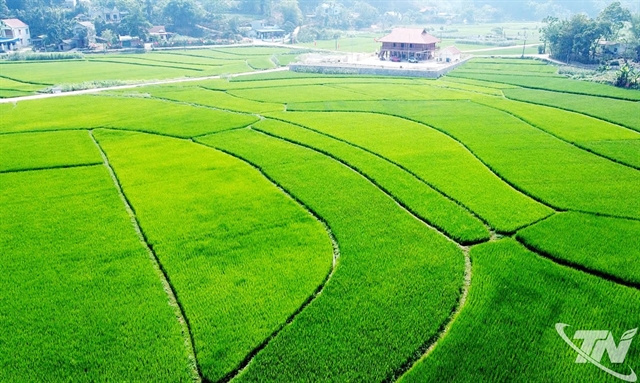 |
| The alternate wetting and drying (AWD) smart rice farming model, implemented by over 100 households in Bản Đông hamlet, Hợp Thành commune (Thái Nguyên province) since the Spring crop of 2025, has brought many practical benefits. Photo courtesy of baothainguyen.vn |
The Thái Nguyên Centre for Agricultural Extension and Environment said the method strengthens root systems, improves crop health, reduces the risk of lodging and increases drought tolerance. It also reduces water consumption, production costs and greenhouse gas emissions.
Yields reached 6.79 tonnes per hectare, 0.89 tonnes higher than in conventionally cultivated fields. Spending on seeds, nitrogen fertiliser, pesticides and irrigation water fell by around 30–40 per cent, while profits reached approximately VNĐ65.7 million per hectare, 56 per cent higher than under traditional farming practices.
Notably, the model’s emission reductions have been documented in a certified greenhouse gas emission reduction report. Total reductions amounted to 44.51 tonnes of carbon dioxide equivalent, with an estimated economic value of nearly VNĐ17.4 million.
The results in Hợp Thành are considered an important foundation for Thái Nguyên to develop an agricultural carbon credit market, contributing to the province’s green growth goals and Việt Nam’s target of achieving net-zero emissions by 2050.
Vũ Tiến Dũng, deputy director of the Thái Nguyên Centre for Agricultural Extension and Environment, said technology only had value when it addressed specific problems faced by producers.
The application of science and technology and digital transformation should therefore focus on reducing costs and labour, increasing productivity and raising incomes. This is also a key factor in determining whether successful models can be replicated rather than remaining at the demonstration stage.
Digitalisation improves management and sales
In Võ Nhai Commune, technology has been introduced directly into custard-apple orchards through the ‘Võ Nhai Custard-Apple Orchard in the Digital Environment’ model.
Under the programme, 100 trees at two orchards in Mỏ Gà Hamlet have been selected for cultivation under VietGAP standards, using off-season growing techniques, water-saving irrigation and round-the-clock camera monitoring.
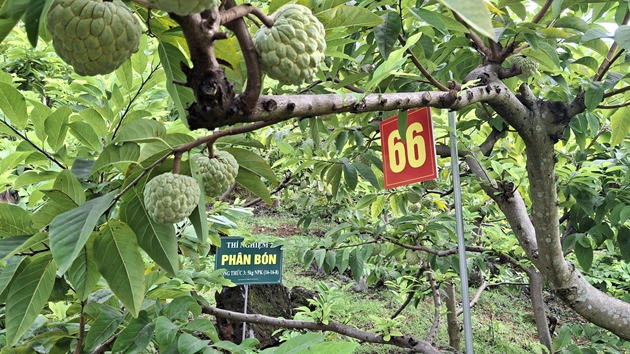 |
| The "Võ Nhai custard-apple orchard on a digital environment" model. Photo courtesy of khuyennongvn.gov.vn |
Each tree is assigned a QR code linked to information about the tree and its grower. Consumers can track the cultivation process, order fruit and follow the development of their tree throughout the growing season.
A notable feature of the model is the shift from simply selling agricultural produce to providing a digital experience. Consumers not only purchase the fruit but can also ‘own’ and monitor a custard-apple tree throughout the growing season via an online platform.
The combination of VietGAP-compliant cultivation, off-season production techniques and digital technology directly connecting producers with consumers removes intermediaries and maximises the economic value of each tree.
It also offers a modern approach to strengthening the local agricultural brand in the digital space.
Digital transformation is also being applied to the management of raw material areas for tea production.
Through the VNPT Green application, 45 cooperative groups, cooperatives and tea production and trading businesses have received guidance on digitalising cultivation processes, maintaining electronic farming logs and managing raw material areas.
The system connects data through application programming interfaces and integrates information on growing areas, pests, plant quarantine and agricultural inputs.
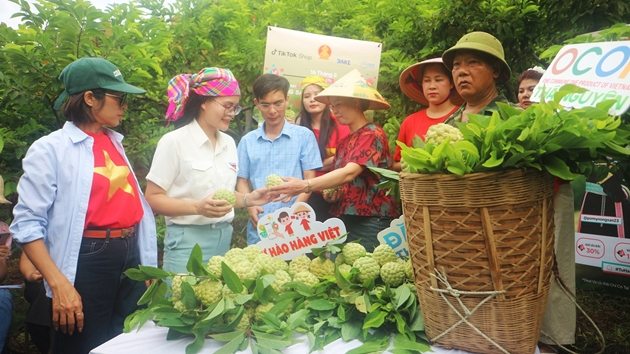 |
| The 'Digital Custard-Apple Tree' livestream at Võ Nhai's digital orchard model. Photo courtesy of khuyennongvn.gov.vn |
In tea-growing areas, sensors monitoring soil moisture, pH levels and temperature are combined with automated irrigation systems, helping reduce water consumption by around 30–40 per cent.
Smart weather stations also provide warnings about adverse conditions and potential pest outbreaks, while traceability data are connected to online sales channels, e-commerce platforms and AI chatbots.
The centre has also tested UAVs to spray organic foliar fertiliser over a seven-hectare Thầu Dầu sticky rice cultivation area in Phú Bình and demonstrated the technology on tea plants.
The technology helps reduce labour requirements, prevent crops from being trampled and distribute agricultural inputs more accurately.
Dũng said the application of technology in agricultural production still faced difficulties due to small-scale farming, limited investment capital, unreliable infrastructure in some areas and many farmers’ unfamiliarity with technology.
Producers must therefore remain at the centre of the transformation, with technological applications accompanied by practical guidance, data standardisation and stronger links among the State, scientists, enterprises and farmers.
Digital transformation must also be linked to green production, emission reductions, traceability and the development of products under the One Commune One Product programme.
Technology application, digital transformation and emission reduction models are opening up new directions for Thái Nguyên’s agricultural sector.
To expand these models, the province needs to continue improving infrastructure, data systems and digital skills while strengthening links among the State, enterprises, scientists and farmers, thereby promoting green, smart and sustainable agriculture. VNS
Sci-Tech
 Sci-Tech
 Sci-Tech
 Sci-Tech
 Sci-Tech
 Sci-Tech
 Sci-Tech
 Sci-Tech
 Sci-Tech
 Sci-Tech
 Sci-Tech
 Sci-Tech
 Sci-Tech
 Sci-Tech
 Sci-Tech