 Society
Việt Nam, EU and Belgium seek deeper, practical cooperation
1.
PHÚ THỌ — The Phú Thọ Provincial Women's Union on Wednesday launched a campaign in response to the 2026 National Anti-Human Trafficking Day, calling for stronger action from authorities and the public to combat human trafficking and protect the rights of women and children.
The event was organised under the Phú Thọ People's Committee's 2026 plan on crime prevention and anti-human trafficking, as well as the provincial Women's Union's implementation of the project 'Promoting Gender Equality and Addressing Urgent Issues Facing Women and Children'.
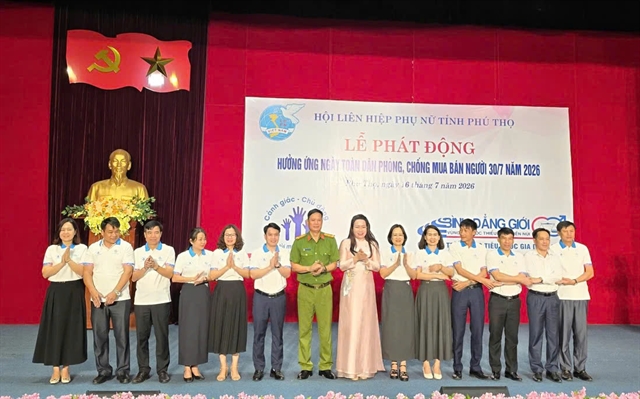 |
| At the ceremony, leaders of the provincial People's Committee, the Phú Thọ Provincial Women's Union, the Phú Thọ Provincial Police, and representatives from relevant departments, agencies and mass organisations took part in a symbolic pledge, reaffirming their commitment to joining forces to prevent and combat human trafficking. VNS Photos Lệ Thủy |
Speaking at the launch ceremony, Nguyễn Hồng Nhung, Chairwoman of the Phú Thọ Provincial Women's Union, said the Government had designated July 30 as National Anti-Human Trafficking Day to mobilise the entire political system and society to prevent, detect and combat one of the most serious forms of organised crime.
She said the campaign was not only an annual awareness-raising activity but also an opportunity for government agencies, organisations and individuals to strengthen their commitment to protecting human rights, especially the rights of women and children, and to help build a safer and healthier society.
Nhung said anti-human trafficking efforts in Phú Thọ had achieved encouraging results in recent years thanks to the leadership of the Party, the direction of provincial authorities and close coordination among relevant agencies.
Public awareness campaigns and legal education programmes had been expanded, community-based prevention models had proved effective, and support services for victims had gradually become more comprehensive, contributing to social stability and the protection of citizens' legitimate rights and interests, she said.
Despite these achievements, Nhung warned that human trafficking remained a complex challenge as criminal networks increasingly exploited digital technology and social media to recruit victims.
Traffickers often target people seeking employment, overseas jobs or marriage with foreigners. They lure victims with promises of 'light work with high pay', arrange illegal migration and fraudulent marriage brokerage, and engage in child trafficking, foetal trafficking, organ trafficking and commercial surrogacy.
Many of these crimes are now committed online, making detection and prevention more difficult. Women, children, young people, low-income workers and ethnic minority communities remain among the groups most vulnerable to trafficking.
"Human trafficking is an extremely serious crime that directly violates human rights, personal freedom, dignity and family happiness," Nhung said.
"It leaves lasting consequences for victims and negatively affects sustainable social development."
She stressed that combating human trafficking was not solely the responsibility of law enforcement agencies but required the participation of the entire political system and society.
As the organisation representing and protecting women's legitimate rights and interests, the provincial Women's Union has worked closely with relevant agencies to implement a wide range of practical initiatives.
Thousands of communication campaigns, training courses, seminars, competitions and community forums have been organised, attracting hundreds of thousands of officials, Women's Union members and residents.
Community initiatives such as 'Safe Communities for Women and Children', 'Trusted Community Addresses', 'Community Communication Teams' and 'Leaders of Change Clubs'` have continued to improve public awareness, strengthen self-protection skills and provide support for women and children at risk of or affected by trafficking.
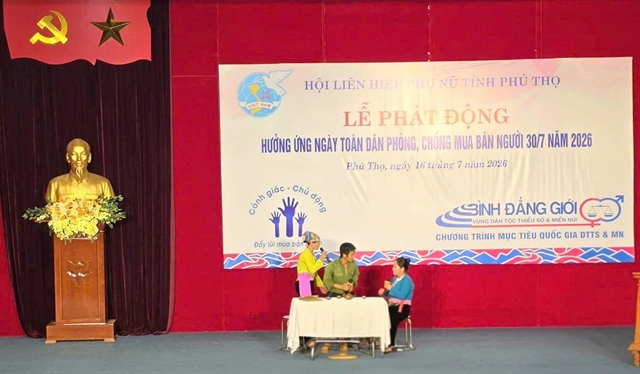 |
| A play performed by the Community Communication Team of Thượng Cốc Commune depicted real life scenarios to help local people recognise the deceptive tactics used by human traffickers. It also equipped them with practical knowledge and skills to protect themselves and their families from trafficking risks both online and in their daily lives. |
To mark the 2026 National Anti-Human Trafficking Day, the provincial Women's Union called on authorities, organisations and Women's Union branches at all levels to focus on three priorities: strengthening legal education and public awareness through both traditional and digital communication channels; improving support services for vulnerable groups and trafficking victims; and enhancing cooperation between the Women's Union, police, the Việt Nam Fatherland Front and other socio-political organisations to expand community-based prevention models.
At the ceremony, Senior Lieutenant Colonel Đinh Văn Nghĩa, deputy head of the Criminal Police Division (PC02) under the Phú Thọ Provincial Police, briefed participants on the latest trafficking trends and methods.
He said provincial police had uncovered 14 human trafficking cases and prosecuted 57 suspects since 2021.
Nghĩa also warned that businesses such as massage parlours, karaoke venues, hotels and other accommodation facilities could be exploited by traffickers, while illegal migration abroad continued to expose residents to the risk of being trafficked.
He called on authorities, mass organisations and local communities to strengthen coordination in raising public awareness while improving livelihoods and creating stable employment opportunities to reduce people's vulnerability to trafficking.
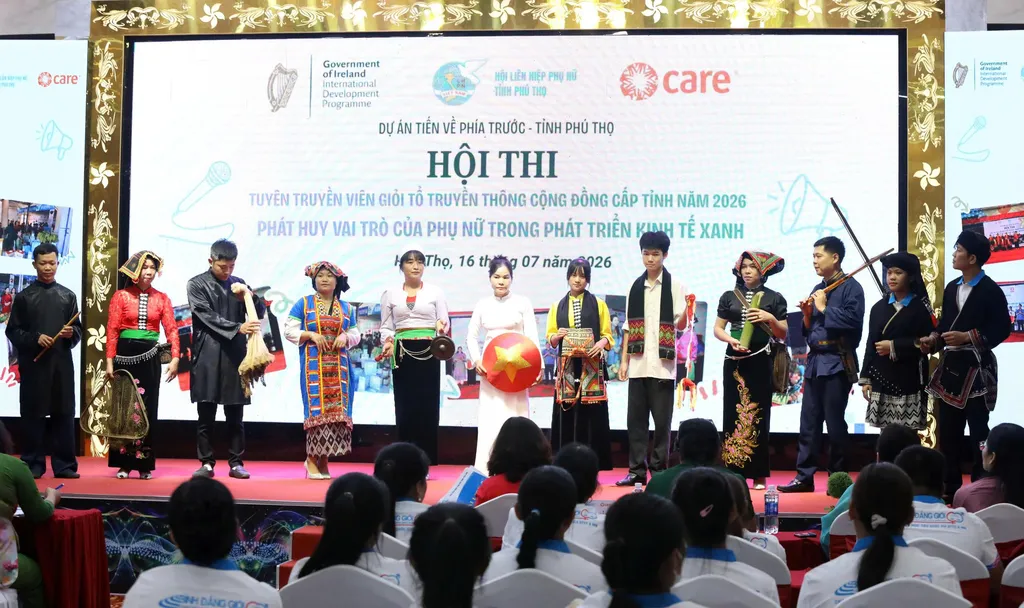 |
| People from various ethnic groups in the province take part in the Best Communicator Contest. |
Following the launch ceremony, hundreds of Women's Union members, police officers and delegates joined a parade through the streets of Hòa Bình Ward to spread messages promoting public awareness and collective responsibility in preventing, detecting and combating human trafficking.
Alongside the launch ceremony in response to the National Anti-Human Trafficking Day, a Best Communicator Contest and a soft volleyball tournament were organised under the Moving Forward programme in Phú Thọ Province.
Funded by the Government of Ireland through CARE International in Việt Nam and implemented in partnership with the Phú Thọ Provincial Women's Union, the events drew nearly 600 women and men from communes and wards across the province. — VNS
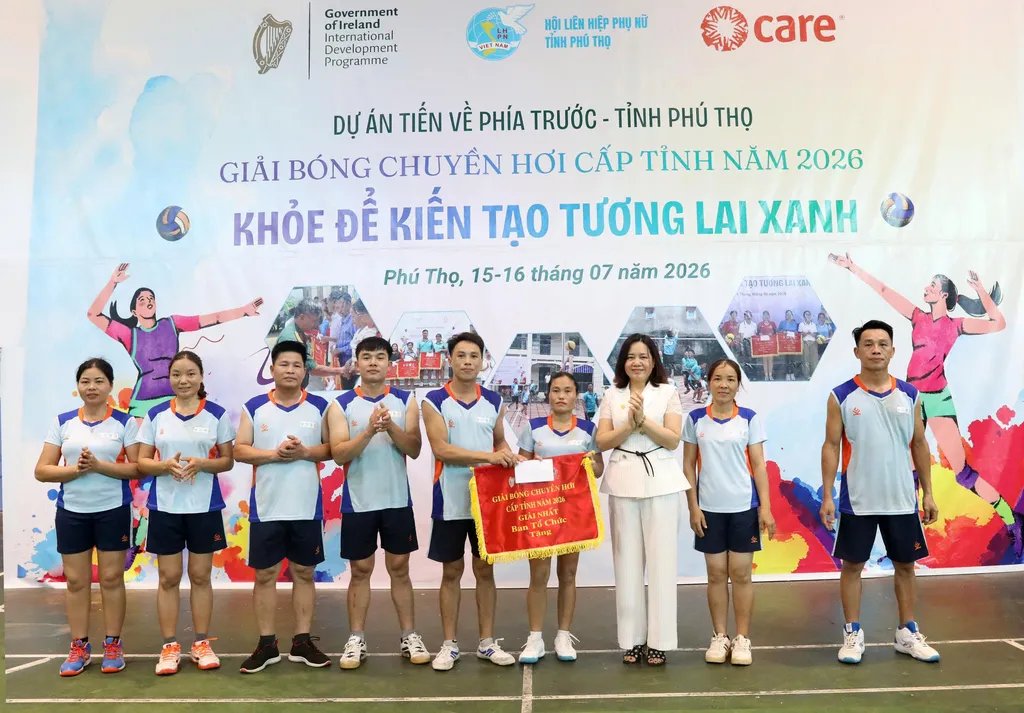 |
| The soft volleyball tournament attracted hundreds of participants from across the province. |
Society
 Society
 Society
 Society
 Society
 Society
 Society
 Society
 Society
 Society
 Society
 Society
 Society
 Society
 Society