 Society
SBV to curb property price inflation, enforce lending rate rules
1.
|
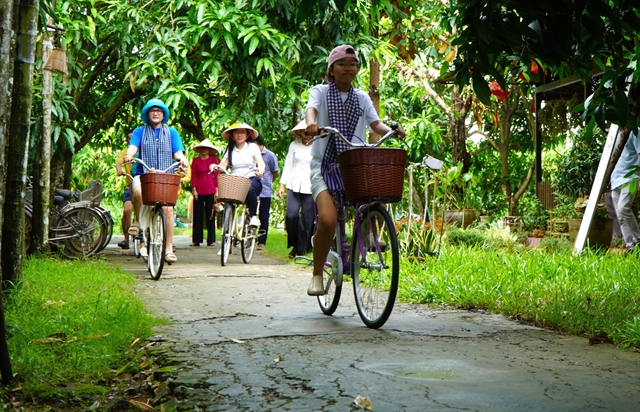
| Visitors cycle along a scenic mango orchard trail in Mỹ Thọ Commune, Đồng Tháp Province, where agritourism is creating new value for the province's main fruit. —VNA/VNS Photo |
ĐỒNG THÁP — Agritourism is creating new opportunities to increase the value of Đồng Tháp Province's mango industry, helping growers diversify their income and enabling rural growth.
Mỹ Thọ Commune has emerged as one of the province's pioneers in combining mango cultivation with tourism, transforming orchards into destinations where visitors can experience local culture, farming traditions, and the Mekong Delta's rural lifestyles.
Mango is one of Đồng Tháp's main agricultural products, and is grown on more than 17,300 hectares, mainly in Cao Lãnh, Mỹ Thọ, and An Hữu communes.
In recent years, alongside efforts to improve fruit quality and meet export standards, Đồng Tháp has shifted from focusing solely on agricultural production to developing a broader agricultural economy, recognising the commercial, ecological, and cultural values of its mango orchards.
At The Mango Trail Farmstay in Mỹ Thọ Commune, visitors can cycle along mango-lined paths, paddle across ponds, feed fish, sample dishes made from fresh mango, and learn about local farming practices.
Its tranquil orchard setting and authentic countryside experiences have become popular tourism products, attracting a growing number of domestic and international visitors.
Hoàng Thị Ngọc Phượng, a visitor from HCM City, said it was the third time her family had returned to the farmstay.
"It is not only the beautiful orchards that bring us back, but also the hospitality of local people and the opportunity to experience everyday life in the Mekong Delta."
Hồ Thị Thu Thủy, manager of The Mango Trail Farmstay, said the 1.4-hectare property continues to devote most of its land to mango cultivation while integrating tourism services, and the model generates two or three times higher incomes than merely selling fresh mangoes.
Revenues from accommodation and tourism activities help sustain incomes during non-harvest periods.
The farmstay receives 1,000-2,000 visitors a year, with foreign tourists accounting for as much as 70 per cent during some periods.
Tourism has additional jobs for guides, orchard tours, and sales of local products.
Nguyễn Văn Mương, one of the commune's agritourism pioneers, has turned his family home and orchard into a destination showcasing local history and culture.
Besides visiting the Phủ thờ Thư Ngọc Hầu provincial historical and cultural relic preserved by his family, visitors can hear stories about the development of Mỹ Thọ's mango-growing region while enjoying tea and mango-based specialities.
Mương said many guests were particularly fascinated by an 80-year-old mango tree believed to be the second generation of the area's original "ancestor mango tree".
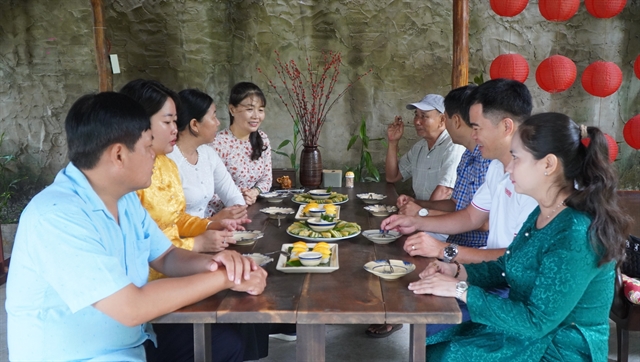
|
| Visitors enjoy mango-inspired dishes at The Mango Trail Farmstay in Mỹ Thọ Commune, Đồng Tháp Province, where local cuisine is a key part of the agritourism experience. —VNA/VNS Photo |
Building sustainable mango economy
Nguyễn Minh Tuấn, chairman of the Mỹ Thọ Commune People's Committee, said locally there are around 1,310 hectares of mango orchards that produce nearly 11,800 tonnes of the fruit every year.
Cao Lãnh Cát Chu mangoes account for 70 per cent of the area, with the remainder comprising Cát Hòa Lộc, Tượng Da Xanh, and other varieties.
The commune has been granted 50 growing area codes covering more than 1,134 hectares, strengthening export opportunities.
But most mangoes are sold fresh through traders, with only around 10–15 per cent marketed through direct partnerships with businesses.
Tuấn said agritourism has become an important way to increase the value of the mango industry while strengthening the Mỹ Thọ mango brand through its ecological landscape.
The commune plans to encourage growers to improve orchard landscapes, expand visitor facilities and develop activities such as orchard tours, demonstrations of safe cultivation methods, and hands-on harvesting experiences.
It also aims to develop more OCOP products and strengthen cooperation with travel companies to establish specialised agritourism routes.
Alongside tourism, Mỹ Thọ is also promoting digital orchard management, off-season flowering techniques, and production to VietGAP and organic standards.
Many farmers have started using biological products to reduce pesticide use while integrating livestock beneath mango trees to improve productivity and protect the environment.
Trần Phú Hậu said his family cultivates 5,000 square metres of organic mangoes, producing around 15 tonnes annually, earning VNĐ400 million (US$15,300) and profits of nearly 70 per cent.
He said organic farming not only produces safer fruits but also improves the ecosystem, enhances product value, and creates better market opportunities.
As Đồng Tháp continues to diversify its rural economy, mango orchards are evolving beyond fruit production into destinations that combine agriculture, culture, and tourism, creating new income streams for growers and strengthening the long-term competitiveness of one of the province's main agricultural products. — VNS
Society
 Society
 Society
 Society
 Society
 Society
 Society
 Society
 Society
 Society
 Society
 Society
 Society
 Society
 Society