 Society

SBV to curb property price inflation, enforce lending rate rules
1.
|
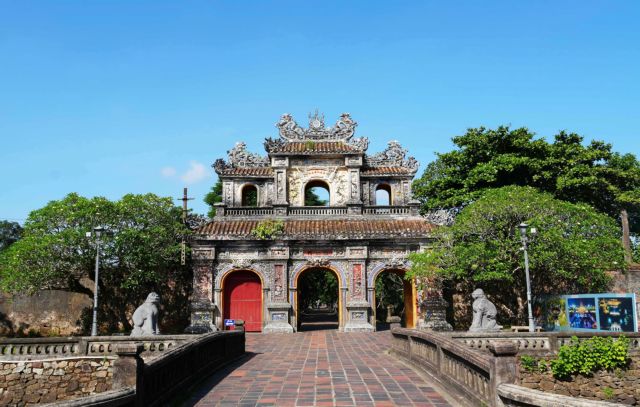
| Hiển Nhơn Gate in the Huế Imperial Citadel. The citadel is a defining cultural heritage in Huế City. — VNA/VNS Photo Nguyên Lý |
HÀ NỘI — The Government has announced the criteria for cities to qualify to pilot the ‘cultural heritage city’ model and preferential policies to support it.
The criteria and policies were set out in Decree 282, dated July 14, which implements the National Assembly’s Resolution 28, dated April 24, on the development of Vietnamese culture.
A city may be selected to pilot the model if it possesses cultural heritage formed throughout its historical development, maintains a close relationship with that heritage, and whose value is defined or influenced by the heritage's value.
It will be eligible for selection if it has at least two tangible cultural heritage sites, intangible cultural heritage elements, or documentary heritage items within its territory that have been recognised, ranked, or inscribed by either Việt Nam or the United Nations Educational, Scientific and Cultural Organization (UNESCO).
The city must also have issued and effectively implemented regulations on the management, protection, and promotion of cultural heritage values within its jurisdiction, and possess practical experience in investing in, conserving, restoring cultural heritage in accordance with the law.
The decree also sets out preferential policies on land use, fees and service charges to support the pilot.
The provincial People's Council in which the city selected for the pilot is located will decide on additional land-use quotas, apart from those allocated under the national land-use plan, for investment projects in the fields of cultural heritage and cultural industries.
The provincial People's Committee, once approved by the People’s Council, will determine the level of preferential land rental rates applicable to each specific heritage area to carry out projects offering commercial services and tourism, public investment-private management and public-private partnership (PPP) projects in the field of cultural heritage.
The maximum preferential rate must not exceed a 50 per cent reduction from the prevailing land rental rates.
Regarding fees and charges, the provincial People's Council is authorised to determine service fees at heritage sites and to establish charges outside the fees and charges prescribed by law.
The local budget is entitled to retain the full amount of revenues generated from these additional fees and charges.
Revenue from admission fees collected at scenic sites, historical and cultural relics, cultural facilities, and museums located within a cultural heritage city, after deducting operating expenses, will be partially retained by public service units to cover the costs of the fee-based services they provide.
A portion of the revenue must be added to the State budget for the restoration, conservation and promotion of cultural heritage values within the locality, or to the local budget to be added to the State budget for these purposes later. — VNS
Society
 Society
 Society
 Society
 Society
 Society
 Society
 Society
 Society
 Society
 Society
.jpeg) Society
Society
 Society
 Society
 Society