 Society
SBV to curb property price inflation, enforce lending rate rules
1.
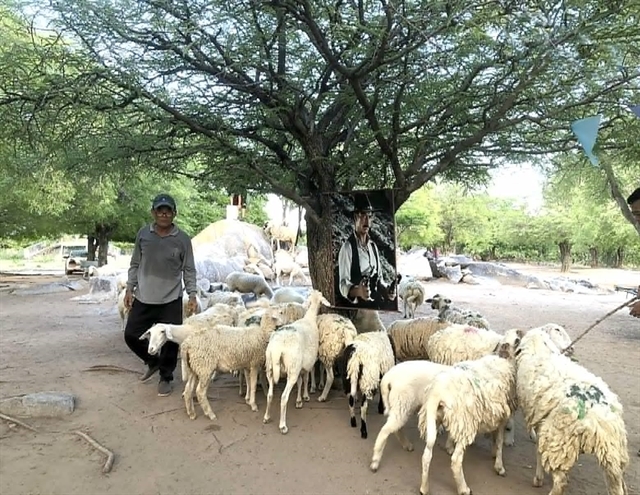 |
| Đạo Thanh Tường’s family, a Chăm household, has improved their living standards through sheep farming and developing tourism. — VNA/VNS Photo Viết Tôn |
KHÁNH HÒA — On the path to renewal and sustainable development, ethnic groups and communities in the mountainous areas of Khánh Hòa Province are at an important turning point.
The combination of local strengths, resources from national target programmes and the inevitable trend of digital transformation is producing a 'double objective': improving material living standards while modernising administrative governance.
From pastoral grazing plains to digitised offices, a new face of Khánh Hòa’s highlands is emerging, clearing the way for a breakthrough phase of development in the 2026–30 period.
Looking at the living conditions of ethnic communities in Khánh Hòa in recent years, a clear strong shift from subsistence living to a market-oriented economy of goods and services is evident.
A typical example of this new direction is the model of combining livestock farming with experiential tourism in border and ethnic groups areas.
In this harsh-climate land, people have found a sustainable livelihood in sheep farming. The story of Đạo Thanh Tường’s family, of Chăm ethnicity, is a vivid illustration.
His flock of more than 50 sheep not only generates income from selling breeding stock, but also serves as an attraction that draws tourists to visit, photograph and experience nomadic life.
Khánh Hòa Province currently has 34 ethnic groups, with more than 266,000 people, concentrated mainly in 28 remote communes and wards.
In the 2021–25 period, under the close direction of Party committees and authorities, ethnic affairs achieved impressive results.
The average income of ethnic people in Khánh Hòa reached VNĐ34 million (US$1,200) per person per year, an increase of 2.14 times compared with 2020.
The poverty rate fell by an average of 6 per cent per year, which is testament to the effectiveness of direct and indirect support policies.
More important than income is the change in infrastructure. To date, all of communes in ethnic groups areas have road access to their centres paved with asphalt or concrete.
The strengthening of school and health-station facilities not only makes it easier for children to attend classes but also ensures that people receive healthcare locally.
Notably, social welfare indicators show comprehensive attention: 99.94 per cent of households have grid electricity and 99.66 per cent of residents have access to hygienic water.
These figures are not merely statistics but the core foundation for narrowing the development gap between lowland and upland areas, creating momentum for further progress in the next phase.
Action plan
According to Nguyễn Việt Hùng, chairman of Khánh Hòa Province People’s Committee, although many achievements have been made, he acknowledged there are bottlenecks that must be resolved.
Socio-economic infrastructure in ethnic groups areas has improved but still does not meet the requirements for rapid and sustainable development in the new context. Access to high-quality public services remains limited, and the region’s distinctive potentials have not been thoroughly exploited into competitive advantages.
To solve this challenge, Khánh Hòa has set out a decisive action plan for 2026–2030, closely linked to the National Target Programme for socio-economic development of ethnic groups and mountainous areas.
Hùng said that a financial resource of nearly VNĐ4.1 trillion ($156.2 million) was expected to be mobilised.
This capital will not be spread thinly but concentrated on core items: upgrading the power grid, securing centralised domestic water supplies and completing inter-regional transport networks to facilitate goods exchange.
In particular, Khánh Hòa will focus on resettling people from areas at high risk of landslides to ensure the safety of lives and property in the face of climate change.
Additionally, the province has requested breakthrough mechanisms on land and credit to attract businesses to invest in ethnic groups areas, creating stable employment for local people.
A breakthrough element in the ethnic-affairs development strategy in Khánh Hòa, and nationwide, is digital transformation.
Currently, the construction of two national databases on ethnicity and religion is being urgently implemented. These are regarded as invaluable 'digital resource repositories' that will give policymakers a clear and accurate view to make decisions closely aligned with reality.
Digitalisation goes beyond dry statistical figures. It helps process administrative procedures more quickly and transparently.
People in the most remote villages will be able to access public services through digital channels, reducing travel costs and time.
At the same time, digital data will enable authorities to accurately review beneficiaries, avoiding overlapping investments or omitting genuinely disadvantaged households following administrative unit mergers.
Economic development coupled with cultural preservation, infrastructure investment alongside digital transformation – this is the modern governance mindset Khánh Hòa is pursuing.
When data flows are connected and resources are targeted correctly, no village will be left behind.
After the July 2026 milestone, ethnic affairs in Khánh Hòa will enter a new chapter: more modern, more precise and imbued with human values, continuing the story of sustainable development on this fragrant land of aspiration. — VNS
Society
 Society
 Society
 Society
 Society
 Society
 Society
 Society
 Society
.jpeg) Society
Society
 Society
 Society
 Society
 Society
 Society