 Society

SBV to curb property price inflation, enforce lending rate rules
1.
|
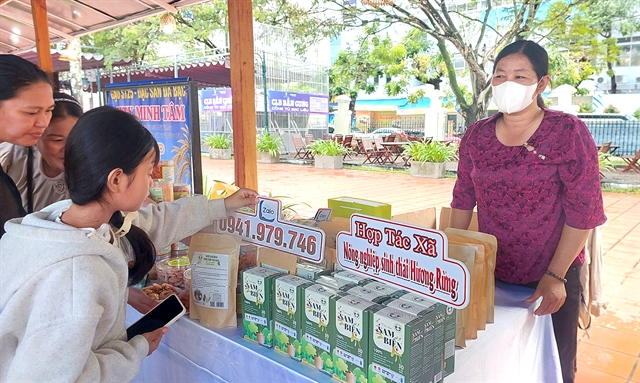
| Visitors learn about sea purslane tea, an OCOP product made by the Hương Rừng Ecological Agriculture Co-operative in Vĩnh Hậu Commune, at an OCOP fair in Bạc Liêu Ward, Cà Mau Province, on July 25. — VNA/VNS Photo |
CÀ MAU — Cà Mau Province is helping small and medium-sized enterprises (SMEs) and co-operatives adopt digital technologies, viewing them as a driver of economic development and a key part of its goal of achieving double-digit economic growth annually between 2026–30.
The efforts are part of the implementation of the Politburo’s Resolution No. 57, issued in December 2024, on breakthroughs in science, technology, innovation and national digital transformation.
The southernmost province is implementing a range of policies to support SMEs’ digital transformation through the Science, Technology and Innovation Development Fund, according to its Department of Science and Technology.
It has more than 10,000 enterprises, more than 90 per cent of them SMEs.
This year, it launched a digital transformation project for SMEs.
Under the project, the province aims to help at least 800 businesses assess their digital readiness, receive consultancy and training, and adopt digital solutions.
Võ Kiên Giang, chairman of the Cà Mau Business Association, said helping SMEs embrace digital transformation would enable them to apply digital technologies in production and business operations while gradually changing their mindset to meet evolving development needs.
The association would continue working with provincial departments, agencies and local authorities to provide training, research consultancy, technology links and data sharing while helping build a digital business community, he said.
It would also propose practical, scalable initiatives to promote effective digital transformation among SMEs, he added.
The province aims to support at least 5,000 SMEs in digital transformation by 2030, according to Nguyễn Minh Luân, Deputy Chairman of the Cà Mau People's Committee.
At least 3,000 of them will receive support to adopt digital technology products, digital platforms and artificial intelligence.
Priority will be given to digital management systems, e-invoicing, e-commerce and cybersecurity.

|
| Nông Văn Thạch, chairman of the Ba Đình Co-operative in Vĩnh Lộc Commune, introduces his co-operative's BL9 rice during a livestream at an OCOP fair in Bạc Liêu Ward on July 25. The rice, grown under the shrimp-rice farming model, is an OCOP product that won first prize at the 2026 Mekong Delta Delicious Rice Competition. — VNA/VNS Photo Tuấn Kiệt |
Digital benefits
Companies and co-operatives that have adopted digital technology have already seen tangible benefits.
Hương Bảo Châu Co., Ltd. in U Minh Commune, for instance, produces and processes more than 10 local agricultural products, including crab floss, shrimp floss and crab salt.
Since its establishment, it has used digital platforms and social media to promote and sell its products online.
Nguyễn Thị Lan Hương, its director, said relying solely on traditional methods would have taken four to five years to establish the company's brand.
"By applying digital technology and promoting products on social media platforms, our products became known nationwide in just over two years," she said.
The Minh Duy Co-operative in Hưng Mỹ Commune cultivates more than 22 hectares of cattail, known locally as bồn bồn, and processes a range of products from the plant.
Its revenue has increased significantly after nearly a year of selling products through digital platforms and social media.
Phạm Thị Dung, its director, said the co-operative's products were now promoted and sold on multiple digital platforms, increasing monthly sales by about 25–30 per cent.
It had also received free livestream support from Cà Mau Newspaper and Radio-Television.
"Support for digital transformation has brought many advantages in promoting our products. It provides an opportunity for SMEs and co-operatives to make breakthroughs in production and business," she said.
|
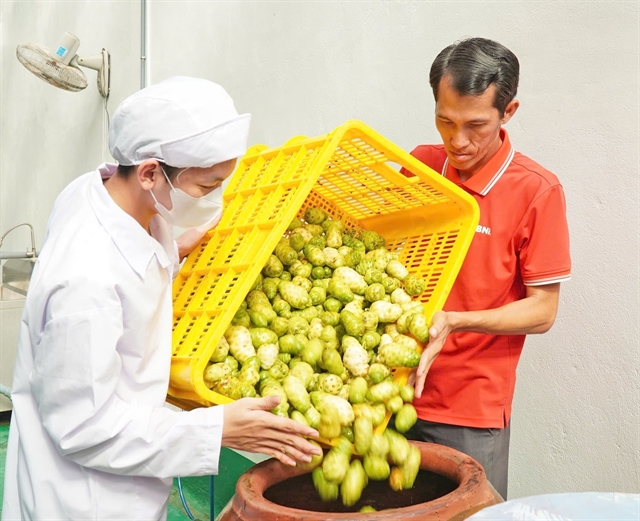
| Khưu Văn Chương (right) in Trần Văn Thời Commune has developed an organic noni growing area, built a four-star OCOP brand for concentrated noni juice and expanded the distribution network nationwide. — VNA/VNS Photo |
Cà Mau is also promoting digital transformation to develop products under the country's "One Commune – One Product" (OCOP) programme, seeing it as an important way to increase the value of agricultural products and expand markets.
After nearly seven years of implementing the programme, the province has recognised 330 OCOP products, including two five-star, 74 four-star and 254 three-star products.
Many producers have invested in deep processing, brand development and the effective use of e-commerce platforms.
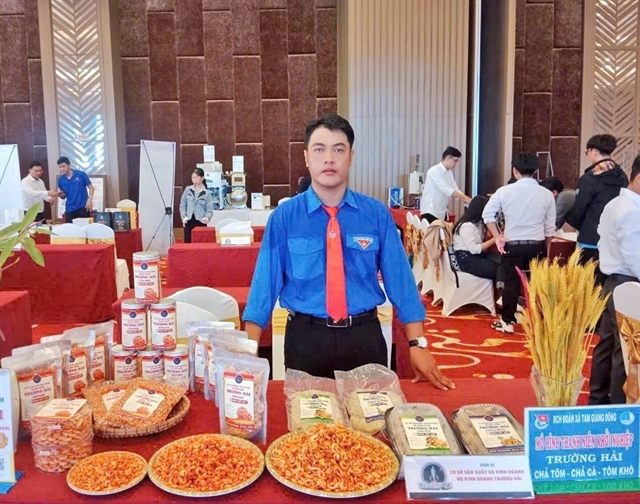
Nguyễn Trường Hải, in Tam Giang Commune, has invested in machinery to produce products from ecological shrimp.
His three-star OCOP dried shrimp products generate annual revenue of about VNĐ10 billion (US$380,000) and create jobs for dozens of local workers.
|
| Nguyễn Trường Hải's three-star OCOP dried shrimp products from Tam Giang Commune highlight the quality of Cà Mau's eco-farmed shrimp. — VNA/VNS Photo |
To help OCOP producers broaden their markets, the provincial Co-operative Alliance and Cà Mau Newspaper and Radio-Television launched a product showroom earlier this year and regularly organise professional livestream sales sessions.
Nguyễn Văn Vũ, chairman of the Cà Mau Co-operative Alliance, said: "Through digital platforms, OCOP products can reach consumers more quickly, more widely and more effectively.
"This is an important channel for co-operatives to expand markets, increase product value and improve competitiveness."
Cà Mau aims to increase the number of OCOP products to 460 in 2026, including at least 70 new three- and four-star products and 18 upgraded to four- and five-star status.
The province also plans to expand the role of co-operatives and SMEs in the programme, increase distribution through modern retail channels and develop more model product showrooms.
Lê Văn Sử, Deputy Chairman of the Cà Mau People's Committee, said the province would continue shifting from an agricultural production mindset to a multi-value agricultural economy.
It would also link OCOP products with local culture, eco-tourism and the province's distinctive strengths, particularly the U Minh Hạ Forest, he said. — VNS
Society
 Society
 Society
 Society
 Society
 Society
 Society
 Society
 Society
 Society
 Society
 Society
 Society
 Society
 Society