 Society

Two Australian entertainment names revealed behind the scenes of Symphony of the Sea Season 3 in Phú Quốc
1.
|
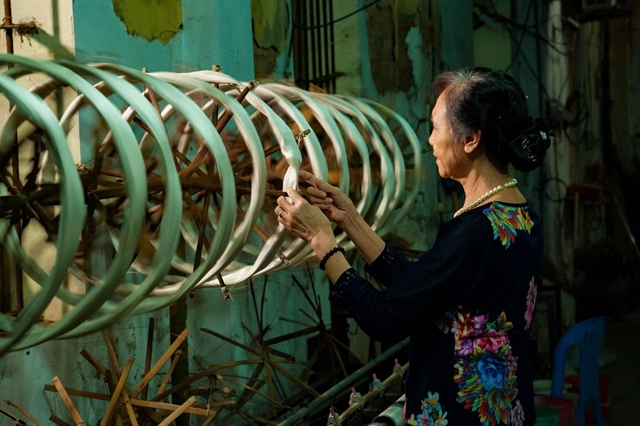
| An artisan in Vạn Phúc silk village. — VNA/VNS Photos |
HÀ NỘI — The surge in e‑commerce and digital technology is giving traditional craft villages a chance to leap from local markets to the world stage, but success will require strategy, a mindset shift among artisans and stronger support from the tech ecosystem.
Việt Nam’s e‑commerce sector has expanded rapidly, with the Ministry of Industry and Trade’s e‑commerce department reporting average annual growth of about 25 per cent. By 2025 online retail is expected to reach about US$31 billion, roughly 11 per cent of total retail sales, with some 60 per cent of the population shopping online.
That expansion offers a major boost for handcrafted goods, which are prized for cultural value and environmental friendliness.
Hoàng Thị Phương, a representative of the Vạn Phúc silk village craft association in Hà Đông, Hà Nội, said that the core value of village products was found in the cultural stories behind each item, and that placing them on e‑commerce platforms was not merely about selling but a means of building brand identity and preserving tradition for modern consumers.
Vạn Phúc silk benefits from growing consumer demand for handcrafted goods with transparent origins and distinct national character.
Bát Tràng pottery village has also moved quickly online.
According to Đặng Đình Túc, a representative of Giang Cao‑Bát Tràng pottery, about 60 per cent of local makers use social media to sell and some 20 per cent are on major marketplaces such as Shopee, Tiki and even Amazon. Some have staged cross‑border livestreams to reach international buyers.
Challenges remain
Despite the potential, experts and representatives of craft villages say major obstacles stand in the way.
Phương said that cheap industrial imitations from neighbouring countries posed strong competition and that without strong branding and digital protection, village products could be outcompeted even at home.
Digital skills are a bottleneck for small producers. Professional product photography, data optimisation, online order management and livestreaming require specialised staff, which many villages lack. Túc said internal coordination was weak and internet infrastructure uneven, hampering the creation of online value chains.
Logistics is another major constraint. Handicrafts are often bulky and fragile, raising shipping costs and reducing price competitiveness on international platforms, according to Phạm Như Thanh, vice‑director of the Institute for Applied Research on Craft Village Products.
“Without a coordinated support ecosystem, craft villages will remain at the pilot stage rather than achieving a true breakthrough,” he said.

|
| Products of Bát Tràng pottery village. |
Experts call for a more systematic approach rather than 'do first, think later'.
Phương proposed a unified digital brand for craft villages, QR codes for traceability and a 'digital craft village space' integrating virtual shops, tourism maps and production videos.
Long‑term development should link craft villages to the green and creative economies and digital transformation, they say. That requires coordination among 'four houses': the state, scientists, businesses and farmers/artisans to channel investment effectively and translate policy into practice.
Former agriculture minister Lê Minh Hoan has said modern consumers buy not only a product but the production method and the cultural story behind it.
Experts say green, responsible agriculture must become the norm for Vietnamese products to hold their place internationally and adapt to climate change.
Technology is central to that shift. Digital transformation, artificial intelligence and smart farming can improve traceability, cut costs and reduce greenhouse gas emissions as Việt Nam moves toward net zero by 2050. A circular economy that uses agricultural by‑products could reduce pollution and create new value chains.
But the transition depends on farmers and artisans. Training is needed to make them professional operators who understand production management, science and market demands.
New‑model businesses and cooperatives will be crucial in linking production to consumption, particularly through e‑commerce platforms that can take Vietnamese agricultural and craft products to further markets. — VNS
Society
 Society
 Society
 Society
 Society
 Society
 Society
 Society
 Society
 Society
 Society
 Society
 Society
 Society
 Society