 Society
HCM City honours fallen soldiers with solemn musical tribute
1.
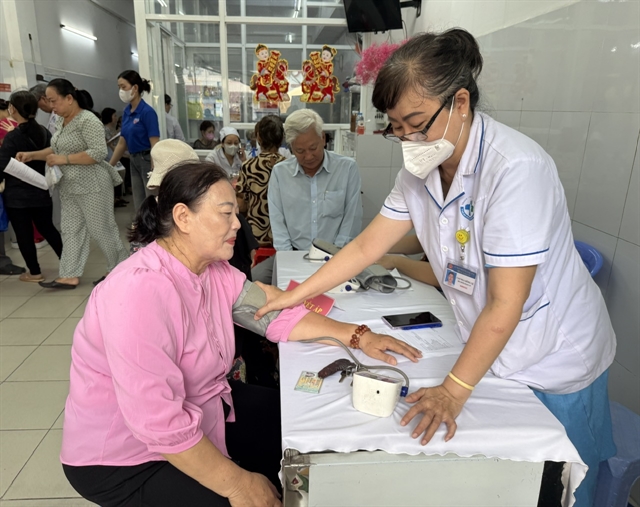 |
| Residents in HCM City receive a health check-up at the Bình Tây Ward Health Station on April 17. — VNS Photo Thu Hằng |
HCM CITY — The HCM City Department of Health on Thursday launched a 150-day campaign to accelerate the city’s universal health check-up programme.
The campaign has mobilised the entire healthcare network -comprising public and private hospitals, ministerial-level medical facilities, regional health centres, general and specialised clinics, and commune-level health stations across the city – to provide comprehensive health check-ups for all local citizens.
This marks the first time the city has mobilised both its public and private healthcare systems to participate in a large-scale preventive health programme, ensuring that all 168 wards, communes, and special zones have professional support.
The city will also step up the deployment of mobile medical teams to communities, schools, and businesses as well as organise home-based check-ups for the elderly, people with disabilities, those in difficult circumstances, or individuals with limited mobility.
Speaking at the launching event, Assoc. Prof. Dr. Tăng Chí Thượng, director of the department, said that the programme aims to ensure all city residents undergo health screenings this year and have electronic health records created.
This is a major step to shift the city’s healthcare system from a treatment-focused mindset to proactive healthcare, with preventive medicine as the foundation, data as a management tool, and the public at the centre of all healthcare activities, Thượng said.
After nearly two months of implementation, the programme provided health check-ups and created electronic health records to more than 550,000 residents across the city, he said.
“Free check-ups must be provided regardless of administrative boundaries, creating the most favourable conditions for residents to access to the programme,” he said.
“Health screening data must be updated fully, accurately, and promptly on the community health platform to help build electronic health records and ensure continuous health management for citizens,” he added.
At the event, ministry-level hospitals, along with regional general hospitals, medical centres, and private hospitals across the city, signed agreements with local wards, communes, and special zones to participate in the 150-day campaign starting on July 16.
Local authorities are responsible for compiling lists of residents, conducting public communication campaigns, and arranging venues for the screenings.
Meanwhile, hospitals will dispatch doctors, nurses, and technicians to join mobile teams, provide professional support, handle transfers to higher-level facilities when necessary, and manage patients with chronic diseases post-screening.
With a population of more than 14 million, the city will continue to mobilise all resources to accelerate the universal health screening programme to achieve its target of 100 per cent of its population undergoing health screenings this year. —VNS
Society
 Society
 Society
 Society
 Society
 Society
 Society
 Society
 Society
 Society
 Society
 Society
 Society
 Society
 Society




