 Society
Prenuptial agreements in Việt Nam: what couples need to know
1.
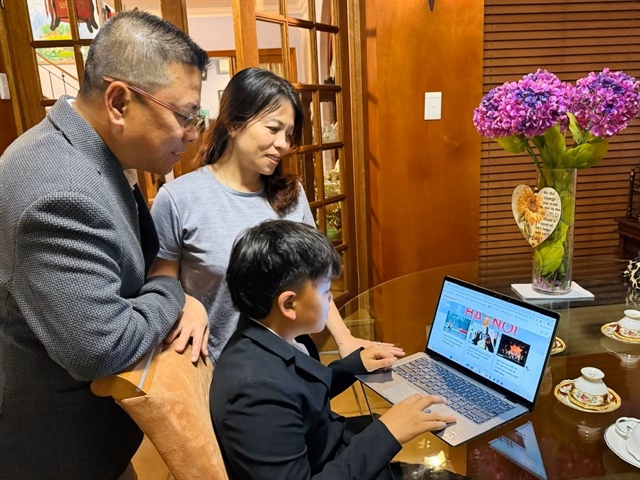 |
| Vietnamese language and homeland history lessons are skilfully imparted by Lê Hoài Nam (left) to his son Tony through online platforms, guided by the belief that ‘keeping the soul of the homeland alive must begin within each household.’ — VNA/VNS Photo Đặng Huyền |
HÀ NỘI — For Vietnamese people living abroad, keeping their language and culture alive begins at home.
That is the belief of Lê Hoài Nam, head of the Vietnamese Community Liaison Committee in South Africa.
For Vietnamese families in South Africa, language is the biggest barrier to passing on their culture, Nam said.
Children born and raised there mainly use English at school and with friends, while opportunities to speak Vietnamese are largely limited to the home.
That makes parents’ efforts all the more important.
“Our children may be born, grow up and study in South Africa, but what matters is that they understand they have Vietnamese roots. If parents do not make an effort to speak Vietnamese with them or help them learn about Việt Nam, it will be very difficult for them to develop a connection with their heritage as they grow up,” Nam said.
Drawing on his experience of teaching Vietnamese to his son Tony, Nam believes children learn best when they are encouraged rather than forced.
Instead of making Vietnamese feel like another school subject, his family made it part of Tony’s daily life through everyday conversations, stories about his grandparents and regular video calls to Việt Nam. These help him become more comfortable using the language.
“Whenever he manages to say a sentence in Vietnamese or learns something new about the culture, we always recognise his efforts and encourage him. When he joins community activities and meets other Vietnamese-speaking adults and children, he begins to understand that Vietnamese connects him not only to his family, but also to a much wider community,” Nam said.
Success does not necessarily mean children speaking Vietnamese as fluently as their peers in Việt Nam. What matters is that they remain connected to the language, understand their roots and feel proud to be Vietnamese.
Preserving cultural values
For Nam, passing on Vietnamese culture means more than teaching the language or introducing children to traditional clothes and food.
“These things certainly matter, but Vietnamese culture is also reflected in how we treat one another: the love we share within our families, respect and care for our parents and grandparents, and, above all, compassion and a willingness to help others,” he said.
“These shared values help Vietnamese people feel connected to one another, wherever they live in the world.”
In his years of community work, Nam has seen that solidarity in action when members help newcomers settle in or support families through difficult times.
Gathering for festivals and Tết, as well as helping one another through hardship, gives children born abroad a chance to experience that sense of community for themselves.
He also stressed that preserving Vietnamese identity should go hand in hand with integration.
“Preserving our identity does not mean closing ourselves off. We can participate fully in South African society and respect its laws while maintaining a strong sense of who we are as Vietnamese people.”
South Africa’s Vietnamese community is small and widely dispersed, with some members living hundreds or even thousands of kilometres apart.
Keeping people connected is therefore a constant challenge for the Liaison Committee.
Nam believes the community should find more opportunities to come together throughout the year, rather than waiting for major festivals or Tết. Combining gatherings with online activities would allow members to stay in touch, share information and help one another with legal matters and everyday difficulties.
Support from the Vietnamese Embassy and other Vietnamese representative offices is also important.
“We very much hope that agencies back home will offer more practical support, such as Vietnamese-language teaching materials designed for children born abroad or exchange programmes for young people,” Nam said.
“Here in South Africa, annual cultural events such as the Mid-Autumn Festival and the ‘Spring of the Homeland’ programme are especially important. Bringing these celebrations to communities from Pretoria to Cape Town helps people feel connected to their roots and gives them a sense of belonging.”
For Nam, a strong community depends on mutual respect, a willingness to listen and shared responsibility. Everyone, from successful entrepreneurs and experienced intellectuals to other community members, should feel valued and have a say. Only then can the community grow stronger, with more people contributing rather than leaving the work to a few dedicated individuals.
Intellectual capital
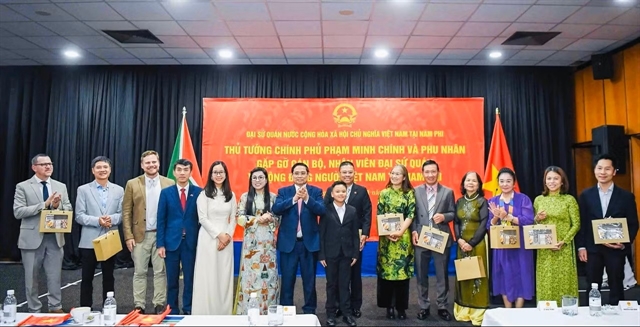 |
| Former Prime Minister Phạm Minh Chính (centre) and his wife at a gathering with the Vietnamese community in South Africa. — VNA/VNS Photo |
Nam sees the upcoming event marking Great National Unity Day on November 18 and Việt Nam Cultural Day on November 24 as an opportunity to bring people together.
He hopes its impact will last beyond a week of activities. To achieve that, young people should help shape and organise the programme themselves, whether by making videos about Việt Nam or inviting their South African friends to enjoy Vietnamese food, music and folk games.
Nam also believes greater recognition should be given to what overseas Vietnamese can contribute to the country’s development, from professional knowledge and management experience to scientific and technological expertise and international networks.
Vietnamese people who live and work responsibly in South Africa also help others gain a better understanding of Việt Nam.
To make better use of these skills and connections, agencies in Việt Nam need to create practical opportunities for overseas Vietnamese to contribute.
Understanding what both sides need is essential to turning ideas into concrete projects in education, trade and technology transfer.
Reflecting on his efforts to keep Vietnamese language and culture alive far from home, Nam said overseas Vietnamese remain deeply attached to their homeland, however far away they live.
He believes Vietnamese culture can continue to thrive in South Africa if families do their part to pass it on and agencies in Việt Nam provide practical support. For younger generations, that means being able to embrace life in South Africa while staying connected to their Vietnamese roots. — VNS
Society
 Society
 Society
 Society
 Society
 Society
 Society
 Society
 Society
 Society
 Society
 Society
 Society
 Society
 Society