 Society
President Hồ Chí Minh Mausoleum reopens after restoration
1.
|
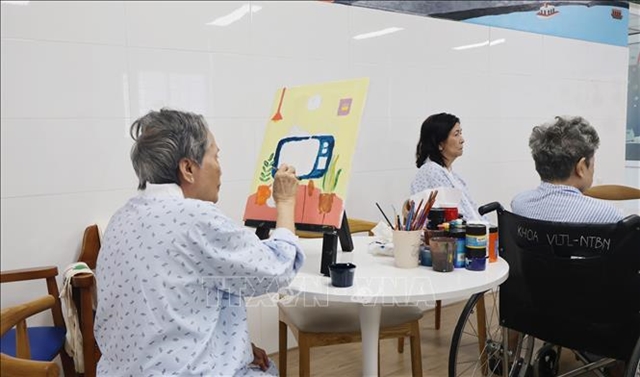
| Senior citizens participate in relaxation activities at the HCM City Hospital for Rehabilitation and Occupational Diseases. —VNA/VNS Photo |
HCM CITY — HCM City is expected to become an aged society by around 2038, posing diverse challenges to the city’s socio-economic development and healthcare systems, according to the city Department of Health.
The city became an ageing society in 2017.
It is home to around 1.57 million people aged 60 and above, accounting for nearly 11 per cent of its population.
The demand for elderly care will continue to rise while the capacity of the family-based care model is coming under increasing strain, said Huỳnh Minh Chín, deputy director of the department.
Older adults often live with multiple chronic illnesses, placing them at risk of functional decline, malnutrition, dementia, depression, and a loss of self-care capacity.
Management of these complex conditions requires continuous, interdisciplinary care and tight linkages among hospitals, primary health stations, families, and social assistance centres.
The city has piloted various elderly healthcare models for the elderly since 2025.
The daytime care service for older adults at the Hospital for Rehabilitation and Occupational Diseases is one of the pilot models.
Assoc. Prof. Dr Phan Minh Hoàng, the hospital's director, said that after one year of operation, the facility provides daytime care for 40 senior citizens.
In the morning, seniors receive health checks and do light exercise and then they have lunch and rest at noon. In the afternoon, they participate in activities tailored to their physical condition such as coloring, knitting, gardening, or playing games before returning home.
83-year-old Nguyễn Thị Ái Vân residing in the city’s Khánh Hội Ward has attended the daytime care programme for over six months.
She takes a bus to the hospital every morning, where nurses check her health and she interacts with peers.
When she felt unwell, doctors provided examinations, adjusted prescriptions, and tailored dietary meals for her.
She said that the service brings her joy.
Many daytime care centres for the elderly have been established across various wards and communes.
Although it has been in operation for just two months, the Daytime Care Centre for the Elderly in Bình Tân Ward has become a familiar destination for many seniors.
Early in the morning, elderly men and women gather at the centre to have their health checked by medical staff from the ward health station, followed by group activities such as gentle exercise, playing chess, or singing and socialising.
Vũ Hồng Ninh, chairman of the Bình Tân Ward Elderly Association, noted that the model provides a community-based space where seniors maintain active daily habits.
Ward leaders are currently developing a herbal garden where seniors can actively plant and cultivate traditional medicinal herbs.
The deputy director of the department emphasised that population aging is an inevitable trend requiring proactive strategies to mitigate impact on public health, social security, and economic growth.
The Department of Health is coordinating with municipal departments, healthcare facilities, educational institutions, and businesses to foster a professional and accessible senior healthcare ecosystem.
In the coming period, the city will develop a seamless five-tier care network for the elderly spanning from home care to specialised hospital care.
At the first tier, elderly individuals are encouraged to proactively maintain a healthy lifestyle, undergo regular health check-ups, manage risk factors, and utilise electronic health records at home.
At the second tier, the role of local health stations, daytime care centres, specialised elderly care facilities, and senior clubs is leveraged to provide activities focusing on health monitoring, counseling, rehabilitation, and assisting the elderly in maintaining an independent life.
The third tier involves integrated care teams, comprising staff from local health stations, family physicians, nurses, and caregivers who provide support at home.
The fourth tier consists of residential care, with the development of diverse models encouraged, including nursing homes, skilled nursing facilities, rehabilitation centres, specialised care for those with dementia, and palliative care.
The final tier comprises specialised hospitals, which handle complex medical cases, provide professional expertise across the entire system, and ensure safe post-discharge referrals. —VNS
Society
 Society
 Society
 Society
 Society
 Society
 Society
 Society
 Society
 Society
 Society
 Society
 Society
 Society