 Society
Đồng Tháp promotes OCOP products to boost rural economy
1.
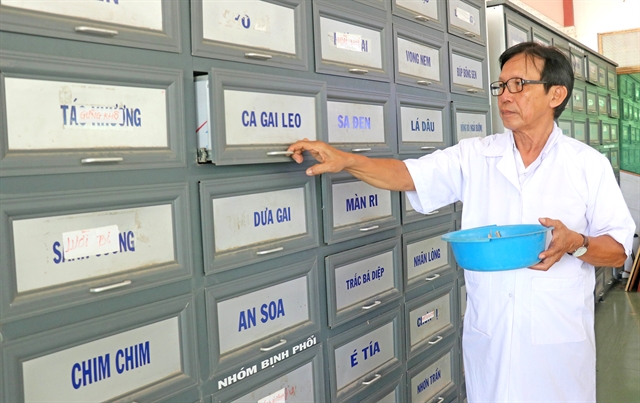 |
| Herbal medicines are used to treat patients at the Chợ Vàm Charitable Traditional Medicine Clinic in Chợ Vàm Commune, An Giang Province. Traditional medicine provides wellness products and services for tourists. — VNA/VNS Photo Công Mạo |
HÀ NỘI — Việt Nam possesses abundant medicinal plant resources and a traditional medicine heritage rich in knowledge and experience accumulated over generations.
This is an advantage for developing traditional medicine and the medicinal plant industry, while also providing a foundation for creating health and wellness products and services for tourists.
To harness this potential effectively, it is necessary to conserve genetic resources, standardise cultivation areas, improve the quality of medicinal materials and intensify scientific research, linking product development with the preservation of traditional cultural values.
Leveraging traditional medicine
Việt Nam currently has more than 5,117 species of medicinal plants and fungi, 408 animal species, 52 species of marine algae and 75 types of minerals used as medicines.
These are valuable resources of great significance for the development of traditional medicine, the pharmaceutical industry and the bioeconomy.
According to Associate Professor Dr Nguyễn Tuấn Hưng, director of the Việt Nam Institute of Traditional Medicine, abundant medicinal plant resources are the foundation for leveraging the strengths of traditional medicine while also expanding the potential to develop high-value herbal products.
Despite its resource advantages, Việt Nam’s medicinal plant sector still faces numerous limitations.
Many experts believe that medicinal plant development must shift from spontaneous, fragmented exploitation to standardised production, the application of advanced technology and value-chain-based linkages.
At present, overexploitation and inadequate control are depleting many valuable medicinal plant genetic resources. In some areas, wild harvesting remains destructive and is not linked to the protection and regeneration of natural resources.
The number of concentrated medicinal plant cultivation areas meeting GACP-WHO (Good Agricultural and Collection Practices -World Health Organisation) standards remains limited, and cooperation between the State, scientists, businesses and local people has not delivered the expected results.
In reality, domestic medicinal plant supply currently meets only about 25–30 per cent of demand.
Many medicinal materials are mainly exported in raw or minimally processed forms, resulting in low added value, whereas the value of medicinal plants lies not only in raw material extraction but also in variety selection and breeding, the development of standardised cultivation areas, research into active compounds, deep processing and the development of branded products.
This situation calls for improvements to mechanisms and policies; the establishment of national standards for medicinal materials and traditional medicine ingredients; planning for concentrated cultivation areas; and stronger quality and traceability controls over raw materials.
Today, demand for herbal medicines, health supplements and natural-origin cosmetics is rising, and green, natural consumption trends are opening up opportunities for the medicinal plant industry.
To meet requirements for product quality and consistency, science and technology must be placed at the centre of the development process.
Science is regarded as the key to enhancing the value of medicinal plants, contributing to genetic resource conservation, preserving standard varieties, breeding varieties with high active-compound content and adapting to climate change.
This should go hand in hand with planning cultivation areas based on local advantages and strengthening links between businesses and medicinal plant growers.
Businesses need to participate in connecting production with consumption, providing training and transferring techniques for cultivation, harvesting, preliminary processing and processing, thereby helping to establish a stable raw-material supply chain that meets quality requirements.
New development space
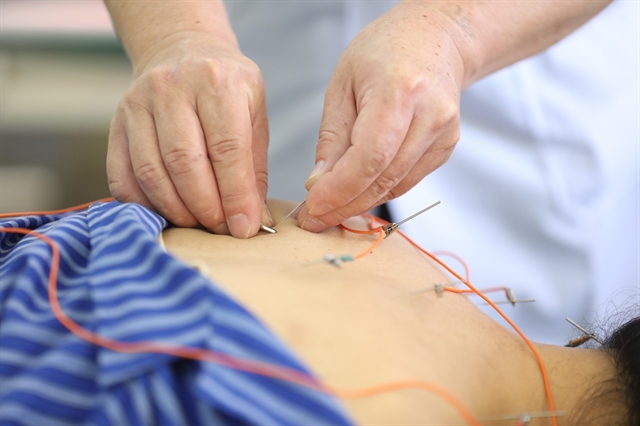 |
| A patient receives electroacupuncture treatment at the Lạng Sơn Provincial Traditional Medicine Hospital. Traditional medicine has potential to develop health care. — VNA/VNS Photo Anh Tuấn |
The development of traditional medicine is placed within the overall policy of protecting, caring for and improving people’s health. Politburo Resolution No. 72-NQ/TW sets out the requirement to promote the role of traditional medicine and integrate it with modern medicine in training, disease prevention, examination and treatment.
The Prime Minister on July 9 this year issued Decision No. 1250/QD-TTg, approving the plan for developing Việt Nam’s traditional medicine sector.
Subsequently, the PM on October 13 this year issued Decision No. 1976/QĐ-TTg approving the National Strategy for the Development of Việt Nam’s Traditional Medicine to 2030, with a Vision to 2045. The strategy identifies traditional medicine development as a strategic, regular and long-term task, linking health protection and care with the promotion of national cultural values, economic development and international integration.
Permanent Deputy Minister of Health Vũ Mạnh Hà emphasised that these directions would require traditional medicine to be developed in a scientific, modern and internationally integrated manner; to combine traditional medicine with modern medicine; and to promote the application of science and technology, digital transformation and the development of the medicinal plant industry.
According to Professor Dr Trịnh Thị Diệu Thường, director of the Traditional Medicine Administration under the Ministry of Health, a prominent principle of the National Strategy for the Development of Việt Nam’s Traditional Medicine to 2030, with a Vision to 2045, is to “shift from a mindset of using traditional medicine to treat illness to providing comprehensive healthcare.”
The strategy aims to develop traditional medicine in a comprehensive, modern, scientific and internationally integrated way; to make the sector an important part of the national health system; and to harmonise it with modern medicine in lifelong healthcare.
Notably, the strategy sets a target of building national brands for 30 medicinal plant products, traditional medicines and herbal medicines and establishing five lines of traditional medicine-based health and wellness products and services for tourists, linked to the preservation and promotion of traditional cultural values.
This is directly relevant to the direction of developing health and wellness products based on indigenous resources and traditional medical knowledge.
To achieve these goals, the strategy prioritises research to demonstrate the safety and efficacy of traditional medicines and non-pharmaceutical treatments; the application of biotechnology, genetic technology and nanotechnology; and the development of clinical trials, a national database, artificial intelligence and big data.
The conservation, collection and digitisation of traditional medical knowledge are also required, with the target of digitising at least 70 per cent of the knowledge that has been surveyed, collected and verified by 2030.
The development of traditional medicine-based health and wellness products and services for tourists must therefore be linked to requirements concerning quality, safety, scientific evidence and the preservation of traditional knowledge.
Alongside developing standardised medicinal plant cultivation areas, research and deep processing, building brands for products derived from Vietnamese medicinal plants will help raise the value of indigenous resources.
With clear policy direction and abundant medicinal plant resources, traditional medicine has the opportunity to contribute to the development of health and wellness products and services for tourists.
To realise this goal, it is necessary to implement in a coordinated manner tasks including conserving genetic resources, standardising raw materials, conducting scientific research, developing the medicinal plant industry and preserving traditional cultural values. — VNS
Society
 Society
 Society
 Society
 Society
 Society
 Society
 Society
 Society
 Society
 Society
 Society
 Society
 Society