 Society
25-year-old hamlet head sets example for youthful leadership
1.
|
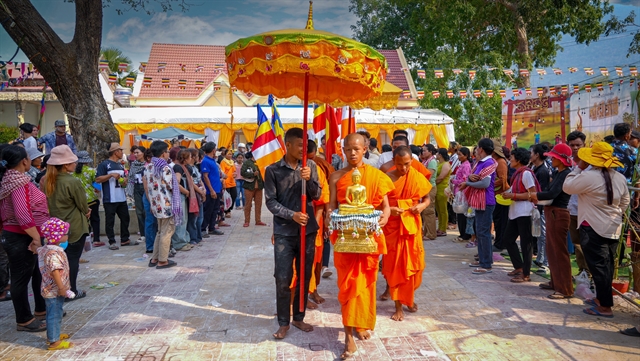
| Khmer people perform traditional rituals, preserving cultural and religious values within ethnic minority communities in Tây Ninh Province. — VNA/VNS Photo |
TÂY NINH — Ethnic minority communities in Tây Ninh Province are experiencing improvements in their living conditions as the southern province expands livelihood support, strengthens social welfare and improves infrastructure in border areas, while protecting religious freedom and cultural identity.
The province is implementing policies to promote economic development and equal rights among its 17 ethnic minority groups, many of which live in communes bordering Cambodia.
The efforts aim to improve livelihoods, strengthen community ties and contribute to a peaceful and stable border region.
According to the Tây Ninh Department of Ethnic and Religious Affairs, the province has 35,589 ethnic minority people living in 13,594 households, accounting for about 1.12 per cent of its population.
The largest ethnic communities are the Khmer, with 20,024 people, the Chăm, with 6,683, and the Hoa, with 2,572, while other ethnic groups have a combined population of 1,634.
They live alongside the Kinh majority in various areas, particularly border communes.
Trương Thị Phương Thảo, director of the department, said each ethnic community has its own cultural values, customs, traditions and beliefs, contributing to the diversity of local social and cultural life.
Promoting this diversity is not only a matter of preserving heritage but is also directly linked to ensuring equality, strengthening ties between communities and maintaining political and social stability, particularly in border areas, she said.
From 2024 to 2026, the department has co-ordinated more than 50 training courses on human rights and the prevention of racial discrimination for over 3,500 officials and ethnic minority people, promoting equality and legal awareness.
|
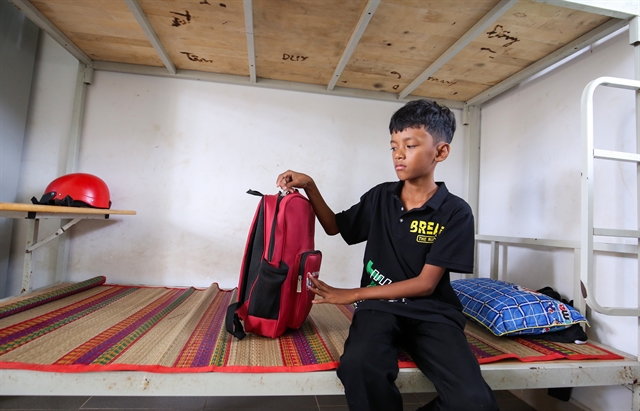
| Náp Nam, a sixth-grade Khmer student, studies and stays at Tây Ninh Province’s Ethnic Minority Boarding. — VNA/VNS Photo |
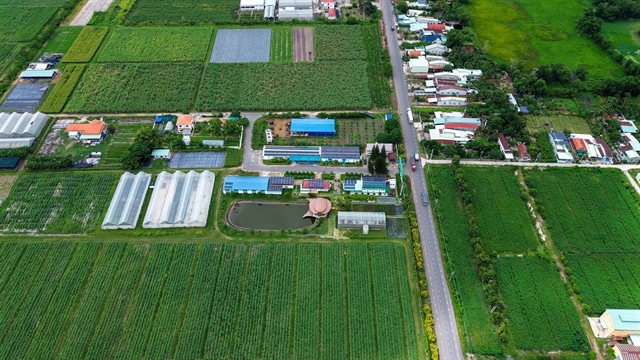
The province has also implemented support policies covering housing, domestic water, loans, vocational training, education, healthcare and livelihood development.
All residents have access to electricity and hygienic water, while over 80 per cent manage waste through collection services or self-disposal.
Poor ethnic minority households fell from 50 in 2023 to 13 by the end of 2025.
By 2030, the province aims to reduce the figure to below 10, bring all relevant communes up to new-style rural area standards, and ensure 50 per cent of working-age ethnic minority people receive vocational training and earn stable incomes.
Nguyễn Đài Thy, standing deputy chairwoman of the Tây Ninh People’s Committee, said the province continues to uphold the principle that “all ethnic groups are equal, united, respect one another and help one another develop”.
She said the province prioritises preserving the Cửu Long (Mekong) Delta and southeastern regions’ cultural and ecological values to diversify tourism, boost socio-economic development and protect ethnic identities.
It also aims to expand digital access and promote livelihoods suited to border areas, climate adaptation, green growth and a circular economy.
|
| Rural areas in Tây Ninh Province are undergoing changes as infrastructure investment improves, helping to raise residents’ quality of life. — VNA/VNS Photo |
Secure livelihoods
Huỳnh Bích, a respected Khmer community member in Hoà Đông A Hamlet, Phước Vinh Commune, owns over one hectare of mature rubber trees.
Farm income has enabled him and his wife to build a solid house and secure a better life.
He said roads and schools have improved significantly in recent years, making travel and business easier.
“People's lives have clearly improved,” he said.
Investment in local schools and Khmer-language education has also helped preserve the language alongside Vietnamese.
“Buddhist monks at Chung Rút Pagoda provide free summer Khmer classes for children,” he said.
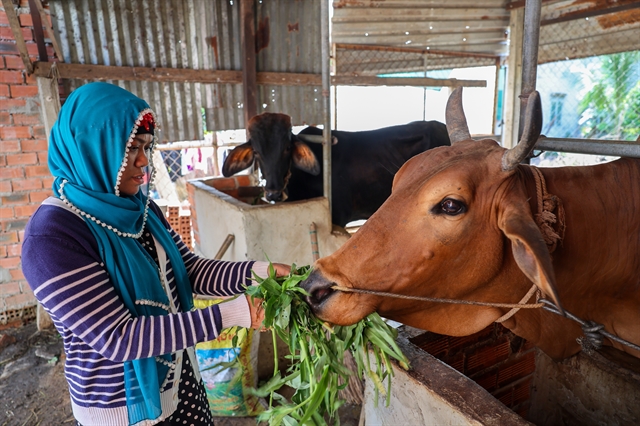
Chăm Muslim residents in Chăm Hamlet of Tân Thành Commune have benefited from better roads, electricity, clean water, loans and support for crop and livestock changes and business development.
|
| Chăm communities in several parts of Tây Ninh Province are developing suitable economic models to gradually increase incomes and improve their livelihoods. — VNA/VNS Photo |
Thị A Mi Na, a respected Chăm community member, said residents are increasingly proactive in increasing household incomes, supporting new-style rural area development and maintaining local security.
Authorities have also supported the observance of Ramadan and celebrations of Roya Haji, while children can learn and preserve their traditional language and script, she said.
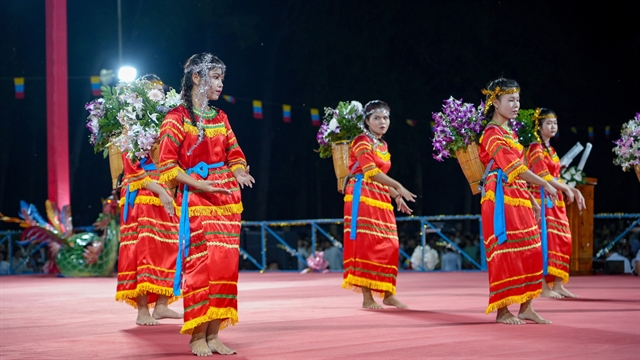
In Bình Minh Ward, the Tà Mun community illustrates how cultural traditions endure alongside economic development.
Residents recently celebrated Saunko Khamun, their biggest annual festival, honouring ancestors and deities and praying for health, peace and prosperity.
Lâm Sà Hương, a respected member of the Tà Mun community in Thạnh Hiệp residential quarter, said: “This year, the community is holding larger celebrations than it did last year because the economy has developed and many households have escaped poverty.”
|
| Traditional Tà Mun folk dances are performed at cultural exchange activities among ethnic communities in Tây Ninh Province. — VNA/VNS Photo Minh Phú |
In Ninh Điền Commune, which shares an 18.9km border with Cambodia, ethnic minority and religious affairs are central to grassroots governance, socio-economic development and border security.
Danh Xà Rương, a respected Khmer community member in Thành Long Hamlet, said new streetlights have made travelling at night safer for older residents and schoolchildren.
Trần Thế Hiệp, deputy chairman of the Ninh Điền People’s Committee, said the commune has implemented ethnic minority policies since 2024, supporting production, crop and livestock conversion, vocational training, education, healthcare and infrastructure improvements.
The commune had no poor households last year.
Since 2024, it has allocated one hectare of production land to each of 95 households, provided 60 breeding cows to 30 ethnic minority households and built 15 “Đại đoàn kết” (Great Solidarity) houses for disadvantaged families.
Hiệp said support now focuses on promoting sustainable livelihoods through production guidance and vocational training for young people.
These efforts aim to stabilise incomes, reduce the need to work far from home and limit exposure to social problems, he added. — VNS
Society
 Society
 Society
 Society
 Society
 Society
 Society
 Society
 Society
 Society
 Society
 Society
 Society
 Society