 Society

Ascott Presents Its Fifth Edition of The Famous CFC in Kuala Lumpur, Drawing Fans from Across Southeast Asia
1.
|
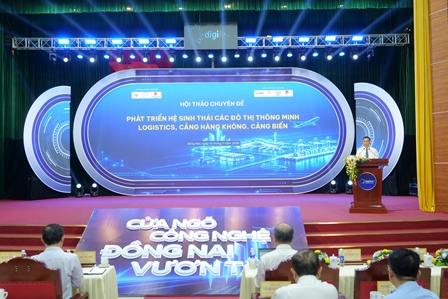
| The 'Developing an Ecosystem of Smart Logistics Cities, Airports and Seaports' seminar allowed experts to share opinions about a smart economic ecosystem. Photos courtesy of organisers |
ĐỒNG NAI — Experts discussed building a smart economic ecosystem capable of leveraging data, technology and investment resources at a seminar on November 1 in Đồng Nai City.
Entitled Developing an Ecosystem of Smart Logistics Cities, Airports and Seaports, the seminar was held as infrastructure connectivity and supply chains become increasingly important to Đồng Nai's competitiveness as a national hub for industry and logistics centres.
Speaking at the event, deputy director of Đồng Nai's Department of Construction Dương Văn Hiếu said: "Going beyond the application of digital technology to transport or warehousing operations, the event is about a matter of strategic significance, with implications for the spatial organisation of development, infrastructure investment, and the enhancement of Đồng Nai’s competitiveness in the near future."
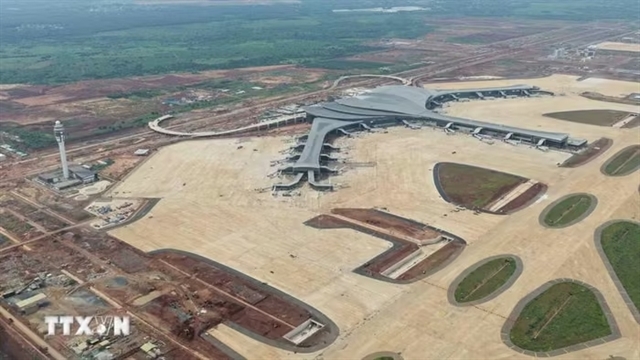
He said Đồng Nai is on the brink of a huge opportunity to develop as the home of the new Long Thành International Airport, which is expected to begin commercial operations in late December. It is also home to a seaport system, industrial zones, an inter-regional transport network and logistics service hubs.
Long Thành International Airport holds an important role in the city's plan. Together with the Phước An and Gò Dầu-Phước Thái seaport systems, industrial zones and an inter-regional network of road and rail infrastructure, it created opportunities for the development of high-quality logistics services, multimodal transport, international trade and economic activities integrated with the aviation ecosystem.
The main question is how to take advantage of these infrastructure systems so that they function effectively as a unified whole.
|
| A view of Long Thành International Airport, an important piece in Đồng Nai's smart logistics plan. VNA/VNS Photo |
In the digital economy era, the way logistics systems are organised is undergoing a transformation. This requires Đồng Nai to go beyond the development of physical infrastructure. It must also explore smart connectivity and operational models that align with the scale and nature of the emerging economic system.
The seminar focused on four major areas: integrating planning with logistics infrastructure connectivity, developing models for logistics data sharing, applying digital technologies focused on practical efficiency and establishing refined coordination mechanisms with a clear implementation roadmap.
Delegates presented insights on modern, multi-modal supply chain management designed to facilitate connectivity between urban areas, airports, seaports and industrial zones.
Reports also covered the development of an ecosystem for science, technology, innovation and digital transformation, drawing on international lessons applicable to Đồng Nai, as well as the creation of green, sustainable industrial ecosystems aligned with net zero emissions goals.
The event also explored the promotion of smart urban development, leveraging technologies like AI, the Internet of Things and digital twins.
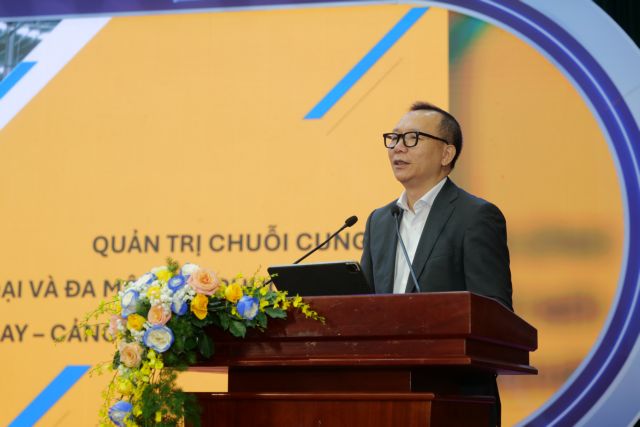
Vietnam Post representative Lê Quốc Anh said Đồng Nai should focus on developing its system of airports, seaports and industrial zones, while also enhancing inter-regional connectivity.
However, different product categories have distinct requirements regarding logistics timelines, quality and costs, so logistics service chains must be structured to align with the specific needs and characteristics of each customer segment.
|
| Vietnam Post representative Lê Quốc Anh presents his report at the seminar. |
In terms of agriculture, Anh suggested a service chain spanning production areas to consumer markets that integrates collection, storage, transportation and distribution. This approach would help minimise losses, control logistics costs, ensure product quality and improve the actual value realised by businesses.
To support other industries, he recommended that Vietnam Post co-design solutions, optimise service chains and standardise coordination to overcome business hurdles. This approach aims to build an interconnected partner ecosystem to advance Đồng Nai’s logistics capabilities.
Nguyễn Minh Quang, deputy director of the city's Department of Science and Technology, acknowledged the contributions from domestic and international businesses and experts.
Based on these inputs, he asked that the city's agencies work on their plans, which must address practical needs and be feasible to carry out under current conditions. The results must be measurable in terms of time, costs and the beneficiaries involved, he said. — VNS
Society
 Society
 Society
 Society
 Society
 Society
 Society
 Society
 Society
 Society
 Society
 Society
 Society
.jpg) Society
 Society




