 Society
Banks promote non-credit revenue to boost profits amid NIM decline
1.
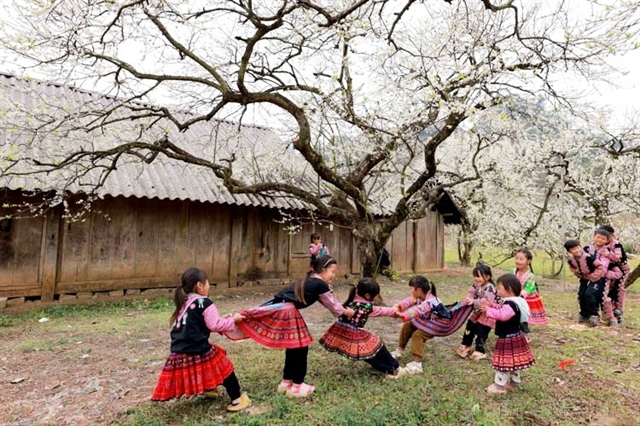 |
| Ethnic Mông children in Sơn La Province play beneath plum trees in full, brilliant white bloom. Việt Nam always regards the children care and protection as an urgent task. — VNA/VNS Photo Quang Quyết |
Thu Trang
HÀ NỘI — Children are the young shoots of the nation’s future and must be loved, cared for and protected.
Việt Nam has always regarded the protection of children from violence and abuse as an urgent task, requiring the coordinated involvement of the entire political system and society as a whole.
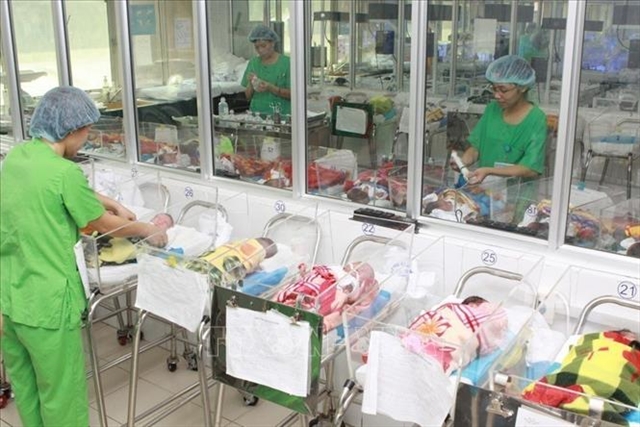
Dr. Lại Thùy Thanh, from the Centre for Developmental Medicine and a member of the Child Protection Board at the National Children’s Hospital, affirmed that healthcare facilities played an extremely important role in child protection.
“Hospitals are not only places where children receive initial care and treatment but also opportunities to identify early cases of children who have experienced violence or are suspected of having been abused – issues that children often do not dare to disclose or share,” she said.
Children are often presented with physical symptoms such as headaches, recurrent abdominal pain, difficulty sleeping, poor appetite, or even self-harming behaviour, which is particularly common among children aged 10 to 14.
“At first, they may feel reluctant and find it difficult to share their experiences. Through screening mechanisms and clinical examinations, doctors can uncover stories of domestic violence, school violence or abuse hidden behind those physical injuries,” she said.
Challenges
Lawyer Nguyễn Ngọc Tấn, from the Ngọc Tấn and Associates Law Firm, said that children were a particularly vulnerable group.
“They have not yet fully developed physically, psychologically, or in terms of their understanding of legal and social matters. This lack of development creates significant difficulties not only for the children themselves but also for lawyers, investigative agencies and psychological specialists seeking to reach and support them,” he said.
Due to limited awareness, many children are unable to recognise unlawful behaviour or acts of abuse committed against them.
“When they do not understand the seriousness of what has happened, they do not know how to speak out or whom to tell. Even when they want to speak, the biggest question remains: “Will anyone believe me? Will anyone listen to me?” Moreover, when faced with serious issues such as threats or grooming, children often become frightened and do not dare to share their thoughts or wishes with family members or investigators,” said Tấn.
Besides, there is the lack of cooperation from guardians. For children, guardians – usually parents or relatives – are their most important source of support. However, in many cases, if guardians refuse to cooperate or withhold information, this becomes a major obstacle for lawyers, doctors and investigative agencies.
“Many families choose to conceal what has happened because they fear stigma, damage to the family’s reputation, or gossip from neighbours. Choosing silence not only stalls the investigation but can also leave the child suffering even deeper harm,” said Tấn.
In addition, there are limitations in professionals’ skills for engaging with children. Working with children, particularly those experiencing psychological trauma, requires highly specialised and extremely difficult skills. Without appropriate methods to encourage disclosure and build trust, children will never open up.
“During interviews or when taking statements, if law enforcement officers only know how to listen without being able to recognise the child’s psychological responses, it will be very difficult to establish the truth,” he said.
Additionally, requiring a child to repeat their painful story several times to different agencies can cause serious psychological harm.
In legal support practice, particularly in cases of sexual abuse or severe physical violence, effective coordination to reduce the number of times a child must give a statement – for example, through a one-way, child-friendly interview room model – can provide far better psychological protection. Information needs to be recorded only once, so that children are not forced to remember and recount frightening memories repeatedly, thereby minimising secondary trauma.
Another challenge that must be acknowledged frankly is the shortage of facilities and professional expertise in many localities, experts agreed.
“Building child-friendly interview and counselling rooms requires funding and infrastructure, which remain difficult for many areas. Furthermore, grassroots investigative officers are often not systematically or deeply trained in child psychology. Most have to learn through experience or rely on parental instincts when working with children. This highlights the need for regular professional training and for equipping local officials with communication and child-engagement skills,” said Tấn.
“At the same time, parents and guardians need to be equipped with the knowledge to speak out confidently, rather than compromising with or concealing wrongdoings because of fear of social prejudice. Concealment does not make the problem disappear; it only makes the consequences increasingly severe,” he said.
Support mechanism
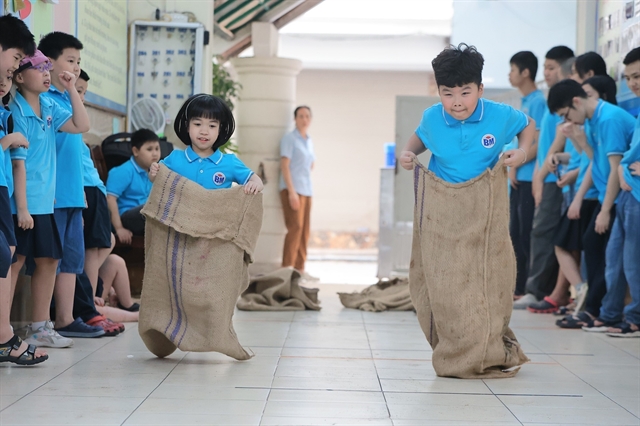 |
| Students from the Bình Minh Primary School in Hà Nội take part in a sack race at a cultural and sports festival. Through cooperation, organisations and individuals can help children enjoy a peaceful childhood. — VNA/VNS Photo Lê Đông |
Dr Thanh from the National Children’s Hospital said the hospital developed more targeted and proactive support mechanisms.
Training is organised so that every member of staff, from examining doctors to supporting nurses, can identify signs of abuse and report them promptly.
“Staff pay attention to physical signs such as bruises or injuries suspected to be caused by violence, inconsistent medical histories, discrepancies in carers’ accounts, or a child’s hesitant attitude and avoidance of contact. Through comprehensive examinations and careful observation of these abnormalities, doctors can make a more accurate assessment of suspected abuse,” she said.
It also established a psychological counselling room with a one-way observation facility. This space allows a specialist to speak directly with a child, while other support staff can observe from behind.
Moreover, the hospital has set up a Child Protection Board comprising doctors, nurses, psychologists and lawyers.
Lê Thị Hường, an official at the Administration of Maternal and Children's Affairs (AMCA) under the Ministry of Health, said that in recent years, the care, education and protection of children had always received close attention from the Party, the State and the Government.
This commitment is clearly reflected in the Politburo’s Directive No. 28 on strengthening the care, education and protection of children. The directive has been translated into numerous practical programmes and policies, which the AMCA is working to advise on and implement.
Among these are two key programmes recently issued by the Prime Minister.
First, the National Programme on Child Protection for the 2026–30 period. This programme places strong emphasis on children affected by violence and abuse, with breakthrough policies and solutions designed to strengthen their safety and protection.
Second, the Programme on Promoting Children’s Participation Rights. This represents an important step forward, focusing on children’s rights to be heard and to participate.
Thanks to the gradual improvement of the policy and legal framework, more than 80 per cent of children in especially difficult circumstances nationwide now receive assistance and access to appropriate services.
Among them, 100 per cent of children who have experienced abuse or violence are provided with protection measures at three levels: prevention, intervention and support.
In the coming period, the AMCA will focus on reviewing and improving the system of legal normative documents. The department will continue to review the current Law on Children and Decree No. 56, guiding its implementation, in order to amend and supplement them in line with new socio-economic conditions and practical realities. Particular attention will be paid to improving support and intervention procedures for children affected by violence, abuse or natural disasters.
On the other hand, the agency is developing technical standards for child protection services. It is working towards establishing a legal framework that enables private service providers to participate in delivering these services. Under this approach, the State will set standards, technical requirements and monitoring mechanisms and move towards commissioning child protection services from private providers, ensuring that children can access services as quickly and conveniently as possible.
Besides, the AMCA will continue to expand professional and technical cooperation with international organisations to learn from their experience, improve institutional frameworks and enhance the quality of child protection services.
All of these efforts reflect the belief that, through commitment, responsibility and a child-friendly approach, organisations and individuals can contribute to keeping children safe and helping them enjoy a peaceful and happy childhood. — VNS
Society
 Society
 Society
 Society
 Society
.jpg) Society
 Society
 Society
 Society
 Society
 Society
 Society
 Society
 Society
 Society