 Society
Railway investment boom must translate into domestic industrial capacity
1.
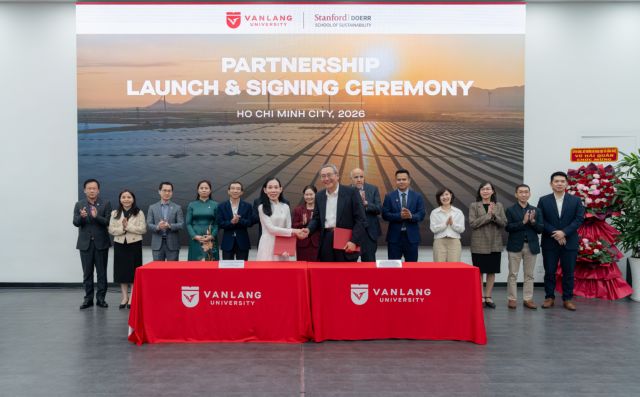 |
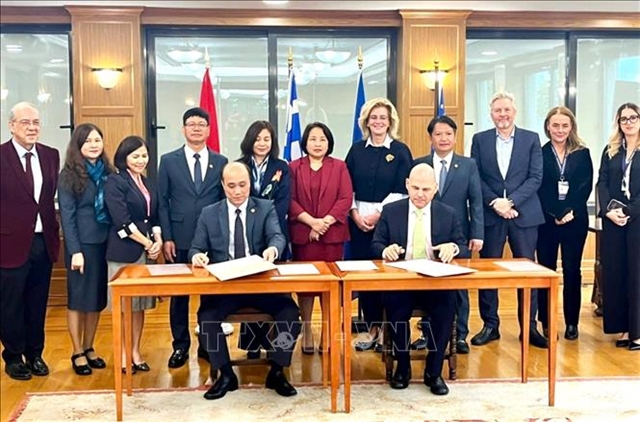
| Representatives of Van Lang University and Stanford Doerr School of Sustainability sign an MoU on joint sustainability research and deployment in HCM City on October 28. — Photos courtesy of VLU |
HCM CITY — Van Lang University (VLU) in HCM City and the Stanford Doerr School of Sustainability at Stanford University in the US have signed a Memorandum of Understanding (MoU), establishing a comprehensive framework for joint sustainability research, education, and real-world deployment in Việt Nam.
The Cửu Long (Mekong) Delta has been designated as the primary pilot region to advance impactful solutions for clean energy transition and sustainable development.
The partnership centres on establishing Living Lab capabilities at VLU.
Operating as an open-innovation model, the Living Lab moves scientific research beyond traditional laboratories into real-world settings.
It brings together researchers, students, government authorities, industry partners, and local communities to identify pressing challenges, pilot field-based interventions, and scale viable solutions across Việt Nam and the broader region.
This initiative comes as Việt Nam accelerates science, technology, and innovation under the Politburo’s Resolution No. 57-NQ/TW, whilst advancing its national commitment to achieve net-zero carbon emissions by 2050.
Mekong Delta: Climate challenges and local livelihoods
As a vital agricultural and aquaculture hub for Việt Nam, the delta faces escalating climate pressures whilst striving to build more resource- and energy-efficient production systems.
Energy underpins the regional economy, powering everything from farming and aquaculture to cold storage, food processing, and industrial operations.
However, for any solution to achieve practical viability, technical performance must be evaluated alongside economic viability, infrastructure readiness, and operational feasibility.
Grounded in the Living Lab framework, joint research teams will work directly with local stakeholders to map energy demands, define focus areas, and conduct testing tailored to local conditions.
Whilst specific pilots will be finalised based on local needs and mutual strategic goals, VLU campus will simultaneously serve as an on-site testbed for renewable energy, clean energy transition, and resource circularity.
Through these initiatives, the partnership will generate evidence-based insights to validate clean energy solutions, de-risk implementation, and pave the way for their scalable adoption across the region.
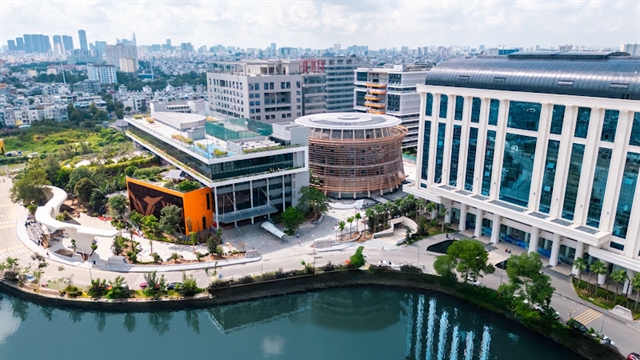 |
| A view of Van Lang University campus in HCM City, which will serve as an on-site testbed for renewable energy and sustainable resource management under its agreement with the Stanford Doerr School of Sustainability. |
Combining interdisciplinary research with local expertise
The collaboration pairs Stanford Doerr School of Sustainability’s interdisciplinary expertise across science, technology, policy, and its global academic network with VLU’s deep contextual insights and environmental research foundations established in 1995.
In 2026, VLU secured a place in the Top 401 - 600 worldwide in the Times Higher Education (THE) Impact Ratings, achieving leading positions in Clean Water and Sanitation (SDG 6) and Responsible Consumption and Production (SDG 12), core competencies that directly align with the ecological imperatives of the Mekong Delta.
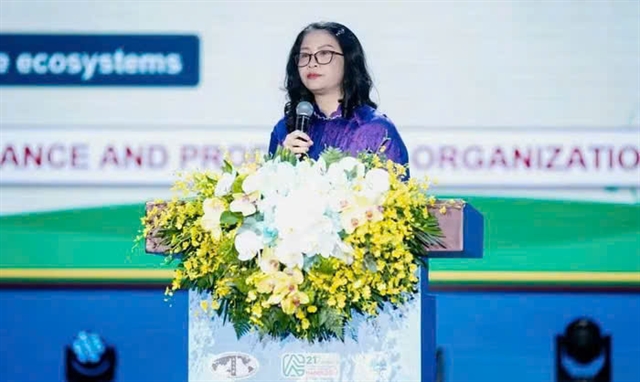
Speaking at the signing ceremony on October 28, Assoc. Prof. Dr Trần Thị Mỹ Diệu, President of VLU, said addressing complex challenges like those in the delta demands not only scientific knowledge, but also a deep understanding of local conditions and tight collaboration among universities, government, businesses, and communities.
“By leveraging our complementary strengths, Van Lang expects to advance research that is both scientifically rigorous and deeply rooted in local needs, contributing directly to practical solutions,” she said.
Dr Jimmy Kuo-Wei Chen, managing director of the StorageX Initiative at the Precourt Institute for Energy, Stanford Doerr School of Sustainability, expressed his deep appreciation for VLU's dynamic spirit, strategic vision, and steadfast commitment towards sustainability.
Sustainable research collaboration platform
Guided by a 2026-31 roadmap, the two institutions aim to build a self-sustaining Living Lab platform, working towards establishing a dedicated centre at VLU and cultivating a multi-stakeholder network across academia, government, and industry.
In education, both partners will explore Living Lab-integrated coursework, fellowship initiatives, student exchanges, postdoctoral research fellowships, faculty mobility, and joint academic workshops.
In the initial phase, the partners will focus on targeted priority areas to establish an operational work plan, with a joint workshop scheduled at VLU in late 2026 or early 2027 to align research agendas and select the first cohort of projects. — VNS
Society
 Society
 Society
.JPG) Society
 Society
 Society
 Society
 Society
 Society
 Society
 Society
 Society
 Society
 Society
 Society