 Society
Hội An to begin Japanese language education at two schools
1.
|
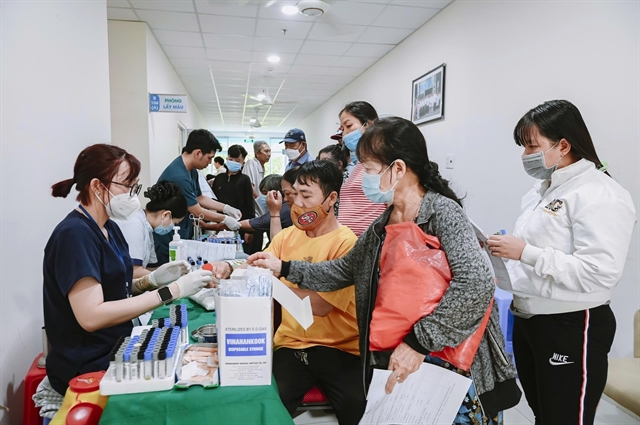
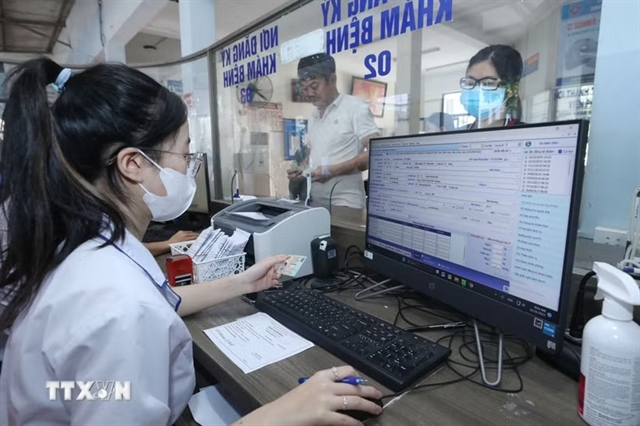
| Residents visit a hospital in Tây Ninh as part of the free nationwide health check-up programme. — VNA/VNS Photo |
TÂY NINH — When the commune announced free health checks in Hamlet 2, Ngô Văn Thái went along, keen to learn if he had any medical issues. And there was.
Although Thái, 51, was rated Grade 2, the second-highest health rating, his results flagged problems with his heart, muscles and joints. He said he would keep a closer eye on his condition and adjust his daily habits.
Lê Văn Triển, 76, who was examined at the same screening point, was also rated Grade 2, and was happy. For people his age, he said, a free check-up was a welcome chance to see how they were doing, and a sign that the government and health services cared.
The two men are among the beneficiaries of Việt Nam’s boldest health pledges: from this year, every one of its more than 100 million people is to be offered a free check-up at least once a year.
The policy is meant to start shifting a health system built around treating the sick towards one that keeps watch over people while they are still healthy.
Tây Ninh, a south-eastern province stretching from the Cambodian border to the outskirts of HCM City, set about the task with a campaign billed as '90 days and nights', which ran through the rainy season from July to September.
By mid-October, two-thirds of the population had been examined, a formidable feat. But the effort has also shown how much harder it is to turn a check-up into lasting care than to deliver it in the first place.
Getting people through the door was hard enough.
Bringing the check-up to the hamlet
Tân Hòa, the border commune where both men live, is sprawling and its population fluid: many residents work elsewhere, and most of those who stay farm or tap rubber, work that starts early and leaves little time for a doctor.
Heavy rain has made travel harder, especially for the old. Then there was the belief, familiar to public health officials everywhere, that you see a doctor when you are ill, not before. And some older villagers saw little point in a check-up that did not end with free medicine to take home.
The commune’s answer was saturation. A 29-member task force hand-delivered invitations to every household. The message went out over the hamlet loudspeakers, as news in rural Việt Nam has for decades, but also from loudspeaker vans, door to door and through community groups on Zalo, the messaging app most Vietnamese use.
Screening points went up in each cluster of homes. The farthest any resident had to go was about 8km; staff serving the remotest hamlets travelled 20 to 40km.
It worked. By 30 September, Tân Hòa had examined all 11,868 people on its verified list. The job now, said the commune’s vice-chair, Vũ Văn Minh, is to keep that list current as people come and go.
Elsewhere, communes found their own ways.
Vĩnh Hưng sweetened the offer: a hospital ran free examinations for 200 people and handed out medicine, and local donors gave milk, biscuits and gifts worth more than VNĐ40 million (about US$1,550) to those who came.
By 15 August, according to its vice-chair, Nguyễn Thị Cẩm Huyền, the commune had finished all 2,963 of its planned examinations, a month and a half ahead of the deadline.
In Cần Giuộc, on the edge of HCM City, the regional health centre sent mobile teams to the homes of the frail elderly, the disabled and those with no one to bring them, and ran its screening points as a one-way circuit, from registration to data entry, to keep queues short.
Every record was then uploaded and digitally signed on the health ministry’s national portal, the building block of an electronic health record.
To examine so many people so fast, the province also enlisted private hospitals. Taking part, said Tô Bảo Quốc, deputy director of Hồng Hưng General Hospital, was both a political duty and a social responsibility.
Fielding four teams and three mobile X-ray trucks, Hồng Hưng examined 19,885 people between July and September.
|
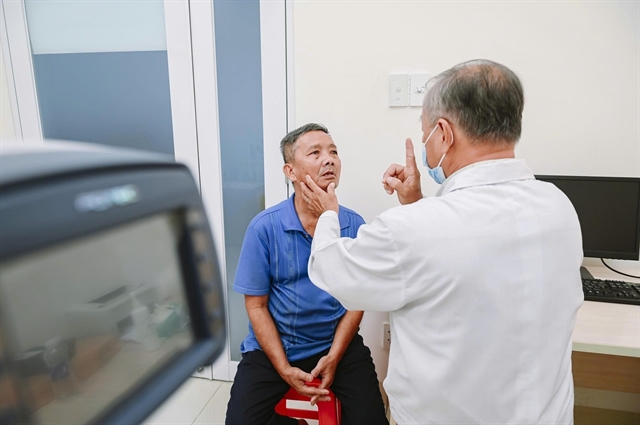
| A doctor tests a resident’s eyesight. — VNA/VNS Photo |
The money comes with strings. The State pays up to VNĐ350,000 (about $14) per person per year, but that is a ceiling, not a flat fee: providers are paid only for services actually delivered and properly documented. The province has approved some VNĐ277 billion (more than $10 million) so far.
Seen but not yet recorded
The deepest problem, though, is not money or manpower. It is what happens to the results.
A check-up changes little unless it leads somewhere: to advice, to monitoring and, when something is wrong, to a follow-up appointment or a referral. That depends on results being recorded in a form someone can use.
By 15 October, Tây Ninh had examined 2,106,755 of its 3,178,342 residents. Only 429,821 records, roughly one in five, had made it into the health ministry’s system. Some providers had uploaded everything; across the province, the backlog was vast.
Nguyễn Đài Thy, the province’s senior vice-chair, credited the campaign with bringing care closer to people and showing who actually lives where, what care they need and whether local clinics can provide it.
But on the data, Thy was emphatic.
"The results of these check-ups must be turned into data with real, practical value – data that serves the long-term management of people’s health. We must not chase the number of examinations at the expense of data quality," she said.
The province has ordered a full review of who has been examined, who has not, and who has been seen but not yet recorded.
It has also called for a national data portal that local clinics can access, and urged the social security agency, which runs health insurance, to link its treatment records to people’s electronic health files, so that tests already done need not be repeated.
The goal, from 2027 on, is for the annual check-up to become a habit rather than a campaign: something people seek out, not something they are summoned to by loudspeaker. — VNS
Society
 Society
 Society
 Society
 Society
 Society
 Society
 Society
 Society
 Society
 Society
 Society
 Society
 Society
 Society