 Society
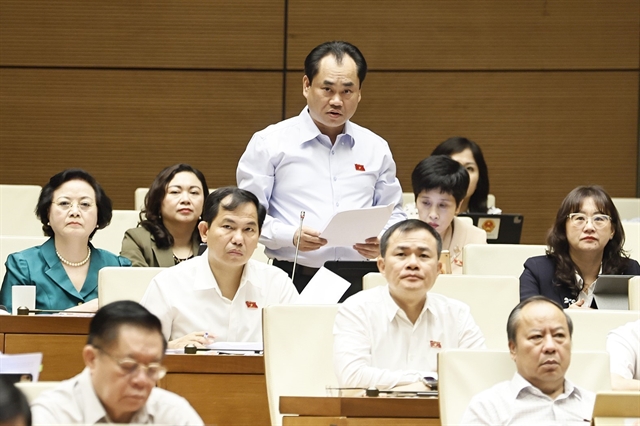
NA deputies call for lower business costs to achieve double-digit growth
1.
 |
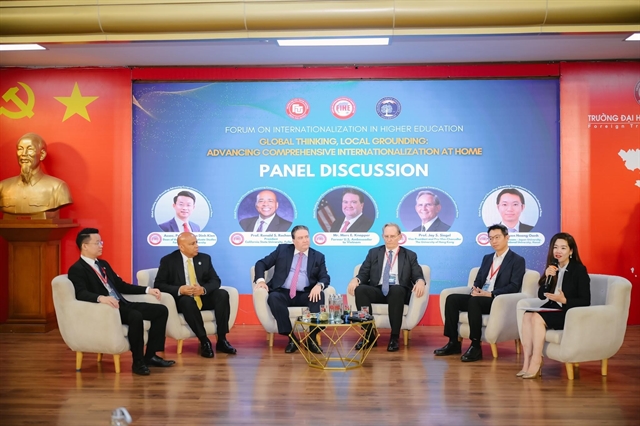
| A panel discussion at the Fertility acadeMe Conference 2026 on October 31.— Photo courtesy of the organiser |
HÀ NỘI — Health experts discussed infertility treatments, a pressing issue given Việt Nam’s declining birth rate and the broader global challenges surrounding reproductive health, at an international conference on October 31.
The scientific symposium, titled "Fertility acadeMe Conference 2026," was jointly organised by the Vietnam Obstetrics and Gynaecology Society (VAGO), the International Federation of Fertility Societies (IFFS), and Merck Healthcare Vietnam.
With the theme "Personalising the Path to Parenthood", the event addressed global infertility challenges as well as low fertility rates in Việt Nam.
The event brought together over 200 leading experts to explore the latest medical advancements and share professional insights, including assisted reproductive technology (ART), mental health support and the application of artificial intelligence.
According to the World Health Organization (WHO), infertility is becoming one of the reproductive health issues of concern globally. In the Western Pacific region (including many countries in Asia-Pacific), the lifetime cumulative infertility rate is about 23.2 per cent – this is also the highest level compared to other regions in the world. WHO also forecasts that infertility will be the third most dangerous diseases, second only to cancer and cardiovascular disease in the 21st century.
In Việt Nam, it is estimated that each year there are more than one million infertile couples, with a rate of about 7.7 per cent, of which primary infertility is 3.9 per cent and secondary infertility is 3.8 per cent. Of these, about 50 per cent are couples under the age of 30. In particular, the rate of secondary infertility (infertility after one pregnancy) is increasing to 15-20 per cent every year and accounts for more than 50 per cent of infertile couples.
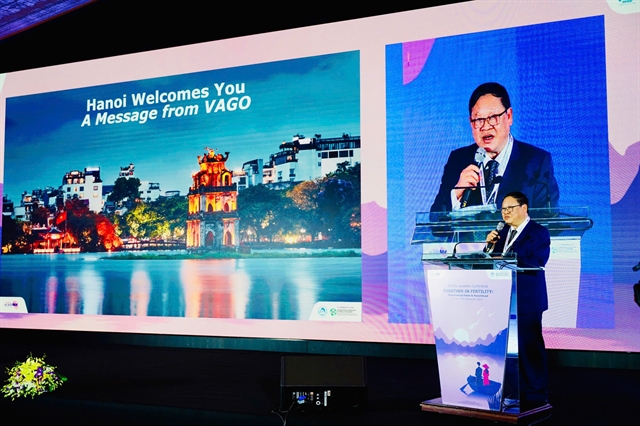 |
| Prof. Nguyễn Việt Tiến, former deputy minister of Health, chairman of the VAGO, speaks at the event. — VNS Photo Thanh Hải |
Speaking at the conference, Prof. Nguyễn Việt Tiến, former deputy minister of Health, chairman of the VAGO, said: "Việt Nam is facing major challenges as fertility rates continue to decline, while infertility rates remain high. Therefore, we need to continue discussing and seeking appropriate interventions and support measures to give individuals and couples experiencing infertility more opportunities to fulfil their dream of parenthood, thereby contributing to improving their quality of life.”
Statistics from the Ministry of Health also show that the current population still has many difficulties and challenges; typically, the replacement fertility rate is not really sustainable. Việt Nam's total fertility rate in 2025 is 1.93 children per woman, a slight increase compared to 2024 (1.91 children), but still below the replacement fertility rate (2.1 children). The low fertility rate has a direct and profound impact on the population structure, affecting the economy, labour, employment and social security.
At the event, experts highlighted infertility and low fertility rates as significant challenges to individuals and families, as well as to population and sustainable development work. In this context, it is increasingly important to raise awareness of reproductive health, promote access to assisted reproductive techniques (ART) and stay up to date with medical advances to improve treatment effectiveness.
Within the framework of the conference, international experts shared the latest updates and in-depth discussions on topics of interest in the field of health care, including personalisation of assisted reproductive therapy (ART), male infertility, optimisation of implantation and pregnancy outcomes, preservation of fertility, mental health care for patients, and innovations in reproductive medicine such as artificial intelligence (AI) and emerging clinical practice evidence.
Through scientific presentations and in-depth discussion sessions, the conference is expected to create an open exchange space between experts, contributing to promoting knowledge updating, sharing practical experiences and strengthening professional cooperation in the field of reproductive medicine in Việt Nam and the region. — VNS
Society
 Society
 Society
 Society
 Society
 Society
 Society
.JPG) Society
 Society
 Society
 Society
 Society
 Society
 Society
 Society