 Society
SBV to curb property price inflation, enforce lending rate rules
1.
|
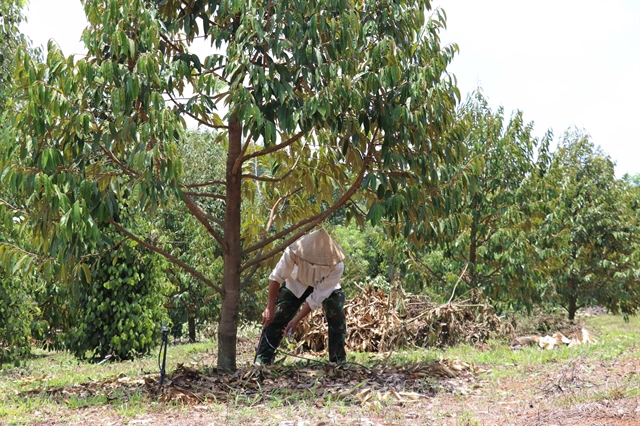
| Bù Ngọc Nam’s durian orchard in Đồng Nai City’s Đắk Ơ Commune is cultivated entirely using organic methods. — VNA/VNS Photo K GỬIH |
ĐỒNG NAI — Durian farmers in Đồng Nai City have shifted to organic cultivation to improve fruit quality and meet higher export standards.
As markets increasingly favour clean and safe produce, many farmers in the southern city’s border communes are using organic and biological farming methods.
The shift is helping raise the fruit’s value while protecting the health of farmers, consumers, and the environment.
Bùi Ngọc Nam in Đắk Ơ Commune is among the pioneers of the transition, adopting the organic model on his 4ha orchard nearly a decade ago.
“I realised the green agriculture model delivers sustainable development for both farmers and crops. The biggest immediate benefit is that my family’s health is better protected.
“Hiring workers to care for the orchard has also become much easier. When chemical farming methods were widely used in the past, pesticide smells lingering in the air made workers reluctant to take the job.”
Nam has also received strong support from local authorities, particularly through easier access to soft loans for farming in recent years, he said.
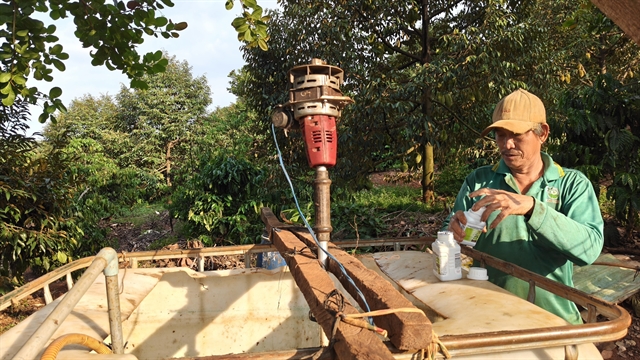
Nguyễn Văn Phúc in Phú Nghĩa Commune has switched to using biological pesticides and fertilisers for his durian orchard.
He said heavy reliance on chemicals in the past harmed his health and degraded the soil.
After adopting the organic biological model, his health has improved significantly and he no longer feels exhausted unlike before, he said.
At the same time, the orchard ecosystem gradually became more balanced, while the soil became looser and retained moisture better, he said.
Phúc said biological products help beneficial microorganisms thrive, strengthen durian trees against fungi and diseases, improve root systems, and enhance fruit quality to meet rising demand for clean produce.
|
| Nguyễn Văn Phúc in Đồng Nai City’s Phú Nghĩa Commune prepares to spray his organically farmed durian orchard. — VNA/VNS Photo K GỬIH |
Nguyễn Thị Thêu in Hamlet 6 of Đắk Ơ Commune has taken the lead in using intercropping and biological farming methods to grow cashew, pepper, and durian.
Her orchard has achieved high yields and generated large profits.
Encouraged by the results, Thêu, who heads Hamlet 6, has persuaded 25 other farmers, or 30 per cent of the hamlet’s total number, to join a clean production chain using organic farming.
She said the model’s value lies not only in economic efficiency but also in creating a safer living environment for the community.
“I continue promoting the model widely with the goal of applying clean organic farming to all key crops in the locality, from cashew and pepper to coffee and durian.”
Local agricultural officials said the shift towards green production would help improve the value and reputation of agricultural products, especially as many export markets have stringent standards.
But admittedly change is slow.
Phan Văn Hà, director of the city’s Area No. 16 Agricultural Service Centre, said many farmers still grow crops without clear planning.
Although some have joined co-operative groups and co-operatives, linkages between them remain weak, he said.
The centre has advised growers to change their mindset and move towards concentrated and organic farming, while selecting areas with suitable soil and growing conditions for cultivation.
It has also urged orchard owners to establish production linkages, co-operative groups, or co-operatives.
“To ensure sustainable durian development, establishing planting area codes and strictly implementing the four-party linkage chain involving farmers, scientists, local authorities, and businesses are mandatory requirements,” Hà said.
“This will help better control quality and avoid consequences caused by rapid expansion, including outbreaks of dangerous pests such as mealybugs or cadmium contamination that could affect [quality].”
The centre has encouraged farmers to switch quickly to biological and organic farming.
Agricultural authorities have also advised orchard owners to improve soil quality and apply proper technical processes since durian trees are highly sensitive to weather, pests, and fungal diseases.
The city has around 21,000ha under durian, including areas where it is intercropped with other fruits. — VNS
Society
 Society
 Society
 Society
 Society
 Society
 Society
 Society
 Society
 Society
 Society
 Society
 Society
 Society
 Society