 Society

Sang proves talent in virtual taekwondo
1.
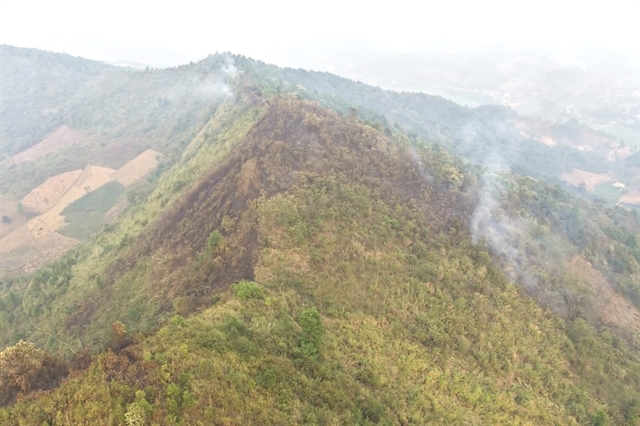 |
| A column of black smoke suddenly rises in mid-April, 2026, signalling an outbreak of wildfire in Nà Tấu Commune, Điện Biên Province. — VGP/VNA Photo |
ĐIỆN BIÊN — A fast-moving wildfire in Nà Tấu Commune earlier this year highlighted both the growing pressure on forest protection and the crucial role local communities play in safeguarding thousands of hectares of woodland in Điện Biên Province.
Dry winds swept the hillsides of Nà Tấu Commune in mid-April this year. From the forest bordering Chan 1, Nong, Sẵng and Co Muông hamlets, a sudden column of black smoke rose, signalling a wildfire.
Calls rang through the hamlets. Some people fetched machetes, others hauled green branches, while local militia, forest rangers and commune police quickly gathered at the hotspot.
Đỗ Đức Mạnh, a forest ranger in Nà Tấu Commune, told the Việt Nam Government Portal: “When we received the report, we went straight to the scene. The fire spread quickly because of the dry weather and dense undergrowth. We extinguished flames on the spot while cutting firebreaks to prevent the blaze from reaching the protected forest and residential areas.”
By about 7.30pm that day, the fire was largely under control. The cause was later identified as people using fire to produce smoke to catch wild bees in the forest. Falling embers landed on dry branches and ignited during the peak of the dry season.
Incidents like this are a constant concern in Nà Tấu. The commune currently has more than 10,200ha of forest but only two local forest rangers.
“The pressure is enormous, especially from October to April each year. A small lapse when burning fields, clearing undergrowth or using fire in the forest can trigger a wildfire,” Mạnh said.
For that reason, instead of relying solely on professional forces, local authorities have chosen to involve residents in forest protection.
Village meetings are held regularly. Legal documents are translated into local languages and broadcast over loudspeakers. Forest rangers visit each hamlet to warn people about fire risks and advise on the safe use of fire when tending swiddens.
In Nà Tấu 1 hamlet, the benefits of community involvement in forest protection have become evident. The hamlet now manages hundreds of hectares of forest.
By protecting that area effectively each year, the community receives about VNĐ300 million (US$11,300) under the forest environmental services policy.
Rather than divide the money equally among households, villagers agreed at a meeting to invest it in transport infrastructure. They also voluntarily contributed labour and donated land to open a 4.5km road to their production area.
The road runs along the hillside, cutting through forest areas that were once nearly isolated during the rainy season. Previously, crops had to be carried on foot or transported by motorbike along slippery dirt tracks. Much land was left uncultivated because there was no practical way to transport produce.
Now small trucks can reach the fields. Farmers have expanded cultivation and transport costs have fallen. As a result, maize, cassava and upland rice command higher prices.
Forest remains, hamlet remains
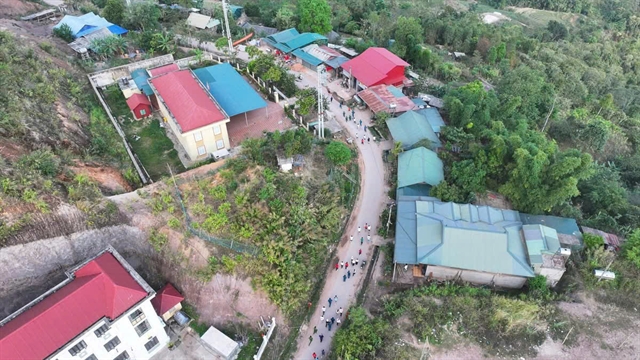 |
| A corner of Nà Bủng Commune. — VGP/VNA Photo |
In another commune in Điện Biên Province, Nà Bủng, the green canopy of more than 9,500ha of forest is also being preserved through community action.
Following administrative consolidation, Nà Bủng now covers more than 16,000ha of natural area, with a vast territory and many hamlets located far from the centre. Forest accounts for about 58 per cent of the land area. This protected forest plays an important role in preventing soil erosion and conserving water resources across the wider region.
Since the beginning of the year, police, military personnel and forest rangers have established coordination procedures for forest protection. Community meetings are held in hamlets, where residents sign commitments to protect the forest and receive guidance on proper swidden cultivation practices.
Vừ A Tùng, a forest ranger in Nà Bủng Commune, said: “We regularly cooperate with local authorities and other agencies to raise awareness in every hamlet, advising people not to burn swiddens when the fire-risk alert is at level four or five.”
In key forest areas, militia members and villagers take turns patrolling. Thào A Củng of Nộc Cốc 1 Hamlet said: “Especially after Tết, when many people burn swiddens, the fire risk is very high. We regularly inspect and remind residents, and we stand ready to help extinguish any fires.”
Allocating land and forests while clearly marking boundaries is seen as an important solution. When villagers are assigned forest land, they begin to regard it as an asset worth protecting.
In Huổi Dạo Hamlet, the community has managed more than 1,000ha of forest allocated by the State since 2013.
During the dry season, villagers regularly patrol and monitor the forest. When fires occur, residents immediately join the authorities in firefighting efforts.
Giàng A Chư, head of Huổi Dạo Hamlet, said: “Where there is forest, there is water for production and land for livelihoods. Losing the forest means immediate hardship.”
Not far away, Vàng Đán Hamlet, home to an ethnic Dao community, sits at the headwaters of the Nà Hỳ Stream. The hamlet, with 61 households, manages more than 500ha of natural forest. For many years, residents have cleared undergrowth and prepared firebreaks before the dry season.
Hamlet head Lý A Sử said: “The most important thing is that people understand the value of the forest. Now villagers are much more conscious, everyone understands that protecting the forest is protecting their own livelihood.”
Across Điện Biên’s forests today, familiar scenes can be seen: forest rangers staying close to the woods, militia members on patrol and villagers cutting firebreaks ahead of the dry season.
They protect the forest through practical actions that help prevent landslides during typhoons, preserve water sources, secure additional income from forest environmental services and support more stable swidden harvests, while safeguarding the forests for future generations. — VNS
Society
 Society
 Society
 Society
 Society
 Society
 Society
 Society
 Society
 Society
 Society
 Society
 Society
 Society
 Society