 Society
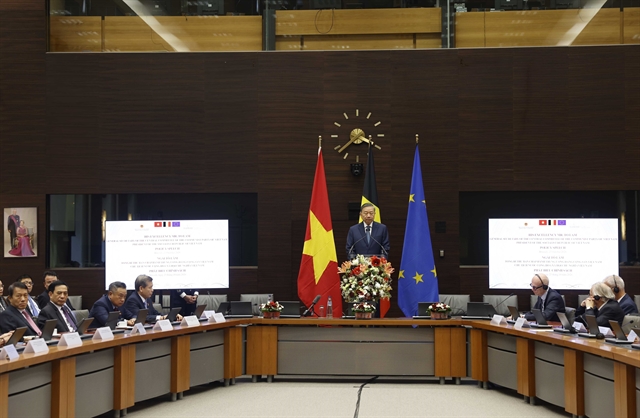
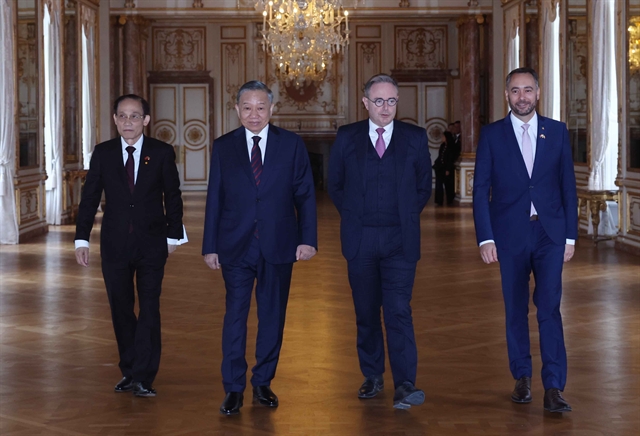
Top Vietnamese leader meets with Belgian Senate Speaker, House President
1.
|
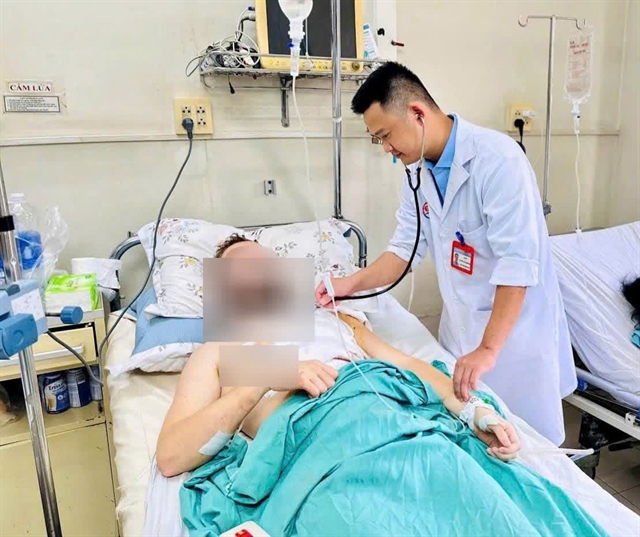
| A doctor checks on the patient's condition on Thursday. — Photo suckhoedoisong.vn |
KHÁNH HÒA — Surgeons at a hospital in the south-central province of Khánh Hòa have saved the life of a Russian national who arrived in a critical condition with a puncture wound to the heart.
The patient was transferred to the General Hospital of Khánh Hòa on June 2 from a local private clinic in a state of severe shock, suffering respiratory. and circulatory failure.
His pulse and blood pressure were almost undetectable and he was unable to breathe on his own.
He had sustained multiple wounds across his body. The most serious was a laceration more than three centimetres long between the ribs on his left side.
His condition was further complicated by an exceptionally rare blood type, O Rh-negative, which is extremely uncommon in Việt Nam and can only be transfused with a precise match, creating a serious logistical challenge in securing emergency blood supplies.
Upon receiving notification of the incoming patient, the hospital rapidly assembled a response team comprising emergency physicians, bedside ultrasound specialists, surgeons, and intensive care doctors.
Lê Viết Huấn, head of the hospital's thoracic surgery department, assessed the situation and immediately ordered that the patient be taken directly to the operating theatre for emergency open-chest surgery.
Once inside, the surgical team found the pleural cavity, the space surrounding the lungs, filled with both fresh blood and clots from a damaged thoracic artery. The pericardium, the protective sac surrounding the heart, had also been punctured with a tear of roughly two centimetres.
Given the complexity of the cardiac injuries, surgeons opted for a median sternotomy, a midline incision through the breastbone, to gain the widest possible access to the chest and address all damage as effectively as possible.
At the same time, the hospital coordinated with the Haematology and Blood Transfusion Centre of Khánh Hòa to urgently source two additional units of O Rh-negative blood for transfusion.
The operation lasted two hours. Surgeons repaired the heart wound, controlled the thoracic artery, cleared the pleural cavity and placed drainage tubes. Additional wounds elsewhere on the patient’s body were also treated.
By Thursday afternoon, the patient was conscious and his condition was improving. He remains under close medical observation. — VNS
Society
 Society
 Society
 Society
 Society
 Society
 Society
 Society
 Society
 Society
 Society
 Society
.jpg) Society
Society
 Society
 Society