 Society
Hưng Yên outlines three economic zones, two development corridors
1.
|
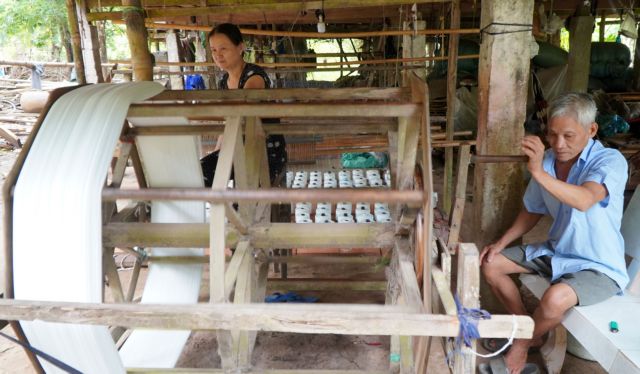
| Setting up the loom frame is one of the most difficult stages in checked scarf weaving in the Long Khánh checked scarf weaving village in Long Khánh Commune. — VNA/VNS Photo Nhựt An |
ĐỒNG THÁP — Đồng Tháp Province aims to develop craft villages into centres for preserving local traditional cultural and historical values while promoting sustainable rural economic growth.
Under its craft village preservation and development plan for 2026–30 and rural industry development strategy to 2030, with a vision to 2045, the Cửu Long (Mekong) Delta province is building green, clean and attractive rural craft villages linked with tourism.
The province is also applying modern technology in production and value chain management, while combining traditional and modern production methods to improve product quality, food safety and competitiveness.
It is developing new designs, increasing product value and expanding domestic and export markets to better serve tourism demand.
Craft villages not only create jobs and raise incomes for local residents, but also help preserve the locality’s distinctive cultural values.
Đồng Tháp currently has 53 recognised craft villages and traditional craft villages. More than 5,860 production establishments are operating across them, employing over 26,050 workers.
The province aims to develop an additional two to three craft villages linked with tourism by 2030. It also targets retraining and improving skills for 100 per cent of workers in craft villages.
Average income for rural workers by 2030 is expected to increase by 1.2 times compared to 2025.
In Lai Vung Commune, many craft villages are maintaining their production and gradually developing into tourism experience products.
Craft villages in the commune that weave baskets and mats, make fermented pork roll and practise other traditional crafts provide stable jobs for local people.
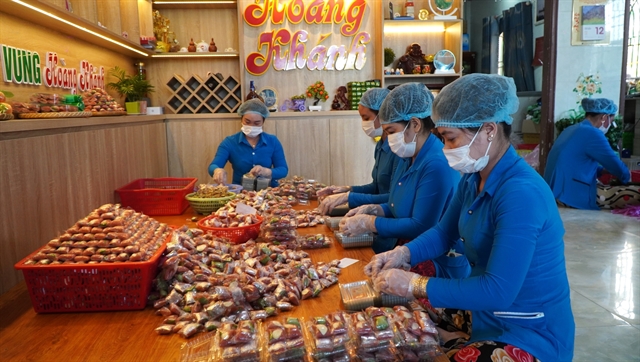
|
| Workers make fermented pork rolls at the Lai Vung fermented pork roll making village in Lai Vung Commune. — VNA/VNS Photo Nhựt An |
Hoàng Khánh, a production establishment in the Lai Vung fermented pork roll making village, is considered a typical establishment for preserving traditional trades while improving product quality.
Its traditional fermented pork roll, fermented cinnamon pork roll and cylindrical fermented pork roll have been recognised as four-star products under the country’s “One Commune–One Product” (OCOP) programme.
Đặng Thị Ngọc Thùy, owner of Hoàng Khánh, said: “To develop my family’s traditional trade, I invested in expanding production and modern machinery.
“Our products are now sold not only in the province but also in many localities nationwide.”
The establishment creates stable jobs for more than 30 local workers, with incomes of VNĐ7–8 million (US$266–304) per person per month.
The Định Yên mat weaving village in Lai Vung Commune is adapting to new trends through mechanised production.
The village now has 433 mat weaving machines, producing around 2.2 million mats a year.
Nguyễn Kim Vân, a village resident, said her family has used weaving machines to shorten production time and improve product quality over the past few years.
“As a result, our mats have become popular not only across provinces in the Mekong Delta, but also in many provinces in the southeastern region, HCM City and even Cambodia.”
Phan Văn Tập, Deputy Secretary of Lai Vung Commune Party Committee and Chairman of the commune People’s Committee, said the locality would continue coordinating with relevant sectors and agencies to effectively implement programmes and projects aimed at preserving and developing craft villages.
These efforts would be linked to the national target programme on building new-style rural areas and the OCOP programme, he said.
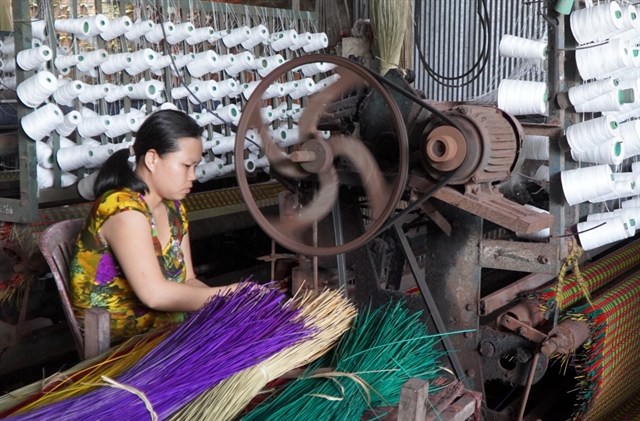
|
| Residents of Định Yên mat weaving village in Lai Vung Commune use weaving machines instead of manual weaving to improve productivity. — VNA/VNS Photo Nhựt An |
Besides creating livelihoods, many craft villages in the province continue to preserve long-standing cultural values.
The Long Khánh checked scarf weaving village in Long Khánh Commune has nearly 60 production households with hundreds of weaving looms, creating jobs for more than 300 workers.
The village supplies more than five million checked scarves to domestic and overseas markets a year.
At the Gò Công altar cabinet making village in Sơn Qui Ward, finely crafted handmade products are not only popular in Việt Nam but are also exported to serve overseas Vietnamese communities.
When consumers mention Gò Công altar cabinets, many immediately think of the Ba Đức brand, a well-known name in the Gò Công altar cabinet making village.
Ngô Tấn Thành, whose father founded the Ba Đức brand, said his family has nine siblings, all of whom run workshops and showrooms producing and selling altar cabinets under the Ba Đức brand.
His family’s altar cabinets are popular among overseas Vietnamese in the US, Canada, Australia and France, he said.
The Bà Đài boat making village in Long Hòa Commune continues traditional production despite many difficult periods.
To prevent the craft from disappearing, the village residents have also started producing miniature boats for tourism and display purposes.
Đồng Tháp is also well known for its Sa Đéc rice flour making village in Sa Đéc Ward.
The province’s crafts of making Sa Đéc rice flour, Lai Vung fermented pork roll and Long Khánh checked scarf have been recognised as national intangible cultural heritage. — VNS
Society
 Society
 Society
 Society
 Society
 Society
 Society
 Society
 Society
 Society
 Society
 Society
 Society
 Society
 Society