 Society
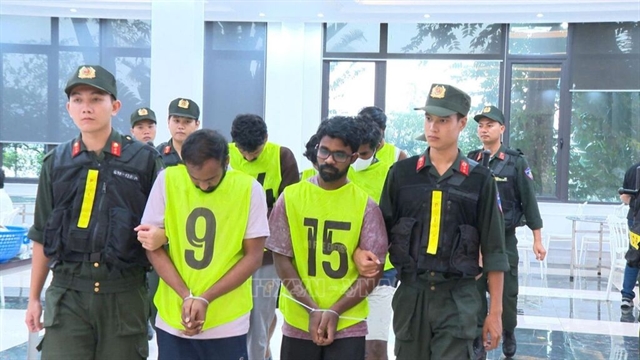
84 individuals investigated for transnational online frauds
1.
|
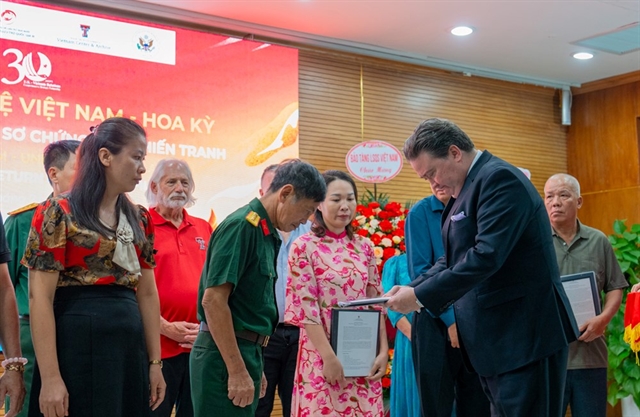
| US Ambassador to Việt Nam Marc E. Knapper (right) returns a CDEC file to a representative of a Vietnamese solder in 2025. Photos courtesy of The Heart of Vietnamese Soldiers |
HÀ NỘI — Vietnamese and American people have agreed to work closely in an effort to return items of Vietnamese soldiers missing in action during the war to their families under an international humanitarian project.
This Việt Nam Wartime Accounting Initiative (VWAI), launched and funded by the US government, marks the first time a comprehensive research and collaboration programme on war records has been held in Việt Nam.
It focuses on utilising archival resources to assist in verifying information about missing persons and locating potential burial sites.
It is run by the Vietnam Centre and Sam Johnson Vietnam Archive (VNCA) and the Institute for Peace and Conflict under the Texas Tech University (TTU).
The Vietnamese side involved in the mission is the Trái Tim Người Lính (The Heart of Vietnamese Soldiers) organisation, represented by its founder, Đặng Vương Hưng.
According to incomplete statistics, during the resistance wars from 1945 to 1975, Việt Nam recorded nearly 1.2 million martyrs. The period from 1954 to 1975 accounted for the largest share, with an estimated 850,000 to more than one million soldiers sacrificing their lives on battlefields in the Southern region of Việt Nam, Laos and Cambodia.
At present, nearly 200,000 martyrs’ remains have yet to be located, while around 300,000 graves have been gathered but remain unidentified.
|
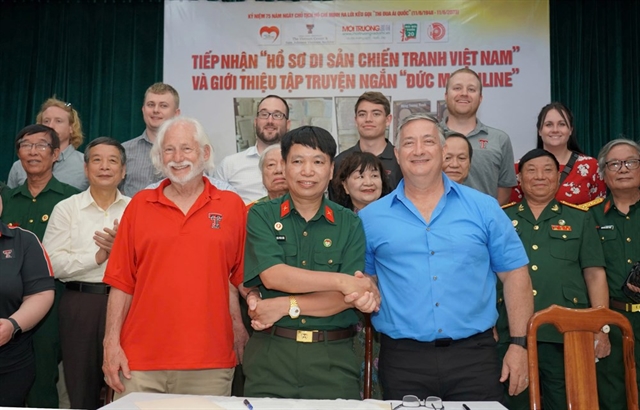
| Colonel Đặng Vương Hưng (centre) and his American project partners in their agreement signing event in 2023. |
The VWAI's focus is on the decoding of the archive known as the Combined Document Exploitation Centre (CDEC), also known as the Việt Nam War Legacy.
These are handwritten letters, diaries, and personal items of soldiers from the north and the liberation force in southern Việt Nam, which were captured on the battlefield between 1954 and 1975. After intelligence analysis, the documents were microfilmed before the originals were destroyed.
After the war ended and the secrecy period expired, the microfilm archive was brought back to the US. It is declassified and digitised by the VNCA.
Currently, the centre preserves around 2.7 million pages of documents related to the two armies, including more than 261,000 CDEC files containing details such as soldiers’ names, units, and the locations, dates and coordinates where the documents were seized.
This information is considered particularly valuable for cross-referencing and verifying missing persons, as well as supporting efforts to locate the remains of fallen soldiers.
Colonel and writer Hưng said the project has been advanced with the support of international researchers, including Prof. Dr Ron Milam, Director of IPAC; Prof. Dr Steve Maxner, Director of VNCA; and Assoc. Prof. Dr Alex-Thái Đình Võ of Texas Tech University. Over many years, they have quietly classified and systematised hundreds of thousands of files from black-and-white microfilms.
Although the project was officially launched this year, preparatory activities have been under way since 2023, resulting in the return of more than 40 files to families of fallen soldiers and veterans.
Whether in the form of electronic copies or black-and-white prints, these documents carry profound sentimental value for recipients, who were finally able to see their relatives’ last handwritten notes, photographs and personal records after decades of waiting.
Hưng called for stronger coordination among relevant authorities and broader support from society to sustain the initiative, which also contributes to promoting cooperation and reconciliation, and to healing the wounds of war between Việt Nam and the United States. — VNS
Society
 Society
 Society
 Society
 Society
 Society
 Society
 Society
 Society
 Society
 Society
 Society
 Society
 Society
 Society