 Society
Việt Nam’s growth prospects appeal to long-term investors
1.
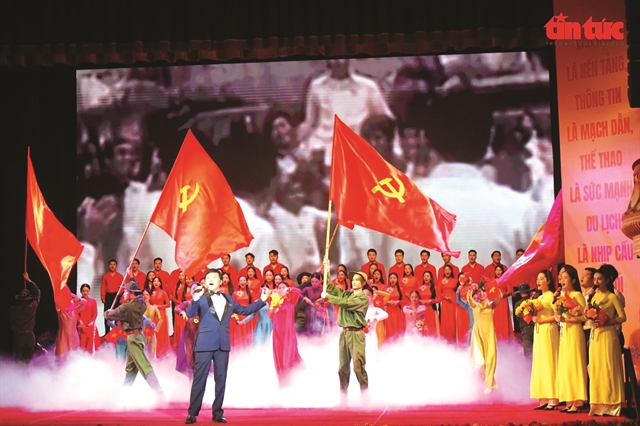 |
| An art performance welcoming the issuance of Resolution 80, reflecting the Party’s determination to place culture at the centre of development. VNA/VNS Photo |
HÀ NỘI — The Communist Party of Việt Nam’s Resolution 80 on cultural development marks a decisive shift in how culture is positioned within national policy – not as a supporting element, but as a foundational pillar alongside economic and social development, experts say.
Many believe the resolution reflects a new stage in the Party's thinking and actions on culture. Rather than a purely specialised document, it is seen as a major policy decision with far-reaching effects across political, economic and social life, helping shape Việt Nam’s future stature and cultural identity.
From support to investment
People's Artist Trịnh Thúy Mùi, vice president of the Việt Nam Union of Literature and Arts Associations and president of the Việt Nam Stage Artists' Association, described Resolution 80 as an important nudge that opens new space for literature, art and artists to showcase their creative abilities and contribute more to the spiritual life of society.
"The resolution demonstrates the Party's and State's special strategic attention to culture, affirming a profound understanding that developing culture is about building a sustainable foundation for national development and a lasting source of internal strength,” Mùi said.
Given its scale and significance, artists and others – both creators and beneficiaries of culture – expected Resolution 80 to deliver a real breakthrough, particularly a shift in mindset from supporting culture to actively investing in it, she said.
"This is a very fundamental change since investing in culture means directly confronting existing limitations and gaps and developing strategies to elevate culture to the same level as other areas of social life," she added.
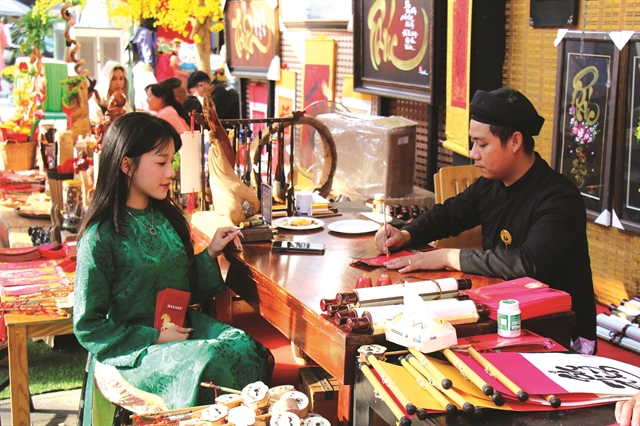 |
| A young woman in áo dài watches a calligrapher at HCM City’s Calligraphy Street. Resolution 80 seeks to preserve and elevate cultural values. — VNA/VNS Photo Thu Hương |
Culture as soft power
Resolution 80, issued by the Politburo on January 7 this year, demonstrates the Party’s political determination to truly make culture a solid foundation, an important endogenous resource, a powerful driving force, a key pillar and a regulating system for the country’s rapid and sustainable development.
With Resolution 80, authorities and sectors at all levels must clearly define culture as an indispensable sector – both a goal and a driver of development, Mùi said.
Many other experts note that the most prominent and profound new feature of Resolution 80 compared with previous documents is the comprehensive upgrading of culture’s role.
Culture is no longer identified solely as a goal and the spiritual foundation of society, but is also affirmed as a regulating system for the nation’s fast and sustainable development.
The resolution once again underscores the need to embed culture deeply across all pillars of social life – from politics and the economy to national defence, security and external relations – so that it becomes a source of national soft power.
Professor Lê Hồng Lý, PhD, president of the Việt Nam Folk Arts Association (VNFAA), highlighted the special importance of Resolution 80, saying it affirms the role of culture in the new context as the country enters a period of strong development and rising, as Party General Secretary Tô Lâm has repeatedly emphasised.
"This resolution continues previous Party resolutions on culture, while clearly and strongly reaffirming its particularly important role of culture in the country's overall development," Lý said. “Culture is now regarded not only as a spiritual foundation, but also as a pillar of sustainable development.”
Culture meets economy
According to Lý, another important highlight of Resolution 80 is that the Party and State have begun to recognise culture as a constituent part of the economy, rather than merely a sector serving spiritual life.
Previously, he said, culture was often seen as a dependent sector that mainly consumed the State budget. Now, with the implementation of Resolution 80, it is identified as capable of creating added value and delivering tangible economic benefits, especially through the development of cultural industries.
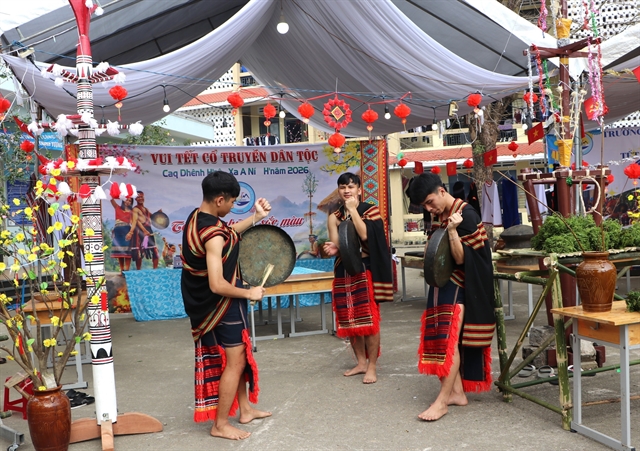 |
| A traditional performance using Hrê ethnic instruments in Quảng Ngãi Province. Resolution 80 places renewed emphasis on traditional cultural values. — Photo Đinh Hương |
Resolution 80 also creates conditions for cultural values to be preserved, protected and developed to a new height.
"When culture is respected and prioritised through appropriate mechanisms and policies, traditional cultural values themselves will have the conditions to flourish, adapting flexibly to modern life," he said.
"It will develop in a healthy, sustainable and positive way, contributing more to society. This is the foundation for building an advanced Vietnamese culture rich in national identity and strong enough to integrate and compete globally.”
The VNFAA president stressed that Resolution 80 would hold particular significance for cultural heritage.
"When heritage is valued and receives appropriate investment, it not only helps preserve traditional values but also brings economic benefits and enhances the people’s cultural and spiritual life," he said, adding that heritage would thus become an important resource for developing cultural industries and building a modern culture that is rich in national identity.
Lý also emphasised that many Vietnamese cultural heritages recognised by UNESCO in recent years not only affirmed the value of national culture but also contributed to enriching the shared heritage of humanity.
In this context, he said Resolution 80 would provide an important basis for Việt Nam to continue making positive contributions to the "multicoloured flower garden" of world culture, while strengthening its soft power and international standing.
Amid digital transformation and the strong influence of social media on lifestyles, norms and value systems, the regulatory role of culture takes on particular significance – balancing growth with social progress, integration with identity, the market with humanity and technology with ethics. This approach is both profound and practical, reflecting the Party’s long-term vision.
Inspiring the people
One of the most humane and breakthrough decisions in Resolution 80 is the designation of November 24 each year as Vietnamese Culture Day, to be observed as a paid public holiday.
Of more than 85,000 people consulted, over 95 per cent expressed strong support and enthusiasm for the decision.
According to leaders of the Việt Nam General Confederation of Labour, the day will provide valuable opportunities to organise cultural and sports activities, take workers to historical and cultural sites or create time for families to share moments and honour traditional Vietnamese family values.
Associate Professor Nguyễn Thế Kỷ, PhD, vice chairman of the Central Theory Council, said "the most compelling keyword of Resolution 80 is the development of cultural industries".
The resolution stresses building cultural industries on the foundation of national culture, viewing culture as both a spiritual and material resource – one that contributes to national prosperity, enriches the intellect and soul of the Vietnamese people and improves material life. This represents a rare harmony between ideals and realities, cultural depth and economic efficiency, according to Kỷ.
The Party has set concrete targets. By 2030, cultural industries are expected to contribute 7 per cent of GDP, while cultural industries and the creative economy are projected to account for 9 per cent of GDP by 2045, becoming pillars of sustainable development.
To reach these goals, the resolution proposes a package of breakthrough solutions focusing on key sectors such as cinema, performing arts, cultural tourism, design, fashion, traditional handicrafts, video games and digital software and content.
The aim is to form internationally competitive cultural industry corporations as well as creative industrial clusters and zones -- marking a decisive shift from culture as a budget-consuming sector to one that generates material wealth, economic growth and national prestige.
The establishment and operation of cultural product exchanges, especially for digital assets, reflect a forward-looking vision aligned with global digital economic trends. VNS
Society
 Society
 Society
 Society
 Society
 Society
 Society
 Society
 Society
 Society
 Society
 Society
 Society
 Society
 Society