 Brandinfo

Huawei Commits to Advancing an Intelligent, Green Europe with Customers and Partners
1.
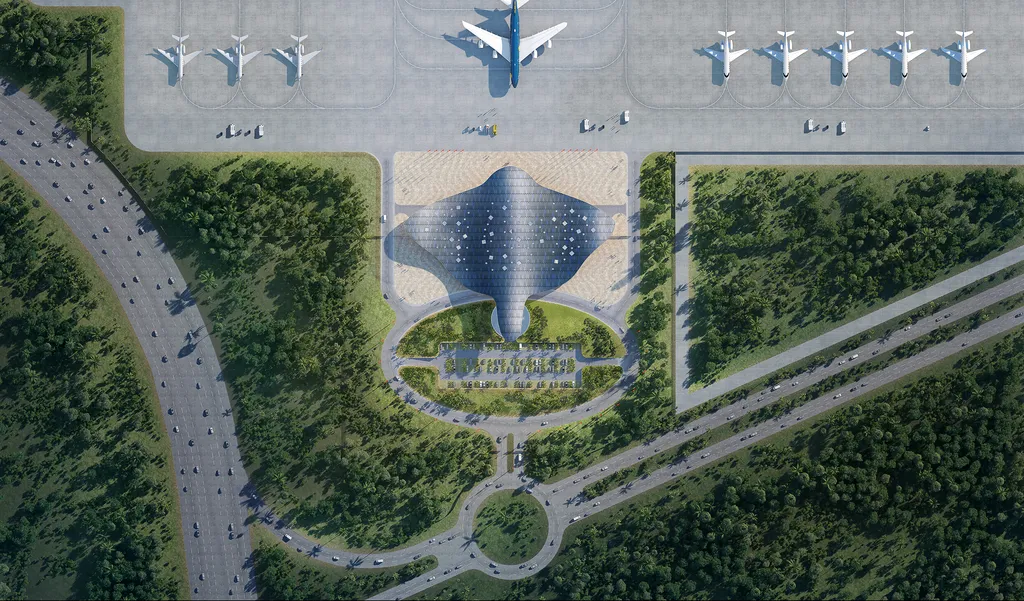 |
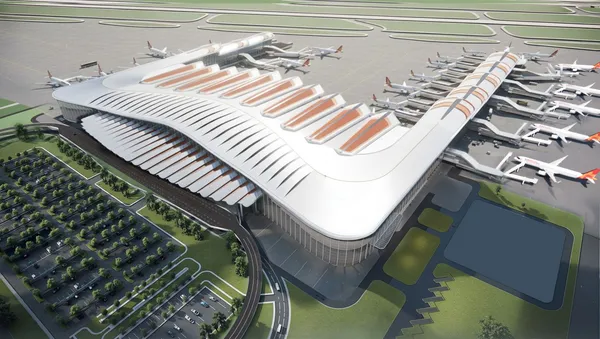
Part of the Phú Quốc International Airport expansion investment project developed by Sun Group, the 8,500-square-metre VIP terminal was designed by Italian architect Marco Casamonti, while the interior was created by Aedas Interiors (Singapore), part of Aedas, one of the world’s leading architecture and masterplanning groups.
Fully equipped with modern facilities, the terminal is capable of serving charter flights carrying up to 300 passengers. It will welcome heads of state during APEC 2027, as well as serve major future events in Phú Quốc.
The terminal’s central design concept draws on the graceful form of the eagle ray, a symbol of freedom and enduring strength. As a result, the interior is conceived as a journey through the many depths of the ocean.
The terminal has been envisioned as a living work of art, celebrating the beauty of Phú Quốc Island through a contemporary design language. From white-sand beaches, fish sauce production, pearl cultivation, pepper farming and sim wine to the rhythms of life in coastal fishing villages, every element has become a source of inspiration, creating an arrival experience rich in local identity right at the gateway to the “Pearl Island”.
 |
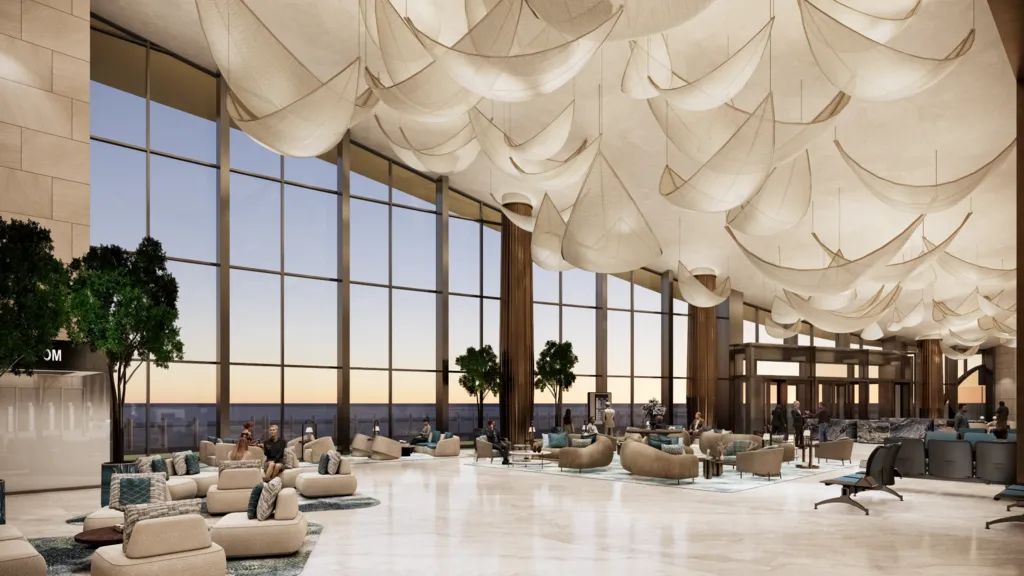
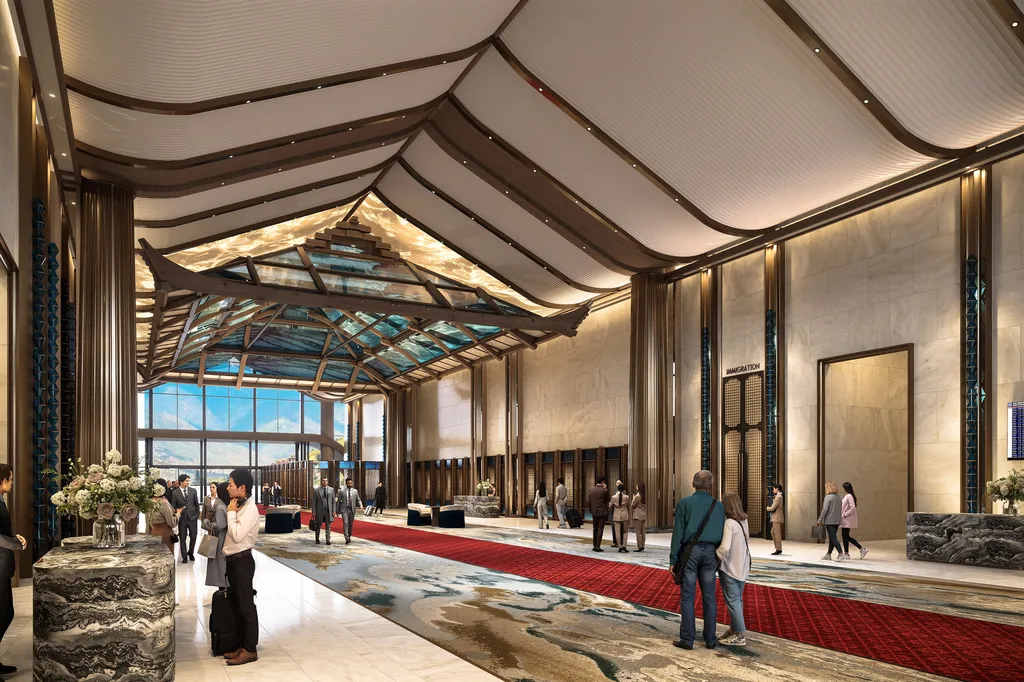
The first touchpoint of the journey is the grand hall, where sunlit water is reimagined through layers of natural light reflected into shimmering golden ripples in constant motion. Within this architecture, infused with the breath of the sea, subtle echoes of the traditional Vietnamese communal house emerge through sloping roofs, timber truss structures and intricately crafted partitions, bringing a sense of warmth and solidity from the very entrance. The bright atmosphere leaves visitors with an immediate impression of a friendly and open Việt Nam.
 |
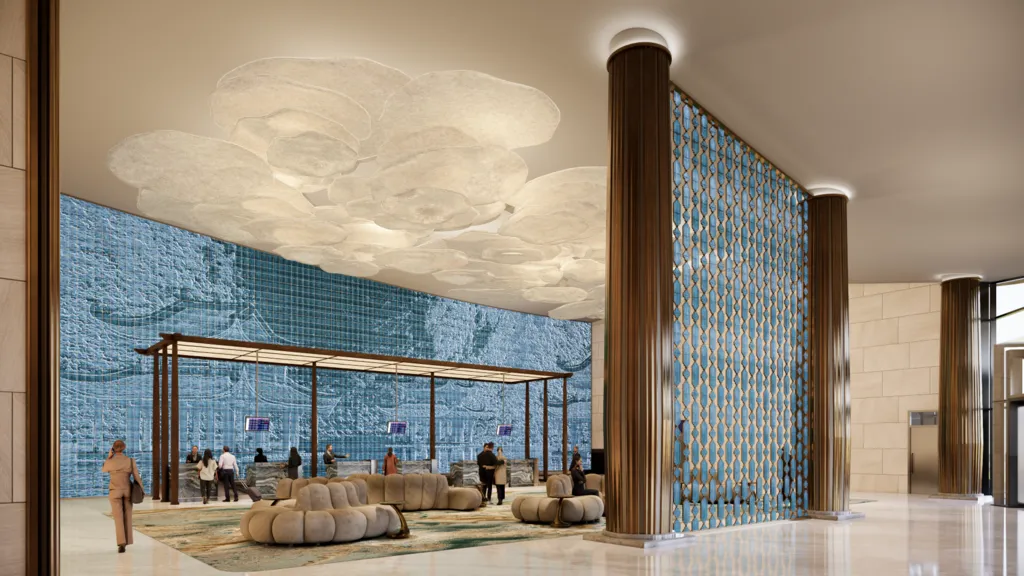
From here, the spatial journey gradually shifts into a softer palette, with sapphire and jade tones evoking the ‘mesopelagic zone’ of the sunset sea. The check-in area is defined by a tall, linear spatial axis, distinguished by rows of wooden columns that create a solemn rhythm. Overhead, wave-like mesh lighting casts a soft glow onto patterned timber panels, recalling the artistry of traditional weaving.
 |
Moving into the departure area, the space opens up dramatically with floor-to-ceiling glass panels that direct the eye straight out to the sea. Low sofas and coffee tables are arranged as scattered ‘islands’ of rest throughout the waiting lounge, beneath a ceiling of continuously undulating slats. The restrained use of colour and light, combined with expansive views and natural materials, creates a sense of calm akin to a seaside resort. Passengers can relax, converse or complete the necessary procedures before their flight.
 |
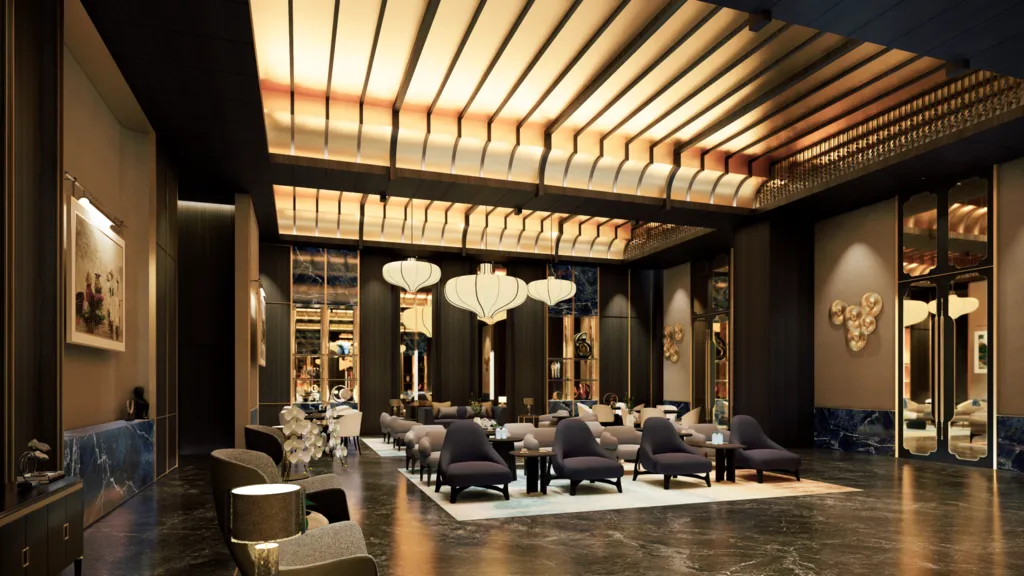
The State Lounge — the waiting area for high-level delegations and heads of state — takes the experience even deeper into the ocean’s most profound layers. Here, all traces of the outside world seem to quieten behind walls in darker tones. Surrounding the space are glossy black obsidian stone surfaces accented with fine golden metallic lines, creating an understated yet captivating sense of luxury. At the centre hangs a glass-and-gold sculpture, suspended in mid-air, evoking the image of an eagle ray spreading its wings freely in the deep sea.
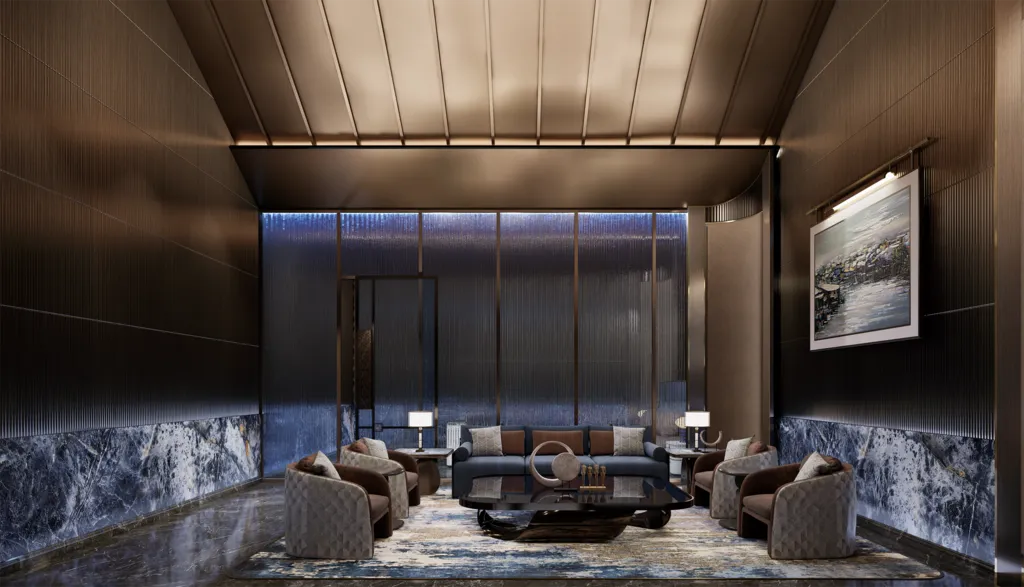 |
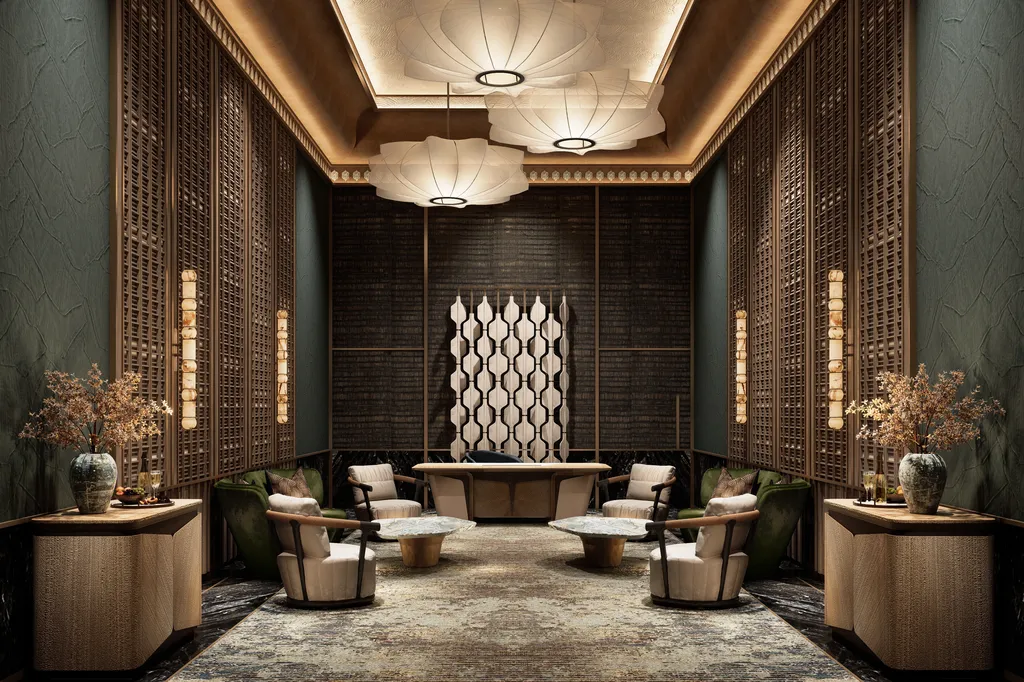
To meet the most stringent standards, the system of functional rooms has been designed to be both separate and flexible, ranging from meeting rooms and temporary workspaces to reception lounges. Every interior detail has been carefully considered to ensure absolute privacy and comfort, while remaining in harmony with the overall architecture. The interplay of wood, stone, bronze-toned metal and ceramics conveys both the authority of a diplomatic reception venue and the familiarity of Vietnamese culture.
 |
With the operational flexibility to serve both large-scale events such as APEC and private charter flights, Phú Quốc Airport’s VIP terminal is not only a piece of advanced infrastructure but also a ‘cultural ambassador’, affirming the position of Phú Quốc Island and Việt Nam on the international diplomatic map.
Brandinfo
 Brandinfo
 Brandinfo
 Brandinfo
 Brandinfo
 Brandinfo
 Brandinfo
 Brandinfo
 Brandinfo
 Brandinfo
 Brandinfo
 Brandinfo
 Brandinfo
 Brandinfo
 Brandinfo