 Society
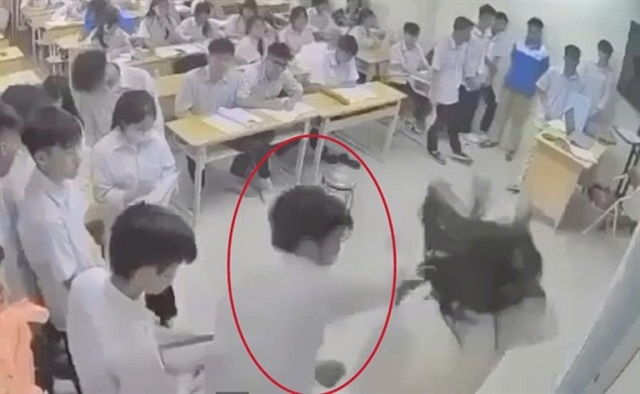
Hà Nội student arrested after allegedly assaulting teacher in classroom
1.
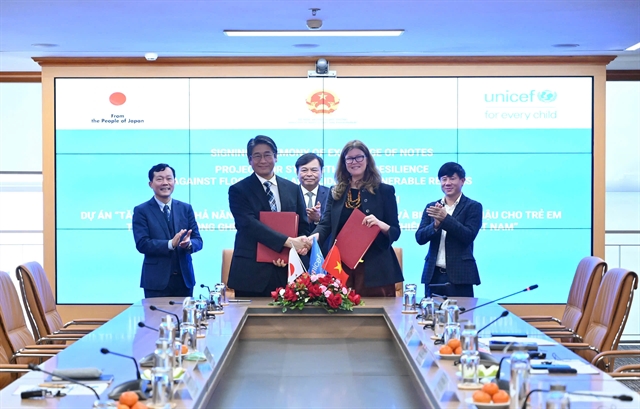 |
| Japan’s Ambassador Ito Naoki and UNICEF Representative Silvia Danailov sign the Exchange of Notes, with Vice Minister Nguyễn Hoàng Hiệp in attendance.. — Photos courtesy of Ministry of Agriculture and Environment |
HÀ NỘI — Japan and UNICEF have launched a new five-year programme to help Việt Nam strengthen disaster and climate resilience for children, with an estimated 27 million children and their communities across Việt Nam expected to benefit.
The initiative, supported by US$6 million in funding from the Government of Japan, will be implemented from 2026 to 2030 by UNICEF Việt Nam in cooperation with the Ministry of Agriculture and Environment, through the Việt Nam Disaster and Dyke Management Authority (VDDMA).
Announced at an event on Tuesday, the programme aims to reduce the growing risks faced by children as climate change intensifies floods, landslides and extreme weather across the country.
At the core of the initiative is a child-centred approach to disaster risk reduction, focusing on improved risk identification, monitoring and analysis, stronger disaster risk governance, and increased investment based on risk information. The programme will also work to enhance the capacity of children, communities and local authorities to prevent, prepare for and adapt to disasters, particularly in areas most affected by flooding and landslides.
The new programme builds on a previous five-year cooperation project between Japan and UNICEF Việt Nam that concluded in 2025. That partnership helped strengthen disaster risk management policies and coordination mechanisms, improve the resilience of essential social services for children, and reduce climate-related disruptions to service delivery.
Disaster risk reduction planning, early warning systems and prevention activities will be expanded under the new phase nationwide. In high-risk provinces such as Cao Bằng, Lào Cai, Nghệ An and Hà Tĩnh, targeted interventions are expected to directly support around 2.2 million children and 7 million people living in disaster-prone areas.
Storm No 3 in 2024 (Typhoon Yagi), followed by severe floods and landslides in 2025, caused widespread damage and loss of life, while revealing gaps in local risk information systems, early warnings and preparedness measures.
Experts warn that natural disasters in Việt Nam are increasing in both frequency and intensity, placing children and vulnerable communities at heightened risk.
Deputy Minister of Agriculture and Environment Nguyễn Hoàng Hiệp said the programme represents a long-term commitment to protecting Việt Nam’s younger generation.
“Phase 2 of the project reflects our shared determination to safeguard the future of children in the face of natural disasters,” he said, highlighting the value of transferring Japan’s extensive experience in disaster response and education to Việt Nam, while adapting it to local disaster patterns.
He also called for closer coordination between implementing agencies to ensure that activities are practical, child-centred and effectively integrated into schools and communities.
Japanese Ambassador to Việt Nam Ito Naoki said Japan was pleased to continue its close cooperation with Việt Nam and UNICEF in advancing disaster risk reduction.
"By strengthening risk identification and analysis, early warning systems, disaster risk governance, and preparedness, this project will help reduce the impacts of floods and landslides and support a safer and more resilient future for children, families, and communities across Việt Nam,” he said.
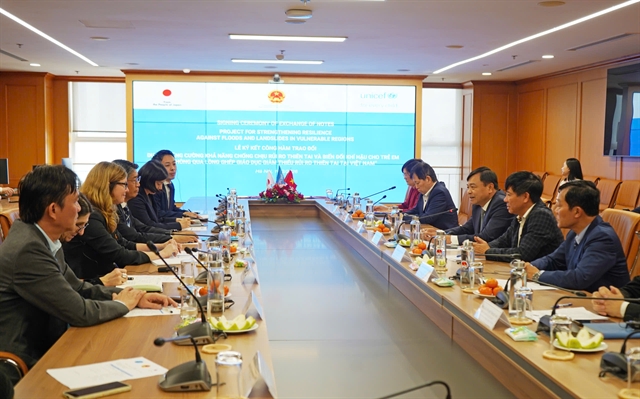 |
| Delegates at the event. |
UNICEF Representative in Việt Nam Silvia Danailov stressed that children are among those most affected by climate change, despite contributing the least to its causes.
“A child-centred approach to disaster risk reduction ensures that disaster management systems and social sectors are inclusive and responsive to their needs and it strengthens preparedness and resilience of children, families and communities,” she said, adding that long-term cooperation with Japan would help ensure that no child is left behind.
During the 2026 to 2030 period, the programme will support the strengthening of disaster risk information systems for policymaking at both central and local levels, alongside improvements to early warning systems. Risk-informed investment will also be promoted, including the development of safer, more inclusive infrastructure such as disaster-resilient schools and community facilities.
At the community level, activities will focus on prevention, preparedness and adaptation through local early warning mechanisms, emergency planning, drills and disaster risk education. Disaster risk reduction and climate change education will be further integrated into the national curriculum, equipping children with the knowledge and skills needed to act safely during emergencies.
The initiative aligns with Việt Nam’s commitments under the Sendai Framework for Disaster Risk Reduction 20152030, the Paris Agreement on climate change and the Sustainable Development Goals. — VNS
Society
 Society
 Society
 Society
 Society
 Society
 Society
 Society
 Society
 Society
 Society
 Society
 Society
 Society
 Society