 Society

"Thai Night Busan 2026" Makes a Grand Return, Connecting Thai Content with Global Partners to Create Business Opportunities and Strengthen Industry Collaboration
1.
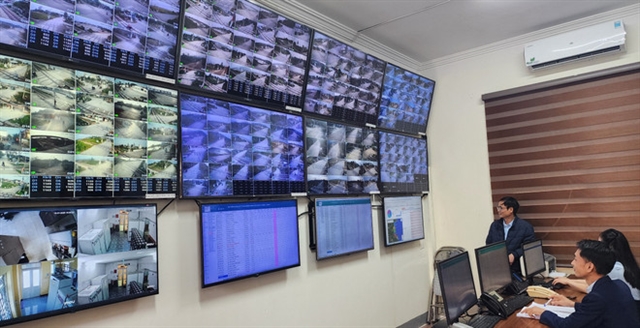 |
| Railway technical staff monitor the camera signalling information system at level crossings for train safety risks. — VNA/VNS Photo Việt Hùng |
HÀ NỘI — As the country takes steps to upgrade and expand its rail network, Việt Nam Railways (VNR) has recently mastered and integrated new technology for train dispatching information systems, reducing dependence on foreign countries and saving costs.
The signalling information system is critical safety and operational infrastructure that serves as the brain and central nervous system, a core technological foundation that determines transport organisation capacity.
It controls the movement of trains, manages traffic flow and prevents collisions by providing essential, real-time data to train drivers and control centres.
Recognising this critical factor, the VNR has worked to master and integrate various technologies for existing train dispatching information systems, aiming for technological autonomy and readiness to manage and master technology transfers for railway projects.
At 4pm every day, the HH16 Sài Gòn-Hà Nội goods train requests permission to pass through the Vinh Station.
Nguyễn Minh Hải, an officer for train operations at the station, presses a button on a machine to notify each level crossing attendant, coordinating the train's passage through stations, crossings and points safely.
"Since this equipment system was introduced, train operations staff and level crossing attendants work with less stress. Train arrival and departure times are precise, ensuring absolute safety," Vinh said.
At kilometre 311+400, an automatic warning at a level crossing detects a car trapped between the railway and road sections.
Installed sensor equipment identifies the unsafe obstacle and activates red lights and alarm bells, while swiftly transmitting information to the warning device on the approaching train from 1.5km away.
The driver immediately applies the brakes to stop the train, preventing collisions and ensuring traffic safety.
Trần Hải Anh, director of the Vinh Railway Signalling – Telecom Joint Stock Company, said that out of 750 crossings from Thanh Hóa to Vinh over nearly 400km (km137+250 to km521+800), the company has installed automatic warning systems at 150 crossings and laid fibre optic cables along the line.
These transmit live images from the crossings to the 24-hour monitoring centre for surveillance and alerts in case of incidents before trains pass, ensuring safety.
"The interlocked signalling control systems, points or sensors at crossings and on locomotives are tightly interconnected, enabling unified, smooth and safe train operations," Anh said.
Bùi Tiến Sỹ, director of the Hà Nội Railway Signalling – Telecom Joint Stock Company, manages 600km of railway across six provinces and cities.
Even on the same line, current signalling information systems vary across routes, with technologies ranging from outdated to modern, upgraded using diverse funding sources, according to Sỹ.
For instance, the Hà Nội to HCM City line to the Đồng Giao Station in Ninh Bình Province uses French firm Alstom's electronic interlocking technology, while other lines employ Chinese automatic railway signalling.
Some equipment is no longer being produced, complicating maintenance and management, while foreign partners have also inflated costs for upgrades and repairs to hundreds of billions of đồng.
Now, VNR has achieved full autonomy in some of this technology, from design, manufacturing and installation to synchronisation of signalling information systems on operational railway lines.
This reduces foreign dependence and lowers staffing requirements for maintenance and operations centres, boosting efficiency.
"VNR engineers and workers have fully mastered design and installation technology for the 6502 relay interlocking system and integrated it with modern electronic equipment from leading groups like Alstom," Sỹ said.
"This has been deployed at 18 stations, saving the State budget hundreds of billions of đồng, shortening project timelines and ensuring absolute train safety."
Mastering core technology
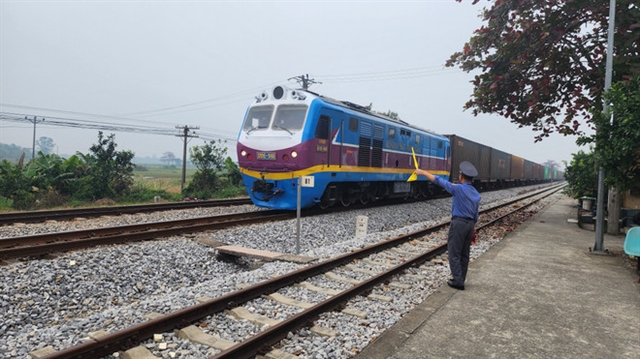 |
| Railway staff on duty for train operations on the North-South line. — VNA/VNS Photo Việt Hùng |
According to VNR Deputy General Director Nguyễn Quốc Vượng, the effort to master this technology will not only ensure train safety, but also build a modern scientific and technological foundation for VNR's workforce, localise products and approach advanced railway systems across the globe.
It also prepares workers to manage, maintain and operate new railway and high-speed rail projects.
"With technology mastery, maintenance investment costs are far lower than with foreign contractors; it enables proactive operations, maintenance, repairs, upgrades and inter-line connectivity, while laying the foundation for upgrades on metro lines and new railways with speeds up to 200km per hour," Vượng said.
Chairman of the VNR Members' Council Đặng Sỹ Mạnh likened the railway signalling information system, as the centralised hub for unified command and control, to a brain and central nervous system determining transport organisation capacity and safety.
Mạnh said that under a National Assembly Resolution, VNR was tasked with managing, maintaining and operating the North-South high-speed railway and the Lào Cai-Hà Nội-Hải Phòng railway, and building a railway industrial complex.
This presented opportunities, but also significant challenges for the corporation.
"VNR has transformed from dependence to autonomy in core signalling information technology. As a State-owned enterprise with full experience, capability and technical ecosystems, VNR is ready to receive, manage, maintain, operate and master technology transfers for new railway and high-speed rail projects, reducing foreign dependence," Mạnh said.
For new railway projects, VNR seeks involvement from the outset, including construction, testing and trial operations of the entire system.
By 2030, the railway operator aims to fully master maintenance and operations of the Lào Cai-Hà Nội-Hải Phòng and North-South high-speed railways, handling 80-90 per cent of electrical signals in new projects.
Việt Nam's railway signalling sector is expected to evolve from a recipient of technology to a manufacturer and high-tech solutions provider by 2045.
VNR also aims to establish an industrial ecosystem producing hardware meeting international standards and minimising foreign supply chain dependence; fully develop and master core algorithms, central control operating systems and electronic interlocking systems for train safety; and export consulting, design, installation and maintenance services for modern signalling systems in railway projects. — VNS
Society
 Society
 Society
 Society
 Society
 Society
 Society
 Society
 Society
 Society
 Society
 Society
 Society
 Society
 Society



