 Society
Talent a strategic national resource for development: Deputy PM
1.
 |
| Disadvantaged residents undergo screening for cardiovascular diseases, chronic kidney disease and metabolic disorders at the Phong Điền Commune Health Centre in Cần Thơ on August 23, 2025. VNA/VNS Photo Ánh Tuyết |
HÀ NỘI — Deputy Prime Minister Lê Thành Long said that Việt Nam’s health sector has recorded comprehensive achievements during the 2021–2025 period, laying a solid foundation for major reforms aimed at expanding access, improving service quality and advancing universal healthcare in the years ahead.
He noted that 2026 would mark a new phase for the sector, bringing both opportunities and challenges that require breakthrough, system-wide efforts to strengthen further the protection, care and improvement of people’s health.
He called on the Ministry of Health to promptly roll out key policies, including periodic health check-ups, free screening programmes and the phased implementation of zero hospital fees.
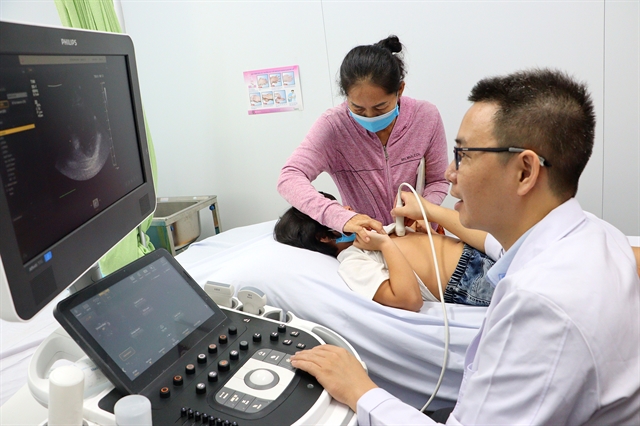 |
| A doctor conducts free cardiac screening for a child in Vĩnh Long Province on May 24, 2025. VNA/VNS Photo Lê Thúy Hằng |
Reviewing sector performance in 2025 and across the 2021–2025 term, while outlining orientations for 2026–2030, Minister of Health Đào Hồng Lan said most major targets had been met or exceeded.
She highlighted institutional reform as a breakthrough, noting that five core laws had been enacted since the beginning of the term. These include the revised Law on Medical Examination and Treatment (2023); amendments to the Law on Pharmacy (2024) and the Law on Health Insurance (2024); and, in 2025, the Law on Disease Prevention and the Population Law.
In addition, dozens of decrees, nearly 200 circulars and numerous development plans and strategies orienting the sector towards 2045 and 2050 have been drafted and submitted to competent authorities for promulgation, helping remove many bottlenecks and obstacles in the health sector's operations.
Medical examination and treatment continued to develop. The service attitude of health workers had improved noticeably, while disease prevention, preventive medicine and primary health care had been further consolidated. The health sector successfully and effectively controlled the COVID-19 pandemic, and most infectious diseases had been kept under control.
Digital transformation in healthcare, Lan said, recorded clear progress. At the same time, the 2021–2025 term also marked important results in streamlining the organisational structure of the health sector to make it more effective and efficient.
Looking ahead to 2026–2030, Lan said the health sector must make strong breakthroughs, act proactively and affirm its role as a key pillar in protecting, caring for and improving people’s health.
She outlined key discussion themes, focusing on solutions to effectively implement the viewpoints, guidelines and policies of the Party Central Committee, the Government and the National Assembly.
Priorities would include further building and improving institutions to create a solid legal framework for sustainable sector development, reorganising the health system to be streamlined and effective in line with the two-tier local government model and developing high-quality health human resources, especially at the grassroots level.
Lan also mentioned accelerating comprehensive digital transformation and building interconnected specialised health care databases; mobilising and effectively using social resources, particularly from the private sector, while promoting public–private partnerships in health care investment and service provision; and proactively and effectively advancing international integration in the health sector.
Commending the sector’s efforts, Deputy Prime Minister Long said that in 2025, most targets assigned by the National Assembly were achieved or surpassed. Health insurance coverage reached 95.15 per cent of the population, with 15 doctors and 34.5 hospital beds per 10,000 people. More than 90 per cent of the population was covered by health management systems, while average life expectancy reached 74.8 years.
Public satisfaction with health care services exceeded 90 per cent. The sex ratio at birth stood at 111 boys per 100 girls, while the rate of stunting among children under five fell below 17.5 per cent.
Notably, he said, the sector advised on the issuance of the Politburo’s Resolution No. 72 on breakthrough solutions to strengthen the protection, care and improvement of people’s health; a National Assembly resolution on special mechanisms and policies to create breakthroughs for health care; and the investment policy for the National Target Programme on Healthcare, Population and Development.
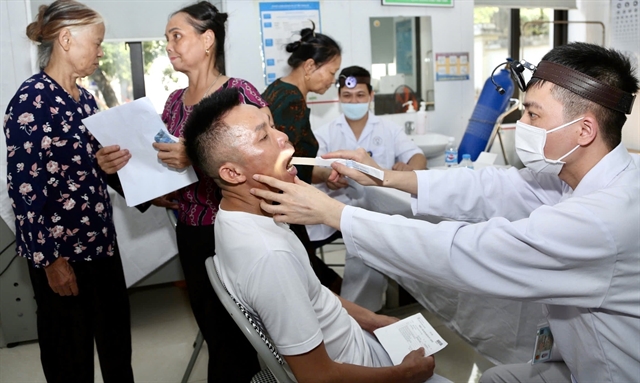 |
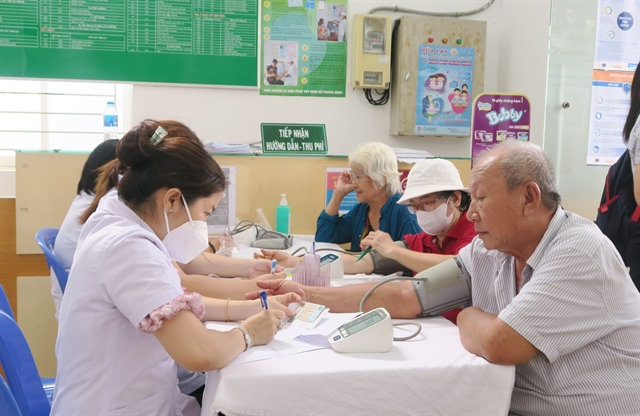
| Residents of Tiến Thắng Commune in Hà Nội attend a free medical check-up covering multiple specialities, including disease screening and early detection of diabetes, lipid disorders, anaemia and blood cell abnormalities on the morning of September 13, 2025. VNA/VNS Photo |
At the same time, many longstanding bottlenecks in procurement, bidding, medical service pricing and health insurance payment were resolved. In particular, the sector focused intensive efforts on definitively addressing outstanding issues in the construction projects of the second branches of Bạch Mai Hospital and Việt Đức Friendship Hospital, completing and inaugurating the facilities on December 19, in line with the set schedule.
Despite these gains, the Deputy Prime Minister also pointed out several shortcomings that need to be addressed. Basic health indicators and access to health care services remained uneven across regions and localities. Grassroots health care had yet to fully provide comprehensive primary healthcare services.
Disease prevention, health promotion and food safety assurance remained limited. Hospital governance still had shortcomings, while health care human resources in some localities and facilities failed to meet requirements, he added.
There were also insufficient mechanisms and policies to mobilise resources for health care development, particularly private health care. A number of violations, abuses and profiteering in medical services, pharmaceuticals and food safety caused public concern. The application of information technology and digital transformation in health care had been slow.
In addition, replacement fertility nationwide was not yet firmly sustained, he said. The sex ratio imbalance at birth remained high, and there was a lack of comprehensive and effective solutions to fully leverage the advantages of the golden population period. Human trafficking and child abuse remained complex, while facilities at social assistance centres and institutions caring for the elderly and people with disabilities fell short of demand.
To address these challenges, Deputy PM Long requested the health sector to focus on several key tasks.
First, it must effectively implement the Party’s and State’s guidelines and policies on health care, particularly the Politburo’s Resolution No 72, the Government’s action programme to implement the resolution, the National Assembly’s resolution on special breakthrough mechanisms for health care and the National Target Programme on Healthcare, Population and Development.
Second, effective mechanisms and solutions must be created to mobilise private sector participation and social resources, especially in investment and the provision of high-quality health care services, preventive services, scientific research, human resource training and the production of medicines, vaccines and medical equipment, as well as testing and standardisation.
Third, digital transformation in health care must continue to be accelerated.
Fourth, there must be clear progress in medical ethics.
Fifth, the organisational apparatus of the health system should be further consolidated and restructured, with adjustments to the planning of health care and social assistance networks to align with administrative reorganisation and the two-tier local government model.
In the immediate term, the Deputy Prime Minister also required the Ministry of Health to maintain close coordination with relevant ministries, agencies and localities to complete the remaining items and conditions for the second branches of Bạch Mai Hospital and Việt Nam - Germany Friendship Hospital.
At the same time, the ministry should work closely with the People’s Committee of Ninh Bình Province to speed up the investment project for the second campus of the Geriatric Hospital, enabling these facilities to become operational as soon as possible to meet people’s needs for medical examination and treatment. — VNS
Society
 Society
 Society
 Society
 Society
 Society
 Society
 Society
 Society
 Society
 Society
 Society
 Society
 Society
 Society