 Society

Việt Nam, Denmark issue joint statement on establishment of Comprehensive Strategic Partnership
1.
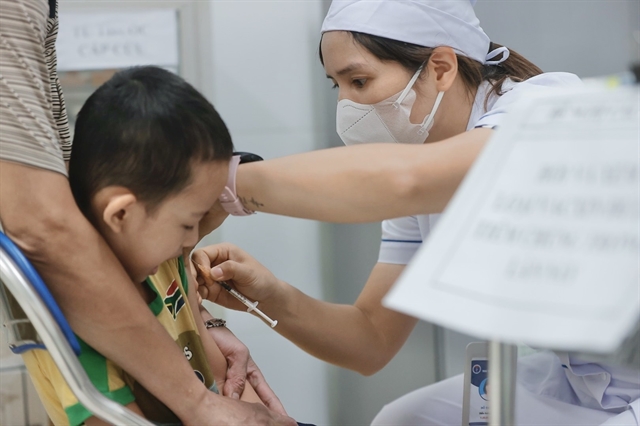 |
| A health worker administers measles vaccine to a child in Hà Nội. — VNA/VNS Photo |
HÀ NỘI — Infectious diseases remain largely under control in Hà Nội despite a rise in several illnesses this year, city health authorities said, pointing to intensified surveillance, vaccination efforts and public-health campaigns.
According to the city's Department of Health, cases of hand, foot and mouth disease and measles have increased markedly compared with the same period in 2024, though officials said no widespread outbreaks have occurred.
From the start of the year, the city recorded 6,262 dengue fever cases across 125 of its 126 wards and communes, a decline of 28 per cent from a year earlier. Health officials attributed the drop to sustained mosquito-control campaigns and early detection of cases.
By contrast, hand, foot and mouth disease surged to 6,015 cases, more than double last year’s figure, though no deaths were reported. Measles infections also rose sharply compared to 2024, with 4,484 cases and one fatality.
Smaller numbers of other infectious diseases were also reported, including 34 cases of whooping cough, 27 cases of tetanus, nine cases of streptococcal infection linked to pigs – one of them fatal – four cases of meningococcal disease and three cases of Japanese encephalitis.
Health authorities said they had stepped up surveillance at hospitals and in communities, with a particular focus on dengue fever and hand, foot and mouth disease, to ensure rapid investigation and containment of cases and clusters.
Mosquito-control measures have been expanded in high-risk areas, including campaigns to eliminate larvae and targeted spraying to kill adult mosquitoes, as the city seeks to prevent both dengue fever and chikungunya.
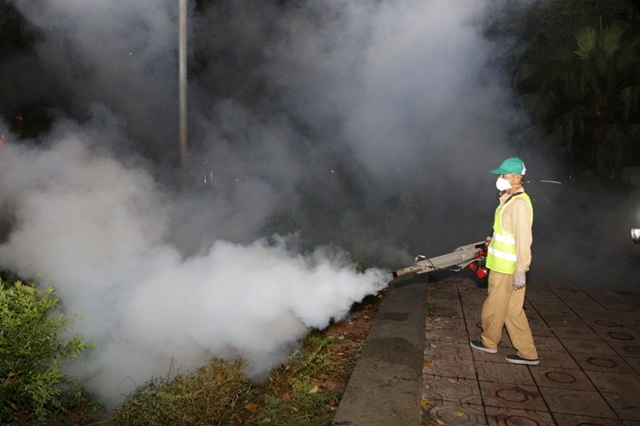 |
| A health worker sprays insecticide to control mosquitoes at a park in Hà Nội. |
The city's Centre for Disease Control continues to monitor mosquito density and breeding indices at sites with active cases, former outbreak locations and other high-risk areas, allowing authorities to respond quickly when risks rise.
The health sector is also working closely with veterinary agencies to track diseases in animals and strengthen prevention of zoonotic infections – illnesses that can spread from animals to humans.
Public communication has been intensified to keep residents informed about disease risks and preventive measures, with officials urging people to cooperate with health authorities during investigations and outbreak responses.
Vaccination remains a central pillar of the city’s strategy. Health and education authorities are jointly reviewing immunisation records and organising catch-up vaccinations for students of all ages.
Vaccinations are being carried out by ward- and commune-level health stations, which officials say are operating effectively.
At least 90 per cent of children found to be unvaccinated or insufficiently vaccinated against measles, measles-rubella, polio and Japanese encephalitis are expected to receive catch-up doses.
As the spring season approaches, health authorities are also preparing for seasonal diseases such as influenza, measles, whooping cough and chickenpox, while maintaining controls for other infectious threats.
Particular attention is being paid to acute flaccid paralysis, amid concerns over cases reported in Laos and the risk of cross-border transmission. Officials said they had intensified monitoring for suspected cases, expanded polio vaccination coverage and prepared rapid-response teams in the event of detection.
Residents have been advised to limit contact with infected individuals, practise good personal hygiene and food safety, use clean water, properly manage waste, ensure children are fully vaccinated and seek medical care promptly if symptoms appear.
Local governments have been instructed to strengthen surveillance at the grassroots level, conduct epidemiological investigations when suspected cases arise and ensure that samples are properly collected and sent to the Centre for Disease Control for testing. — VNS
Society
 Society
 Society
 Society
 Society
 Society
 Society
 Society
 Society
 Society
 Society
 Society
 Society
 Society
 Society