 Opinion
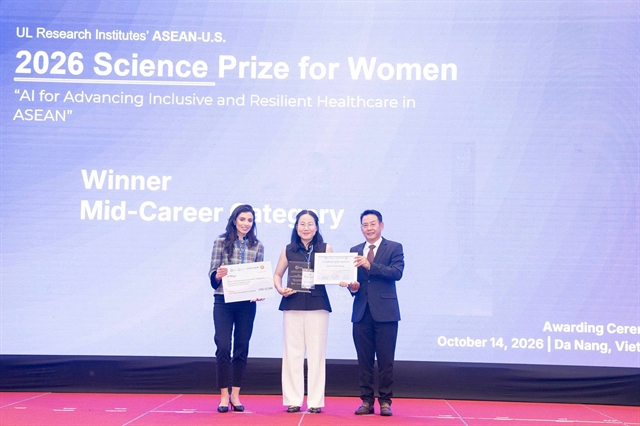
Vietnamese scientist wins ASEAN-US Science Prize for Women
1.
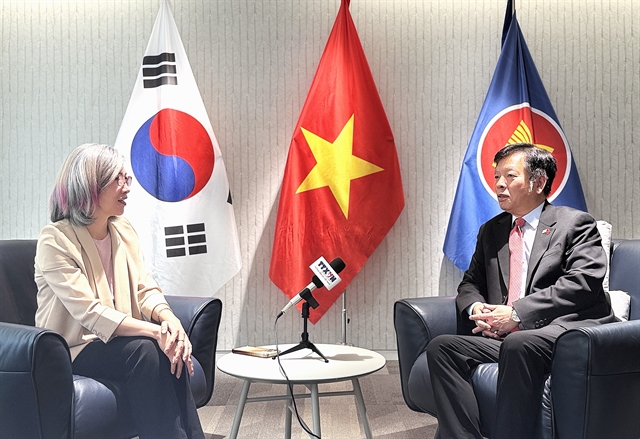 |
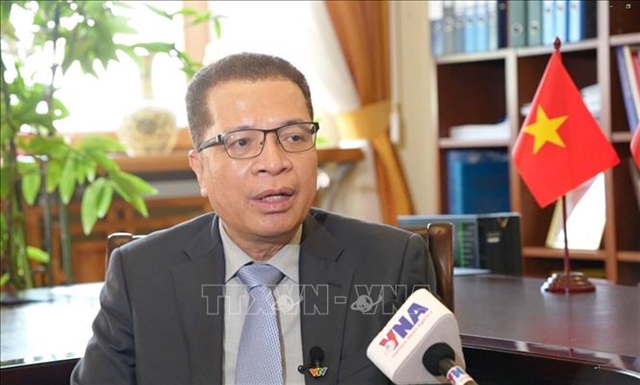
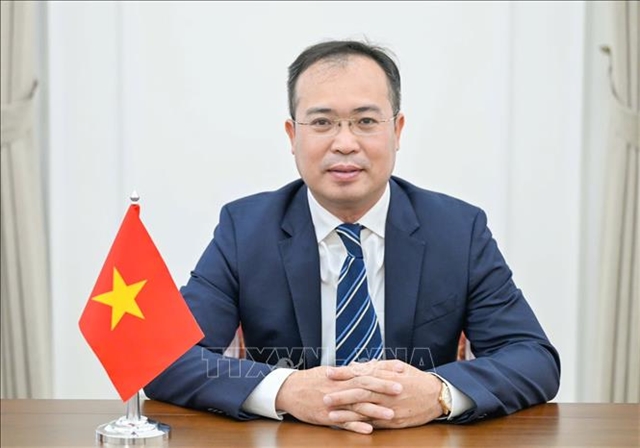
| Vietnamese Ambassador to the RoK Vũ Hồ in the interview with Vietnam News Agency correspondent in Seoul. — VNA/VNS Photo |
SEOUL — National Assembly (NA) President Trần Thanh Mẫn’s official visit to the Republic of Korea (RoK) from September 6–9 is significant for parliamentary cooperation and bilateral relations in general, Vietnamese Ambassador to the RoK Vũ Hồ said.
In an interview with Vietnam News Agency correspondents in Seoul, the diplomat noted that the visit reaffirmed the consistent importance that the Party, State and NA of Việt Nam attach to the Việt Nam–RoK Comprehensive Strategic Partnership. It also directly follows the recent high-level exchanges, including the visit to Việt Nam by the Speaker of the RoK National Assembly in 2025 and RoK President Lee Jae Myung’s state visit to Việt Nam in April 2026.
In brief, NA President Mẫn's visit aims to advance bilateral relations from a strong political framework towards concrete, measurable outcomes that bring practical benefits to people and businesses in both countries.
Ho expressed his hope that the trip will generate new developments in three directions.
First, it will maintain regular exchanges between leaders of the two legislatures, specialised committees and lawmakers, thereby enhancing mutual understanding, sharing experience and building consensus on major issues in bilateral relations.
Second, it is expected to promote the supervisory role of the two legislatures in implementing high-level agreements, particularly large-scale programmes and projects with direct impacts on businesses, workers and people.
Third, it will strengthen coordination at the Inter-Parliamentary Union (IPU) and regional parliamentary forums, contributing to peace and stability, respect for international law and the promotion of ASEAN centrality.
The Việt Nam–RoK and RoK–Việt Nam parliamentary friendship groups should continue to serve as flexible, practical bridges, he suggested. Lawmakers should not only foster friendship but also help identify at an early stage and address issues concerning businesses, workers, the Vietnamese community and multicultural families.
The ambassador stressed that the two legislatures could strengthen exchanges between specialised committees on AI governance, data protection, information security, carbon markets, clean energy, semiconductor industry development and oversight of major infrastructure projects.
These are all emerging areas in which legislation must keep pace with rapid technological development while at the same time safeguarding national interests, people's rights and a healthy competitive environment.
Legislative cooperation should also be linked to efforts to improve the quality of economic cooperation, he added.
In 2025, bilateral trade reached US$89.5 billion, while in the first five months of 2026 it stood at $47.4 billion, up nearly 35 per cent year on year. The RoK's accumulated investment in Việt Nam had reached $101 billion as of May 2026, across more than 10,000 projects.
Such a large scale of cooperation requires a transparent and stable legal framework that also encourages technology transfer, raises localisation rates and creates conditions for Vietnamese businesses to participate more deeply in supply chains, the diplomat said.
“The goal is not simply to attract more capital, but to create new value,” Ambassador Hồ said.
In the semiconductor sector, he recommended the two countries work towards developing a comprehensive ecosystem involving businesses, universities, research institutions and technical human resources. In AI and digital transformation, attention should be paid simultaneously to data, ethics, security and commercialisation.
These are precisely the areas in which cooperation among the legislatures, governments, businesses and educational institutions of the two countries can deliver long-term results.
He added that people-to-people exchanges are an asset of Việt Nam–RoK relations. There are currently nearly 400,000 Vietnamese living in the RoK and more than 200,000 Koreans in Việt Nam, while more than five million trips were made between the two countries in 2025.
Behind these figures are workers, students, experts, entrepreneurs and tens of thousands of multicultural families. They serve as natural bridges between the two countries.
According to him, the two sides should focus on ensuring the legitimate rights and interests of their citizens; supporting substantive integration through language training, legal counselling, career guidance and accessible information; paying greater attention to women, children and multicultural families; and tapping the resources of their communities by encouraging intellectuals, entrepreneurs and young people to contribute to bilateral relations.
The two sides should also coordinate in addressing illegal residence in a lawful and humane manner, with a focus on prevention, while making recruitment processes more transparent and providing workers with better preparation in terms of legal knowledge, language and occupational skills.
“When the two communities are stable, integrated and successful, they will become the strongest social foundation for Việt Nam–RoK relations,” he said. — VNA/VNS
Opinion
 Opinion
 Opinion
 Opinion
 Opinion
 Opinion
 Opinion
 Opinion
 Opinion
 Opinion
 Opinion
 Opinion
 Opinion
 Opinion
 Opinion