 Opinion

Vietnamese community serves as important bridge in Việt Nam-India ties
1.
 |
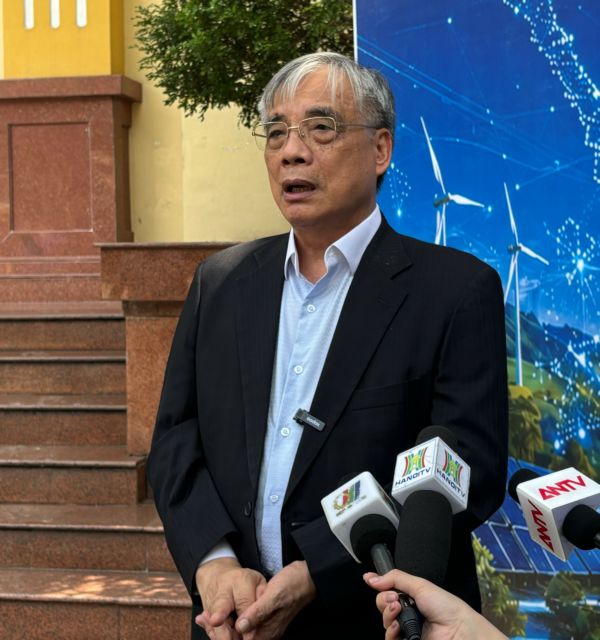
| Deputy Minister of Home Affairs Vũ Chiến Thắng. — VNA/VNS Photo |
Deputy Minister of Home Affairs Vũ Chiến Thắng spoke with Vietnam News Agency about the revised Law on Vietnamese Guest Workers under Contract that was recently passed by the 16th National Assembly.
Why does the revised Law on Vietnamese Guest Workers under Contract give priority to the development of skilled workers by sending them abroad?
I think this is first and foremost a change in mindset. Previously, when discussing sending Vietnamese workers abroad, we often emphasised employment, income and poverty reduction, which was a good direction, but not sufficient.
This time, the law sets out a clearer objective, in which sending workers abroad is also a channel for training and developing the country's workers.
Clause 2, Article 1 of Law 22/2026/QH16, amending Clause 1, Article 4 of Law 69/2020/QH14, sets out a policy of prioritising the deployment of trained employees with professional and technical qualifications to work abroad, enabling them to increase their incomes, access technology and modern management practices and improve their skills, foreign language proficiency, labour discipline and professional working pratices.
This is particularly important as the country places greater demands on science and technology development, innovation, digital transformation and labour productivity.
When working in modern production environments overseas, workers with professional and vocational skills can gain access to technologies, production processes and management methods, while improving their foreign language proficiency, labour discipline and industrial working style in ways that domestic training cannot fully replace.
When they return, what they have accumulated becomes part of the human capital serving the domestic economy. We should thus not look only at the number of people sent abroad, but also at the value each worker can bring back.
This is also why the revised law goes beyond preferential policies for workers before and during their employment abroad and addresses the effective use of workers after their return, including connecting employment information with the domestic labour market.
It also provides special mechanisms and policies for certain occupations requiring professional and technical qualifications or fields prioritised for development by the State, with flexibility following requirements of each period.
If carried out effectively, sending workers abroad will no longer be a one-way flow. Employees will go abroad to work, learn and accumulate experience before returning, while the knowledge, skills, experience and capital they acquire will come back with them to the domestic economy.
That is how overseas employment can become an integral link in the overall strategy for training, developing and utilising the nation's labour force.
The Ministry of Home Affairs is currently studying and drafting a strategy on sending Vietnamese personnel abroad, ensuring alignment with the national workforce development strategy and economic diplomacy orientations.
The ministry is also continuing to study the recognition of workers' qualifications, occupational skills and skills profiles in line with national occupational skill standards, so that each period of overseas employment is recognised and accumulated as valuable long-term professional capacity.
Việt Nam also faces shortages of skilled workers. How can sending them abroad avoid creating a brain drain?
I think the greater concern is not a brain drain, but a waste of human resources.
Workers are sent abroad for a fixed period under employment contracts. The policy is not intended to send qualified workers abroad and have them stay there, but to give them opportunities to acquire skills, foreign language proficiency, experience and access to technology before returning home.
If an engineer, skilled technician or skilled employee returns after several years in a high-tech environment with significantly improved qualifications, then in the medium and long term, the country's workers have been enhanced rather than depleted.
Of course, this does not mean sending workers abroad without considering domestic labour demand. This must be balanced within the overall national workforce strategy.
The Government has tasked the Ministry of Home Affairs with studying and drafting a strategy on sending Vietnamese workers abroad in which the number of workers, their occupational structure and priority markets must be determined in relation to domestic personnel needs and the needs of key sectors.
But balancing the numbers alone is not enough. If we want workers to return, there must be attractive opportunities at home. The direction set out is clear: skills, capital, foreign language proficiency and working styles acquired overseas must be recognised, utilised and disseminated rather than wasted.
Returning workers must be connected with businesses, industrial parks, production establishments and start-up programmes.
In practice, returnees from Japan and the Republic of Korea have become an important resource for the supporting industry, while a clear trend of returnee entrepreneurship has emerged in many localities, creating additional jobs for communities.
The revised law addresses the connection of employment information of returning workers with the domestic labour market and provides orientations for mechanisms and policies to attract and effectively use this resource.
We must make workers clearly see that what they learn abroad has value when they return. Their skills are recognised, domestic businesses need them and they have opportunities for employment and career development.
Retaining capable people cannot be achieved through administrative regulations alone. We must create opportunities and an environment in which they want to return and can make use of what they have learned.
From this perspective, sending workers abroad can become a 'labour cycle' rather than a one-way flow of human capital.
Workers with training and professional and technical qualifications who go abroad will have opportunities to enter markets and occupations offering higher incomes, generating greater and more sustainable economic benefits than workers with limited qualifications or unskilled workers.
This will also encourage workers to recognise the need to acquire professional knowledge before entering the labour market.
Does the shift from prioritising occupations in which Việt Nam has strengths to fields prioritised for development by the State represent a move toward developing workers for strategic sectors?
I think that assessment fairly accurately reflects the spirit of the new provision. The current law provides special mechanisms for occupations requiring high professional and technical qualifications or in which Việt Nam has advantages. This approach is mainly based on the advantages we already have and is relatively passive.
The new provision shifts to a focus on occupations and jobs requiring professional and technical qualifications or fields prioritised for development by the State. It is based on the country's development orientation and is more proactive, marking a change from exploiting existing advantages to preparing workers for areas the country will need.
Put simply, previously we could look at what the market needed and where Vietnamese workers had strengths before sending them abroad. Now, the State can take a longer-term view: which sectors will the country develop? What types of workers will they require? And how can we prepare those employees through training and overseas employment?
The policy is designed in two directions: creating conditions for workers to be trained and gain experience abroad, while establishing mechanisms to attract and use them upon their return.
The list of priority fields must remain flexible to match socio-economic development requirements. Today, these could include processing and manufacturing, digital technology, semiconductors, logistics and high-tech agriculture. Tomorrow, they could include new fields in line with the orientations of the Party and State.
I want to emphasise that this commissioning approach will be carried out in tandem with strategic tools and economic diplomacy.
The strategy of sending Vietnamese workers abroad will identify priority market structures linked to priority sectors. Negotiations and agreements on labour cooperation with other countries will be closely linked to economic diplomacy, with priority given to opening programmes for highly skilled workers and establishing mechanisms for training, employment and qualification recognition.
Sending workers abroad will not simply meet immediate labour orders, but will gradually create skilled labour flows to serve the country's strategic sectors in the future.
If overseas employment is viewed as a workforce training channel, how can the skills accumulated abroad truly become a resource when workers return?
To do so, we must design the entire input, process and output of overseas employment. Before departure, worker preparation and vocational and foreign language training must be aligned with the requirements of each market and occupation.
We must direct workers toward jobs where they can genuinely improve their skills and gain access to advanced technologies and production methods, rather than simply supplying labour.
During their overseas employment, workers' skills also need to be recognised and accumulated. Each worker is managed through an identification code in a specialised database, with their employment history, occupation, position, duration and market recorded and statistically tracked.
The Ministry of Home Affairs is studying the recognition of workers' qualifications, occupational skills and skills profiles in line with national occupational skill standards, so that each period of overseas employment is seen in its professional capacity with long-term value.
This is very important. When workers return, they should bring home not only savings, but also a 'skills asset' that is recognised and has value in the domestic labour market. But recognising skills is only half the story. The other half is whether there is somewhere to put those skills to use.
The revised law strengthens the connection between the employment data from returning workers and the domestic labour market. It also provides for linking the database of Vietnamese workers employed abroad with labour market information.
With such data, we will know what skills a worker returning home has gained, where they have worked, for how long and in what occupation. Employment service centres, local authorities and businesses can then connect them with suitable positions.
For example, an employee who has worked in Japan or the Republic of Korea, speaks a foreign language and is familiar with technology, production processes and industrial working styles, can immediately turn those skills into value in the domestic economy if properly connected with domestic businesses, particularly foreign-invested enterprises and supporting industries.
Overseas employment can become a genuine training channel only when what workers learn is recognised, used and further developed after they return.
How can the skills accumulated abroad be used effectively after workers return, avoiding a waste of talent?
An important new point is that the issue of workers returning home has been elevated into a State policy, rather than remaining merely an operational support matter. The law provides for stronger connections between employment data from returning workers and the domestic labour market to promote and effectively utilise employees with occupational skills.
This provides a basis for ministries, sectors, localities and relevant stakeholders to participate in the process.
But I want to emphasise that the connection cannot be made in a general or superficial manner. It must connect the right person with the right job.
If data on workers' employment histories are available, employment service centres and local authorities can identify each person's skills and experience and introduce them to businesses with corresponding needs.
At the same time, we must continue improving mechanisms for recognising professional qualifications and occupational skills so that domestic businesses have a basis for recruitment and appropriate remuneration. Those wishing to start businesses should also have access to appropriate support mechanisms.
In reality, many workers returning from Japan and the Republic of Korea have joined the supporting industry or used the capital, skills and experience they accumulated to successfully start businesses and create jobs for their communities. These are encouraging signs.
And for this to succeed, responsibility cannot rest solely with the Ministry of Home Affairs. The ministry is responsible for building institutions and databases and coordinating efforts, while local authorities must proactively facilitate connections and support start-ups and service enterprises, as well as returning workers.
When the entire system works together, each returning worker can truly become a skills ambassador spreading value throughout the economy.
I want to reiterate that the greater concern is not a brain drain, but a waste of talent. A worker who returns with new skills, foreign language proficiency, experience, capital and working habits, but who cannot find a suitable job, represents a huge waste.
With increasingly demanding requirements for skills and foreign language proficiency in destination markets, what will the State do to ensure unskilled workers are not left behind?
First, it must be clearly confirmed that 'priority' does not mean 'barrier'.
Prioritising trained workers with professional and technical qualifications does not mean narrowing opportunities for unskilled or untrained workers. On the contrary, it can motivate workers to improve their skills and qualifications, both to meet international market requirements and to enhance their position in the domestic labour market.
The policy is not a choice between skilled and unskilled workers, but about raising the overall quality of the Vietnamese workforce. The State will continue policies supporting vocational and foreign language training, as well as credit support, so that employees wishing to work abroad are not denied opportunities simply because of financial difficulties.
Unskilled workers stand to benefit most from the new regulations. Provisions on preparing labour sources, transparency in fees, monitoring recruitment activities at the local level and controlling training fees are important shields protecting vulnerable groups from fraud and illicit charges.
The ultimate goal is to ensure that workers, regardless of their starting points, have opportunities to improve their capabilities and access international labour markets safely and transparently.
In your view, what will be the measure of success for this policy in the coming years?
I don't think success can be measured simply by the number of people sent abroad. We need to look at the quality of the labour flow. How is the proportion of trained workers with professional and technical qualifications increasing?
What occupations are Vietnamese workers engaged in and in which markets? What are their incomes? And, most importantly, what have they learned during their overseas employment?
Another measure is workers' rights and safety. We need to look at whether the costs workers must pay before departure decrease, whether cases of fraud and unauthorised fees decline, whether violations of employment contracts and illegal residence drop, and whether incidents arising overseas are detected and handled promptly.
A successful policy must first and foremost be one that better protects workers. I believe the most important measure lies in what happens after workers return.
How many find jobs matching the skills they have accumulated? How many economic sectors does the country need? How many successfully use their capital and experience to start businesses? How many become trainers who pass their skills on to other workers?
If those figures rise, it means the labour cycle is truly functioning. Workers go abroad, accumulate skills and experience, return home, are effectively employed and continue creating value for the economy.
Ultimately, the highest measure is the satisfaction, income and standing of each Vietnamese worker, who should be respected while abroad and valued when they return. —VNS
Opinion
 Opinion
 Opinion
 Opinion
 Opinion
 Opinion
 Opinion
 Opinion
 Opinion
 Opinion
 Opinion
 Opinion
 Opinion
 Opinion
 Opinion