 Opinion

Hà Nội plans new safari park as part of major tourism push
1.
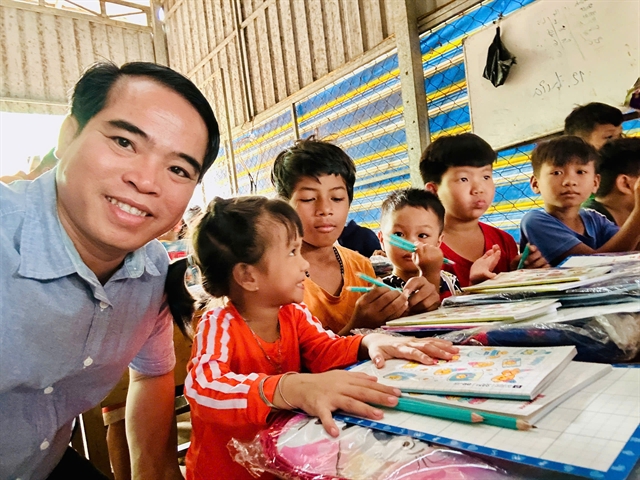 |
| Nguyễn Văn Hào with children at a classroom he and his team built for a remote Vietnamese community in Cambodia. Photos courtesy |
Resolution 23 promulgated by the Communist Party of Việt Nam in early August represents a profound shift in mindset, elevating the stature of overseas Vietnamese affairs. It sets higher demands for awakening and powerfully leveraging the resources of the overseas Vietnamese community to contribute to national development in the new era. On this occasion, Việt Nam News reporters Nguyễn Khánh Chi and Nguyễn Hằng spoke to the principal of the Vietnamese-Khmer Friendship Primary School in Prey Veng Province, Cambodia, Nguyễn Văn Hào.
The Resolution emphasises that overseas Vietnamese are not only an inseparable part of the Vietnamese nation but also an important resource and a bridge between Việt Nam and the world. How has the Vietnamese community in Cambodia demonstrated its role in preserving and promoting Việt Nam’s cultural identity?
As previously noted, a key highlight of Resolution 23 is its recognition that overseas Vietnamese are not only an inseparable part of the Vietnamese national community but also an important resource connecting Việt Nam with the world.
In Cambodia, this is reflected in a community of more than 100,000 people living across 24 provinces. This resource lies first and foremost in the people themselves and in their vibrant cultural life. As they live, study and work in Cambodia, they have continued to preserve the Vietnamese language, customs and family traditions, as well as cultural values associated with the Lunar New Year (Tết), community activities, mutual support and a deep connection to their homeland.
I would particularly like to emphasise the younger generation. If our young people can master the Vietnamese language and understand our national history and culture while successfully integrating into Cambodian society, they can become an important bridge between our two countries.
Under the guidance of the Khmer-Vietnam Association in Cambodia, the community remains united and committed to preserving its language and traditions while integrating into and contributing responsibly to Cambodian society.
A free Vietnamese language class for children from the Vietnamese community, established and managed by the Prey Veng Provincial Branch of the Khmer-Vietnam Association in Svay Plua Commune, Peam Chor District, in November 2025.
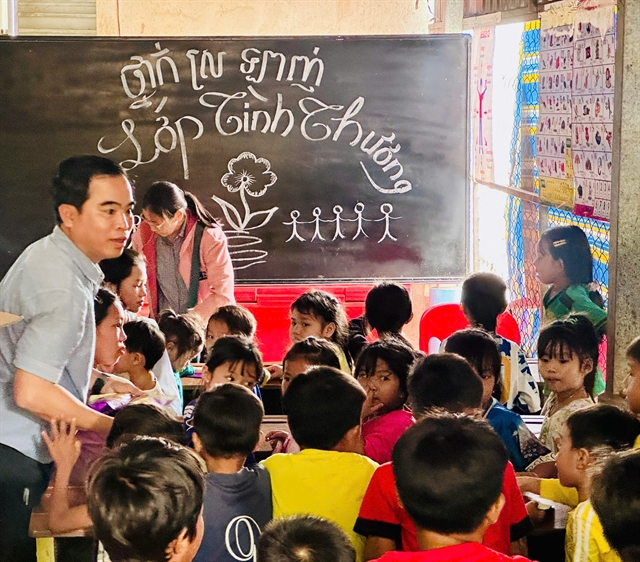 |
| A free Vietnamese language class for children of the Vietnamese community, established and managed by the Prey Veng Provincial Branch of the Khmer-Vietnam Association in Svay Plua Commune, Peam Chor District in November 2025. |
For the first time, the Resolution identifies the preservation of the Vietnamese language abroad as a vital task. Based on your experience teaching at the Vietnamese-Khmer Friendship Primary School, what do you consider the greatest significance of preserving the language in strengthening the connection between young overseas Vietnamese and their roots?
Drawing on my teaching experience at the Vietnamese-Khmer Friendship Primary School in Prey Veng Province, I believe the significance of preserving the Vietnamese language goes far beyond linguistic proficiency. More importantly, the language serves as an “umbilical cord” connecting children to their roots, their families and their national identity. This is why, alongside literacy, our school incorporates lessons about the customs, traditions and cultural heritage of our homeland, Việt Nam.
When a child can fluently read a Vietnamese sentence or understand the stories told by their parents and grandparents, when they can sing a Vietnamese song, recite a poem or understand the history and traditions of the Vietnamese people, the language ceases to be simply a school subject. It becomes a language of emotion and family memory, helping keep their connection to their national identity alive.
I also believe that preserving the Vietnamese language should not be seen as a way of setting children apart from Cambodian society. On the contrary, proficiency in Vietnamese and successful integration into Cambodia can and should go hand in hand.
A child can take pride in their Vietnamese heritage and culture while also mastering the Khmer language, respecting Cambodian culture and becoming a productive member of the society in which they live.
The Khmer-Vietnam Association and Chợ Rẫy-Phnom Penh Hospital provide medical assistance and gifts to Cambodian and Vietnamese residents.
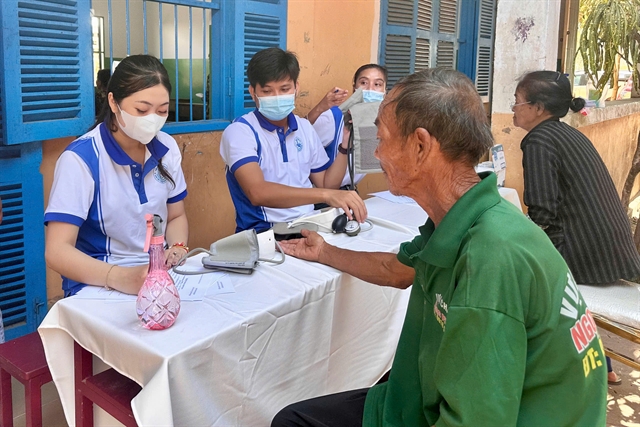 |
| The Khmer-Vietnam Association and Chợ Rẫy – Phnom Penh Hospital provide medical aid and gifts to Cambodian and Vietnamese residents. |
With advances in science and technology, the space for contribution is no longer limited by geography. In your opinion, how should the State support the development of digital networks for overseas Vietnamese experts and intellectuals so they can contribute their expertise and resources to the country’s development?
In the context of rapid scientific and technological development and digital transformation, I believe we need to change the way we think about how overseas Vietnamese can contribute to the country. Physically returning to Việt Nam is no longer a prerequisite for serving the homeland or understanding and contributing to its development.
Today, someone can participate in a project in Việt Nam from anywhere in the world through digital platforms. This reflects the spirit of “accompanying and creating mechanisms” emphasised in Resolution 23.
To make this possible, we need to develop global digital platforms and databases connecting professionals, intellectuals and scientists. These platforms should cover a wide range of fields, including the economy, culture, education and even social and family life.
Most importantly, we need to move from the mindset of “inviting overseas Vietnamese to return home” towards “expanding the space for their contribution”. Some people may choose to return to Việt Nam for long-term work, while others may only be able to contribute a few hours a week from wherever they live. Both forms of engagement are equally valuable as long as they create value for the country.
At the Homeland Spring 2026 festival in Cambodia, Nguyễn Văn Hào served as an ông đồ, practising the traditional art of calligraphy. The activity, closely associated with the Vietnamese Lunar New Year, brought the spirit of Tết to the overseas community.
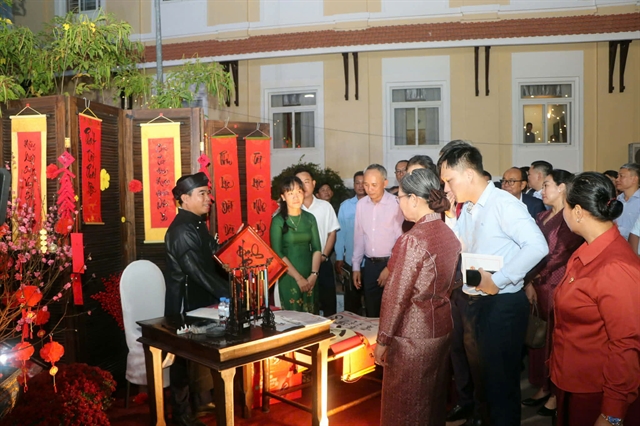 |
| At the Homeland Spring 2026 festival in Cambodia, Nguyễn Văn Hào served as an ông đồ, practising the traditional art of calligraphy. This cultural performance is a hallmark of the Vietnamese Lunar New Year, bringing the spirit of Tết to the overseas community. |
A key highlight of Resolution 23 is the spirit of “accompanying and listening”. What are your thoughts on this approach?
To me, “accompanying and listening” is primarily about shifting the mindset from “managing” the community towards “serving and connecting” with it. Overseas Vietnamese have diverse backgrounds, circumstances and needs, so the Government needs to listen closely to their concerns, difficulties, aspirations and ideas.
Listening is essential to understanding the community and translating that understanding into practical and supportive policies. Accompanying overseas Vietnamese also means ensuring that wherever they live, they can preserve the Vietnamese language and culture, maintain their connection to the homeland and contribute their expertise and resources.
I feel that Vietnamese people abroad, particularly those in Cambodia, increasingly sense that the State is listening to and standing alongside them. At the same time, they maintain strong ties with their homeland and, although they contribute in different ways, share a common desire to preserve and promote their cultural heritage. — VNS
Opinion
 Opinion
 Opinion
 Opinion
 Opinion
 Opinion
 Opinion
 Opinion
 Opinion
 Opinion
 Opinion
 Opinion
 Opinion
 Opinion
 Opinion