 Opinion

AIMCONNECT 2026 Held in Singapore, Bringing Global Automotive Leaders Together to Explore the Future of AI, Trust and Connected Mobility
1.
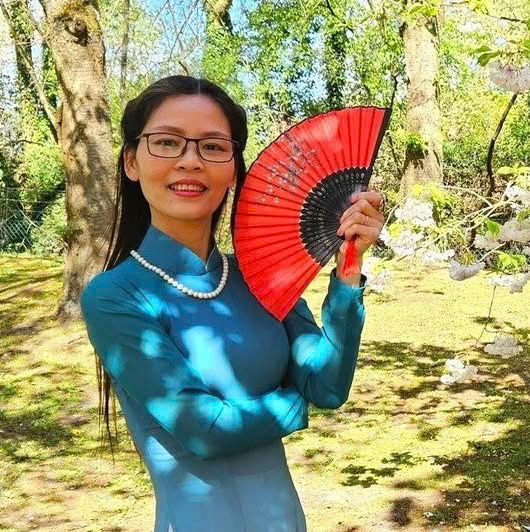 |
| Đào Thị Thu Hằng, head of the Vietnamese Áo Dài Club in Europe (AVE). |
For Đào Thị Thu Hằng, head of the Vietnamese Áo Dài Club in Europe (AVE), the áo dài is a beautiful "language" through which Việt Nam can strengthen national soft power and reputation. Speaking with Việt Nam News reporter Nguyễn Khánh Chi, she emphasised the vital role of overseas Vietnamese as cultural envoys, a mission highlighted in the Resolution 23 on overseas Vietnamese affairs recently issued by the Communist Party of Việt Nam.
Based on the AVE’s activities, how do you perceive the power of the áo dài in introducing a modern yet deeply traditional image of Việt Nam to international friends?
Resolution 23 has elevated the role of the overseas Vietnamese community to a new strategic vision. It affirms that overseas Vietnamese are not only an inseparable part but also a vital strategic resource, acting as a bridge between Việt Nam and the world while directly contributing to the cause of building, developing, and protecting the Fatherland. In particular, the Resolution identifies the goal of promoting their role as “ambassadors”, contributing to the enhancement of national soft power and prestige.
From my practical experience in Belgium and across Europe, I believe that the áo dài is a cultural icon with a unique resonance that allows us to fulfill that role effectively.
To me, the áo dài is one of Việt Nam's most recognisable cultural symbols. When a Vietnamese woman appears in an áo dài at an event in Belgium or an international exchange in Europe, the first things international friends perceive are the beauty, elegance, and distinct identity of Việt Nam.
More importantly, that beauty allows us to unlock a broader narrative about the country and its people: our history, culture, family values, the spirit of Vietnamese women, traditional arts and crafts, creativity, and the ongoing process of the country’s global integration.
Through the activities of the AVE and other cultural exchanges, we find that Belgians and international friends are often deeply curious. They want to understand the origins, meanings, materials, patterns, and the stories behind the garment.
This is precisely when cultural diplomacy becomes tangible and relatable in everyday life. Those very questions provide us with the opportunity to tell the story of Việt Nam.
Resolution 23 sets the goal of leveraging the overseas Vietnamese community to promote the image of the country and its people, thereby strengthening national soft power and reputation. I believe the áo dài is a beautiful "language" through which we can achieve this.
Every áo dài worn at an international event, when accompanied by a well-told cultural story, becomes a "miniature ambassador" for Việt Nam.
In that spirit, I believe every cultural activity organised by the Vietnamese community abroad can serve as a bridge between Việt Nam and the world.
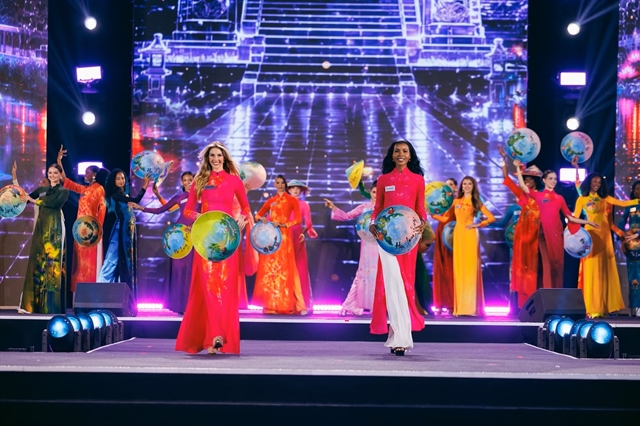 |
| Miss World 2026 contestants showcase the Vietnamese áo dài during the opening ceremony in Quảng Ninh Province on August 12. VNA/VNS Photo |
You have brought the áo dài to many cultural and community activities in Belgium as well as across Europe. What allows the outfit to transcend its role as a traditional garment and become a “cultural language” that helps Vietnamese people connect with their host societies and with one another?
I believe it is because the áo dài has the power to create an emotional connection before a linguistic one.
Wearing the áo dài at an international event in Belgium is not simply about wearing a beautiful outfit. It is a subtle and gentle way of saying: “I am Vietnamese, and I would like to introduce you to my country.” From that moment, the dress becomes a conversation starter.
I have met many Belgian and European friends who were captivated by the garment, and through the stories behind the outfit, they wanted to learn more about Việt Nam. They ask about Tết, about Vietnamese families, women, diverse regions, cuisine, music, and traditional customs. All of these elements attract the interest of international friends through the images printed, embroidered, woven, or painted onto the áo dài itself.
This is why I call it a “cultural language.”
Within the Vietnamese community specifically, the áo dài fosters a powerful sense of belonging. For those living far from home, seeing the silhouette of an áo dài at an international event brings a feeling of closeness to the homeland. It awakens memories, pride, and a deep consciousness of one's roots.
Resolution 23 identifies the overseas Vietnamese community as both a bridge between Việt Nam and the world and a vital force in preserving and spreading national identity, while fulfilling the roles of “cultural ambassadors” and “friendship ambassadors.” I believe the áo dài serves both of these roles perfectly.
On one hand, the áo dài connects Vietnamese people with their homeland. On the other, it opens a door for host societies to step in and explore Vietnamese culture. I believe this is a crucial aspect of integration: we do not just bring Vietnamese culture to the world for recognition; we use it as a medium to build understanding, goodwill, and friendship between the people of Việt Nam and other nations.
Resolution 23 places a focus on preserving and spreading national cultural identity, especially among the younger generation of overseas Vietnamese. In your opinion, how can we ensure that these children don’t just wear the áo dài, but truly understand and feel proud of the cultural values behind the attire?
I have observed that the Vietnamese youths in Europe today enjoy many more advantages than previous generations, yet they also face different challenges.
They grow up in a multicultural environment, speak the languages of their host countries fluently, are exposed to global trends, and possess very open mindsets. Because of this, preserving the Vietnamese language, history, traditions, and national identity must be approached through methods that resonate with their generation.
Resolution 23 recognises this clearly by setting the goal of bringing cultural identity, humanistic values, history, and the Vietnamese language to the younger generation. It also calls for strengthening education in national traditions and history through experiential activities, "returning to the roots" programmes, people-to-people exchanges, and the application of digital technology so that the youth can easily access Việt Nam's intellectual and cultural resources.
From my own experience, I believe we cannot ask the younger generation to preserve their culture through mere slogans. We must help them experience the culture and discover its core values for themselves.
For example, when a young person wears an áo dài, what is most special is that these children are not just wearing a Vietnamese áo dài; they are learning to tell the story of that garment in the language of the place where they live, the place where they were born and raised. When a child can stand before Belgian or European friends and speak in French, Dutch, or English about what is represented on their áo dài, they are no longer just a passive recipient of culture. They have become a bridge connecting Vietnamese culture to the world.
Therefore, the value of the áo dài lies not only in the beauty of its silk but in the stories it can tell and the people it can inspire to tell them.
I truly hope that cultural activities for the younger generation will be organized with this direction in mind: focusing on experience, creativity, interaction, and the application of technology, rather than just being performance-based programmes.
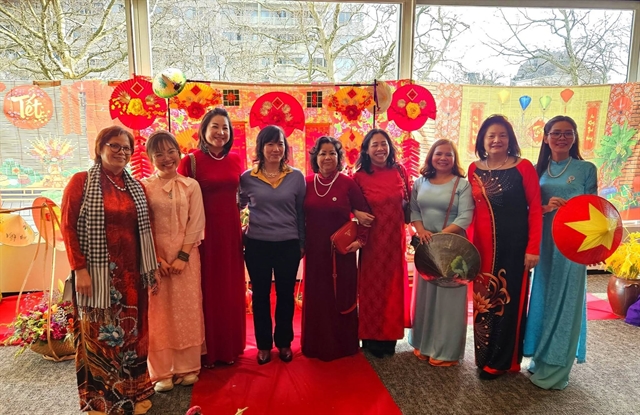 |
| Vietnamese women grace the corners of Europe in colourful áo dài to welcome the Year of the Horse during the 2026 Tết festivities. Photo courtesy of AVE Facebook |
The Resolution advocates for a shift from “mobilising, gathering, and caring” to “accompanying, creating mechanisms, and mobilising resources” for overseas Vietnamese. What mechanisms of support and connection will enable overseas Vietnamese to better serve the Fatherland?
I fully agree with the new spirit introduced in Resolution 23: shifting from “mobilising, gathering, and caring” to “accompanying, creating mechanisms, and mobilising resources.”
That represents a crucial shift in the mindset regarding affairs related to overseas Vietnamese. The Vietnamese community abroad has evolved significantly. The Resolution notes that there are currently over 6.5 million people in more than 130 countries and territories; the numbers of experts, intellectuals, scientists, entrepreneurs, and high-tech workers are growing and becoming younger. Therefore, I believe we must view overseas Vietnamese individuals, associations, and clubs not merely as objects of mobilisation, but as active subjects capable of contributing to and accompanying the nation’s development.
From a cultural perspective, I would like to propose the following:
First, there should be a regular and substantive connection mechanism between overseas individuals and associations and domestic cultural and diplomatic agencies, local authorities, and professional organisations.
Second, there is a need for official, high-quality, and multilingual cultural resources. These materials would enable overseas associations to effectively introduce Việt Nam to international friends.
Third, I hope for direct connection programmes between domestic artisans, researchers, artists, designers, and cultural experts and the overseas community. When these resources are linked, cultural programmes abroad will gain more depth and achieve greater impact.
Fourth, stronger attention must be paid to the younger generation within these associations. Resolution 23 emphasises identifying and nurturing a core team, particularly the youth. I believe this is a vital direction, as the future of the Vietnamese community in Europe lies largely with the second and third generations.
Fifth, I hope community cultural activities can better utilise digital transformation and modern media. Resolution 23 also stresses diversifying communication methods on digital platforms and creating conditions for overseas Vietnamese to participate in promoting Việt Nam’s image in their host countries.
Vice versa, overseas Vietnamese community must also take the initiative to change. We cannot simply wait for State support. While the State creates the mechanisms, the community must be proactive and creative in connecting and mobilising its own resources.
I am deeply impressed by the spirit of Resolution 23: the State and the community must become partners, working together to create value for the homeland and to elevate Việt Nam's image and position on the international stage.
If every overseas Vietnamese is considered a “cultural ambassador,” what message would you like to send to the Vietnamese community in Europe regarding preserving identity, connecting the community, and promoting Việt Nam’s image to the world in this new era?
We may live in different countries, speak different languages, and pursue different careers, but we all share a deeply precious commonality – our Vietnamese roots.
Resolution 23 has clearly defined the position of overseas Vietnamese: we are an inseparable part of the Vietnamese national community, a strategic resource, a bridge between Việt Nam and the world, and individuals who can directly accompany and contribute to the nation’s development.
I believe every overseas Vietnamese can become a “cultural ambassador” and a “friendship ambassador” in their own way. It does not necessarily require doing something monumental.
A Vietnamese person who lives well, works with integrity, respects the laws and culture of their host country, maintains the Vietnamese language within their family, and teaches their children about their grandparents, homeland, and origins—that itself is a way of preserving Việt Nam’s image.
Whether it is someone introducing Vietnamese cuisine to friends, a child telling classmates about the Lunar New Year (Tết), an artist showcasing Vietnamese music, an entrepreneur bringing Vietnamese products to the international market, or a woman wearing the áo dài at an international event and sharing stories about our culture—all are contributing to Việt Nam’s “soft power.”
In particular, I hope we devote more attention to the younger generation. If our youth understand the Vietnamese language, know our history, love our culture, and feel confident in their roots, we will not only preserve our identity for today but also ensure that Vietnamese heritage continues to be passed down to the future.
I believe that in this new era, overseas Vietnamese should not only be those who look toward the homeland but those who join the homeland in building its future. Through our professional endeavors, intellectual contributions, and heartfelt actions, each of us plays a vital role in shaping a global image of Việt Nam that is confident, civilised, modern, and deeply rooted in its unique heritage. VNS
Opinion
.jpeg) Opinion
Opinion
 Opinion
 Opinion
 Opinion
 Opinion
 Opinion
 Opinion
 Opinion
 Opinion
 Opinion
 Opinion
 Opinion
 Opinion
 Opinion