 Opinion

Market falls due to loss on energy, large-cap stocks
1.
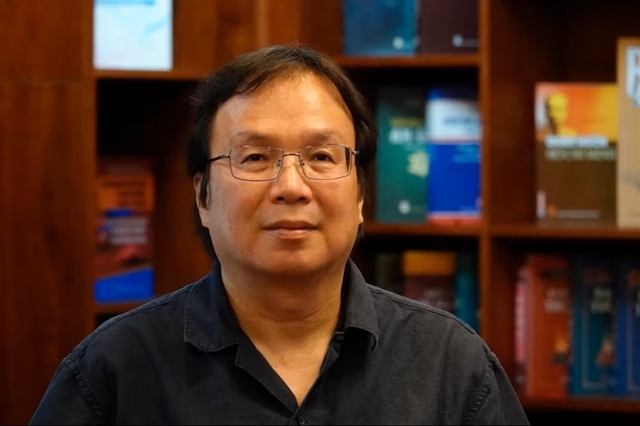 |
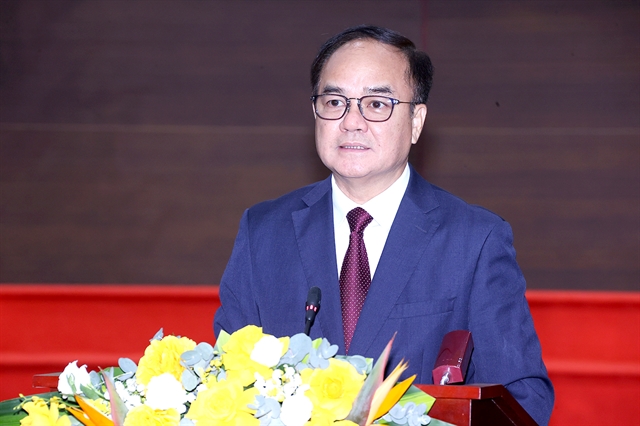
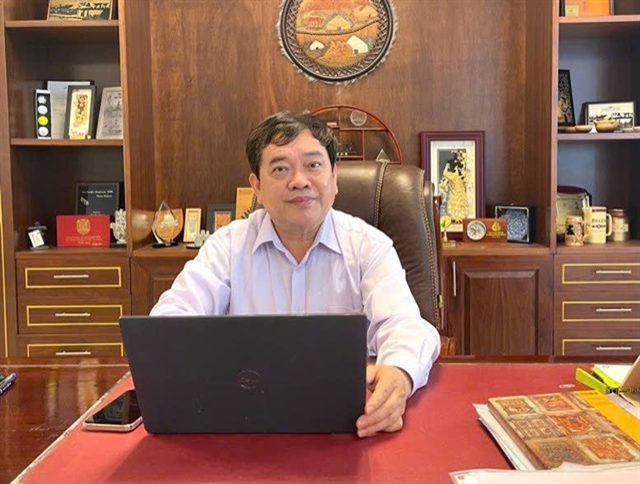
| Chairman of the Board of Members and General Director of the Vietnam Education Publishing House (VEPH), Nguyễn Tiến Thanh. Photos courtesy of VEPH |
The 2026-2027 academic year marks a significant milestone as the entire country adopts a single, unified set of textbooks for the first time. On this occasion, Nhân Dân (The People) newspaper spoke to Chairman of the Board of Members and General Director of the Vietnam Education Publishing House (VEPH), Nguyễn Tiến Thanh, regarding preparation efforts, the roadmap for free textbooks, and the challenge of narrowing regional gaps in education.
How has the Vietnam Education Publishing House prepared to ensure the goal of "accurate, sufficient, and timely" supply, while maintaining quality and reducing cost pressures for learners?
This is an academic year in which students nationwide, from remote islands to urban centers, will use the same set of textbooks. For us, the core mission is to provide textbooks accurately, in sufficient quantities, and on time, while simultaneously ensuring quality and reasonable pricing.
As of August 25, the publishing house has printed and distributed 225 million textbooks and over 76 million workbooks and reference books, exceeding the initial registration targets set by local provinces. From now until the start of the school year, VEPH will release an additional 10 million textbooks to the market to meet the actual needs of schools and localities.
Furthermore, on August 26, the VEPH’s Board of Members approved a plan to print an additional eight million textbooks to ensure textbook security and safety, mitigate the impact of natural disasters and floods, and address other arising practical situations.
One major challenge we faced was the change in administrative boundaries last year, which affected almost all textbook titles, including Mathematics. Eleven specific titles, primarily in Geography and History, required content revisions ranging from 31 per cent to 93 per cent, with some needing to be almost entirely rewritten. These books had to undergo rigorous evaluation by the National Appraisal Council before they could be released.
The policy of providing free textbooks is of particular public concern. In your opinion, what conditions need to be prepared for this humane policy to be effective, ensuring both feasibility and fairness across different regions and learners?
On July 3, the Government issued Decree No 271, which regulates the provision of free textbooks, to be implemented nationwide starting from the 2029-2030 academic year. This is a very sound policy that has garnered social consensus; indeed, many localities wish to implement it immediately in this current school year. However, early implementation faces several obstacles.
First, according to the Decree, localities must approve textbook demand forecasts to serve as a basis for budget estimations before October 30 of the preceding year. Since the Decree was only issued in early July, localities were unable to complete the required procedures in time for the current academic year.
Second, by the end of July, textbooks had already been distributed to more than 90 per cent of students. If we were to organise bidding and procurement for lending purposes now, it would result in wastefulness and create an unfair situation between students who have already purchased their books and those receiving free loans.
It is also necessary to communicate clearly so that the public understands the true nature of this policy: this is a system where the State purchases books for school libraries for students to borrow and maintain, rather than a distribution program for private ownership.
We believe that localities should prepare thoroughly and approve demand forecasts on schedule to ensure synchronised and systematic implementation in the coming school years.
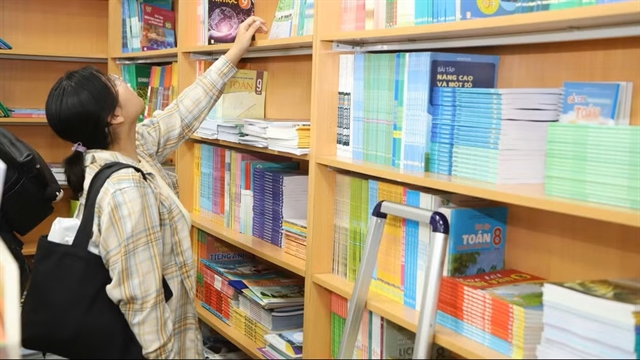 |
| Textbooks are available for the 2026-2027 academic. |
Besides ensuring a sufficient supply of books, VEPH has implemented various solutions to narrow the gap in learning conditions between different regions. Could you share more details about the initiatives currently being deployed?
First and foremost, the fact that the entire country now uses a single, unified set of textbooks—rather than each school selecting books for individual subjects as was previously the case—ensures that students from remote areas to major urban centers all have access to the same learning resources and conditions.
Additionally, over the past two years, the publishing house has donated 3.7 million copies of textbooks to students in disadvantaged areas. This year, in addition to the more than 200 million printed copies serving approximately 19 million students nationwide, we have also prepared a reserve of 13 million copies to provide timely support to localities affected by natural disasters, storms, and floods.
We are also providing all digital versions of the textbooks for free on our online platform, enabling students and teachers in every region to access them.
Over the past two months during the summer time, the publishing house directly organised training sessions involving editors-in-chief and authors to help teachers clearly understand the compilation philosophy and the spirit of the 2018 General Education Programme. This initiative aims to elevate and standardise the quality of teaching across the entire country.
Digital transformation is opening up many opportunities for education. In your opinion, to make electronic textbooks truly effective and a long-term learning support tool, what bottlenecks in mechanisms and policies need to be addressed?
Currently, we have only reached the stage of providing free digitised files of printed books on the taphuan.nxbgd.vn platform—essentially "level one" digitisation. To develop true electronic textbooks (e-textbooks) that are interactive and integrated with Artificial Intelligence (AI), we are facing three major bottlenecks.
First, the concept of an "e-textbook" has not been clearly defined. If we add interactive features, exercises, and AI, the product can easily morph into "digital learning materials" or an "online teaching model," which falls outside the current regulatory scope of a textbook.
Second, there is a lack of economic-technical norms. As a State-owned enterprise (SOE) mandated to preserve and grow state capital, we require a specific framework for editing and digital content production costs to serve as a basis for investment. Without this, spending hundreds of billions of Vietnamese đồng carries the risk of financial loss without a protective legal corridor for the enterprise.
Third, current regulations for piloting/testing textbooks are the same for both digital and printed versions. However, the digital infrastructure and equipment in schools are inconsistent across the country, making these required pilot programs almost impossible to implement effectively.
We recommend that relevant authorities soon issue decrees and circulars providing specific guidance on the definitions, standards, and economic-technical norms for e-textbooks. This would create a clear legal corridor, allowing enterprises to invest with confidence and fulfill their leading role in the digital transformation of education. VNS
Opinion
 Opinion
 Opinion
 Opinion
 Opinion
 Opinion
 Opinion
 Opinion
 Opinion
 Opinion
 Opinion
 Opinion
 Opinion
 Opinion
 Opinion