 Life & Style

Sovico and Hamburg Forge Partnership to Expand Vietnam-Germany Economic Ties
1.
|
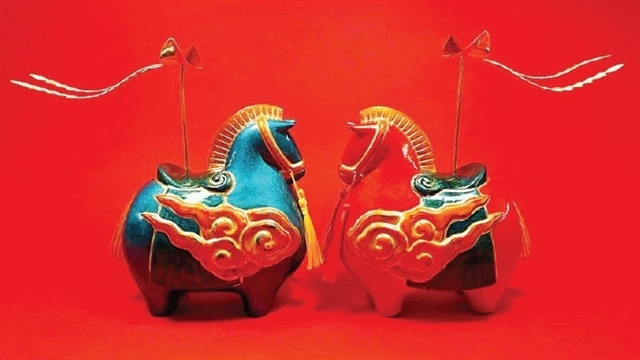
| The "Ngựa hoa mai" (Apricot blossom horse) by artist Lê Huy. Photo nhandan.vn |
HÀ NỘI – In the ever-evolving landscape of Vietnamese art, the Ngựa hoa mai (Apricot Blossom Horse) project stands as a testament to how folk motifs can find new life.
What began as a modest creative spark has blossomed into a vibrant cultural narrative, blending childhood nostalgia with sophisticated contemporary craftsmanship.
Six years ago, at the Mường Cultural Space Museum, artist Lê Huy, founder of Lam Phong Studio, conceived a vision that would eventually define his artistic identity.
Initially, the Ngựa hoa mai was a small, chubby ceramic figure inspired by horses found in traditional Vietnamese reliefs and sculptures. With its squinting, joyful eyes and green-bronze glaze, the piece exuded rustic charm. However, the isolation of the COVID-19 pandemic forced Huy into a period of deep introspection. During this time, the horse evolved from a simple figurine into a profound symbol of hope, memory and cultural continuity.
The addition of the apricot blossoms was serendipitous. While Huy was working, his son accidentally pressed a piece of clay onto the sculpture, exclaiming, “A flower, Dad!” This moment of innocent creativity gave birth to a new identity for the work, symbolising the blossoming of spring and well-being.
By 2026, the project reached a new milestone with the introduction of a brass kite hovering elegantly over the horse’s back. For Huy, the kite is a bridge to his past, reminding him of youthful days flying kites along the banks of the Lô River.
In Vietnamese culture, kites also serve as ritual messengers, carrying prayers for peace and prosperity to the heavens.
Huy’s commitment to innovation is evident in his choice of materials. This year, he ventured into high-end jewellery techniques to craft a miniature version in 18k gold, a meticulous process requiring hours of labour under a magnifying glass. Meanwhile, his larger lacquer versions utilise a sustainable base of pressed stone powder and recycled nylon. This eco-friendly approach creates a surface with remarkable depth and durability, proving that traditional art can align with modern environmental values.
Huy’s portfolio, including previous projects such as Nhâm Dần (an optimistic tiger) and Nhân Ngưu (a peaceful buffalo), reflects a consistent desire to make Vietnamese heritage accessible to a wider public.
His Ngựa hoa mai is more than a decorative object. It is a dialogue between the artist and the artisan, the past and the present. Today, international visitors frequently pause before these gentle, bell-collared creatures, captivated by the fusion of folklore and contemporary form.
For Huy, this remains a lifelong journey to ensure that the spirit of Việt Nam continues to soar alongside contemporary dreams, reminding us of the enduring power and beauty within the nation’s collective cultural memory and deepening the connection between history and the present. VNA/VNS
Life & Style
 Life & Style
 Life & Style
 Life & Style
 Life & Style
 Life & Style
 Life & Style
 Life & Style
 Life & Style
 Life & Style
 Life & Style
 Life & Style
 Life & Style
 Life & Style
 Life & Style




