 Life & Style

MSM chooses AWS to accelerate next-generation technology solutions for agribusiness value chain
1.

|
| Sa Pa, recognised by the Prime Minister in 2017 as a national tourist area of international stature, has since played a pivotal role in promoting Lào Cai’s image, attracting investment and drawing visitors from around the world. — Photo vov2.vov.vn |
LÀO CAI — Resolution 57 is emerging as a key policy driver behind Lào Cai’s latest tourism ambitions, as the northern mountainous province rolls out a plan to turn tourism into a spearhead economic sector and position itself as a four-season destination with international appeal.
The vision is clearly articulated in Project No 10 on tourism development for the 2026–30 period, recently issued by the Lào Cai Province Party Committee.
Closely aligned with Resolution 57 and other major Party and State policies, the plan sets out to create a breakthrough in growth, branding and competitiveness, while adapting to an expanded administrative, economic and tourism space following recent mergers.
Strong momentum and a solid track record
Between 2021 and 2025, Lào Cai’s tourism sector posted impressive average annual growth of around 21 per cent. In 2025 alone, the province welcomed more than 10.5 million visitors, including 1.5 million international arrivals, generating tourism revenue of over VNĐ46 trillion (about US$1.8 billion), 2.4 times the figure of 2020.
Tourism has become an increasingly important contributor to the local GRDP and a major source of livelihoods, creating jobs for around 35,000 workers, including some 14,500 directly employed in the sector.
A relatively comprehensive tourism product ecosystem has taken shape, ranging from high-altitude resorts, eco-tourism and community-based tourism to cultural and spiritual experiences, alongside newer segments such as MICE tourism, adventure travel and wellness tourism.
Sa Pa National Tourist Area continues to play a central role, while destinations such as Bắc Hà, Y Tý, Nghĩa Lộ, Trạm Tấu, Mù Cang Chải and Thác Bà Lake are gradually establishing their own distinctive appeal.
Notably, Lào Cai’s international profile has been steadily raised, with Sa Pa repeatedly honoured by prestigious global organisations and magazines, and the Mù Cang Chải terraced rice fields recognised as a special national relic and listed among the world’s most visually striking destinations.
Expanded space, new growth poles
|
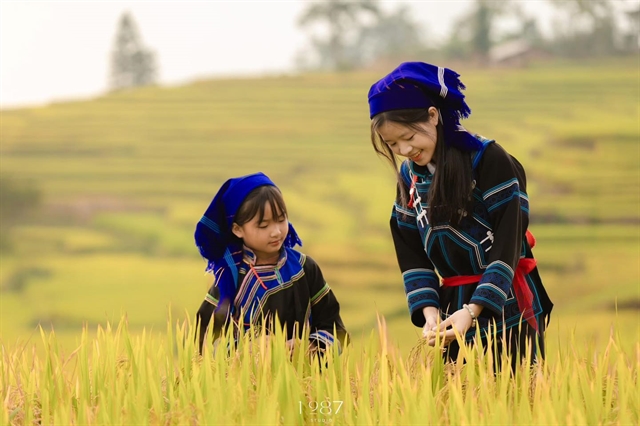
| The terraced rice fields of Mù Cang Chải during the harvest season are considered the most beautiful time of the year to visit the Northwest, when mountains, clouds, autumn sunlight and the scent of new rice blend into a poetic landscape. — Photo Minh Hải |
The merger of administrative boundaries has opened up a much larger development space, connecting the tourism 'gems' of Lào Cai and Yên Bái into a unified and complementary whole. The synergy between Sa Pa – Fansipan – Y Tý – Bắc Hà and Mù Cang Chải – Mường Lò – Suối Giàng – Thác Bà Lake is shaping a diverse and highly competitive northwestern tourism corridor.
Under Project No 10, Lào Cai aims to become a tourism growth pole of the northern midland and mountainous region, built around the core image: 'Lào Cai – Where the colours of the Northwest converge'.
The Hồng (Red) River tourism-economic and cultural axis will focus on MICE tourism, spiritual travel, night-time economy activities and cross-border tourism. The northwestern zone, identified as the key breakthrough area, will be associated with the Hoàng Liên Sơn Range, Sa Pa and the Mù Cang Chải terraced fields, prioritising high-end resorts, adventure sports, wellness tourism and community-based experiences.
Meanwhile, the eastern zone, including Thác Bà Lake, Bắc Hà and Si Ma Cai, will promote eco-tourism, agricultural tourism, water sports and highland markets.
Clear targets towards 2030
By 2030, Lào Cai aims to attract 15 million visitors, including 3.5 million international arrivals, with total tourism revenue reaching around VNĐ70 trillion ($2.7 billion). Direct contributions from tourism are expected to account for 17–20 per cent of the province’s GRDP.
Accommodation capacity will be expanded to about 31,500 rooms, with 25–30 per cent meeting three- to five-star standards. The sector is projected to generate employment for around 80,000 people, with women and ethnic minority workers making up a significant share.
Breakthrough signature offerings include cross-border tourism along the Red River, a transboundary terraced rice route linking Việt Nam and China, 'snow and ice' experiences, adventure sports conquering peaks such as Fansipan, Ky Quan San and Tà Chì Nhù, as well as high-end resort, golf and wellness complexes.
Digital transformation and sustainability as pillars
In line with Resolution 57, digital transformation and sustainable development are identified as core pillars of Lào Cai’s tourism strategy. The province plans to further develop its smart tourism ecosystem, leveraging big data, digital platforms and artificial intelligence.
At the same time, green tourism development, closely linked to the protection of forest ecosystems, highland landscapes and the cultural heritage of the province’s 15 ethnic groups, remains a guiding principle.
With its spectacular natural landscapes, rich cultural heritage and a strategic outlook towards 2030, Lào Cai is well positioned to realise its ambition of becoming an international four-season tourism hub. — VNS
Life & Style
 Life & Style
 Life & Style
 Life & Style
 Life & Style
 Life & Style
 Life & Style
 Life & Style
 Life & Style
 Life & Style
 Life & Style
 Life & Style
 Life & Style
 Life & Style
 Life & Style