 Life & Style

Private conglomerates expand economic contributions through jobs, taxes and investments
1.
|
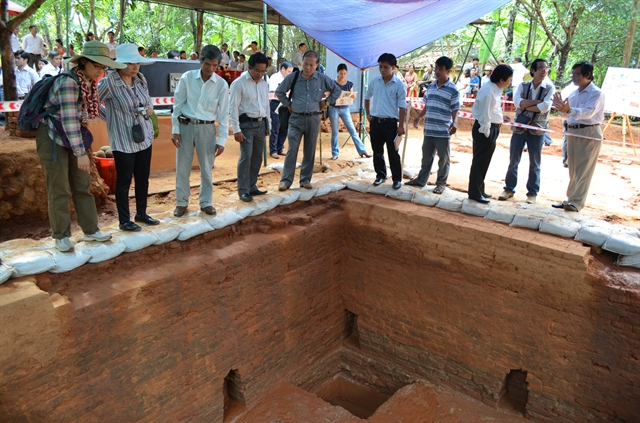
| Archaeologists examine a holy pit at the Chăm tower complex in Phong Lệ Village, Đà Nẵng. The site will become a satellite of the Chăm Sculpture Museum. — Photo courtesy of Võ Văn Thắng |
ĐÀ NẴNG — History is rising from the ground in Phong Lệ Village as Đà Nẵng moves forward with a VNĐ140 billion reconstruction of the ancient Chăm towers, a project set to reshape the city’s cultural landscape and tourism map.
The city said the relic, believed to be the site of a Chăm place of worship dating from the 10th to 11th centuries, will be rebuilt at a cost of VNĐ140 billion (US$5.6 million).
The project includes a series of restoration works on the ancient archaeological towers and new technology displays, including 3D holograms and screenings, to serve tourism.
It said the site will become the second destination of the Chăm Sculpture Museum, one of the most popular centres for the preservation and display of Chăm cultural relics in central Việt Nam.
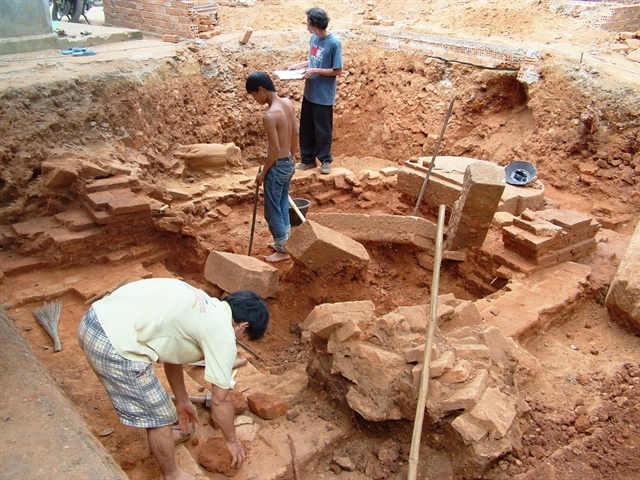
Three excavations were carried out by archaeologists between 2011 and 2016, uncovering collections of animal statues, ceramics and roof tiles at the ruined site.
According to the archaeological survey team, the Chăm towers in Phong Lệ Village, about 10km from the city centre, are linked to an indigenous group that formed an independent kingdom in the region from the 2nd to the 17th centuries.
At an archaeological conference on Phong Lệ Village, Associate Professor Đặng Hồng Sơn, a member of the archaeology team, said the excavations revealed foundation structures of the main tower (Kalan), a gate tower and a long house (mandapan) as well as boundary walls.
|
| An archaeological survey at the Chăm tower complex in Phong Lệ Village, Đà Nẵng. The 10th–11th century relic will be preserved at a cost of US$5.6 million in 2026–27. — Photo courtesy of Võ Văn Thắng |
He said at least 10 complexes of Chăm towers once existed in Đà Nẵng City, but rapid urbanisation may have buried many of them.
The Chăm tower foundations in the village are seen as among the largest such structures ever found in Việt Nam, the archaeological team said.
Preservation and scholarship
Cultural researcher Võ Văn Thắng, former director of the Chăm Sculpture Museum of Đà Nẵng, said the Chăm towers in Phong Lệ Village need to be preserved as a study site for students and young archaeologists as well as a tourism destination.
Last year, an exhibition showcasing 19 national treasures was introduced at the city’s Museum of Chăm Sculpture.
The exhibition displayed 14 original national treasures at the site, including exhibits from ancient Vietnamese cultures from the third to the first century BC and the Sa Huỳnh Culture (some 2,500-3,000 years ago), as well as Champa culture, showing continuous links in central Việt Nam from the seventh to the 13th century.
The Chăm Sculpture Museum of Đà Nẵng was built on the west bank of the Hàn River in late 1915 with major contributions from Henri Parmentier, a prominent archaeologist with the L’École Française d’Extrême-Orient in Hà Nội.
The museum is regarded as a unique display of thousands of artefacts and sandstone statues found at many Chăm towers and excavation sites linked to the Sa Huỳnh Culture, dating back between 2,500 and 3,000 years, in the central region.
It preserves typical sculpture and artworks of Chăm culture from the 5th to the 15th century and is one of the most visited sites by international and domestic tourists to Đà Nẵng City.
The museum, which has been recognised as a historical relic site of the city, houses national treasures for public display including the Trà Kiệu Pedestal, the Mỹ Sơn E1 Pedestal, the statue of Tara/Avalokiteshvara, the Đồng Dương Pedestal and two sandstone statues: Ganesha, one of the best-known and most worshipped deities in the Hindu pantheon, and Gajasimha, a mythical hybrid animal in Hindu mythology.
The city said the introduction of the Phong Lệ Chăm tower site will offer another destination for tourists exploring Champa culture after the Chăm Sculpture Museum of Đà Nẵng and the UNESCO-recognised Mỹ Sơn Sanctuary. — VNS
Life & Style
 Life & Style
 Life & Style
 Life & Style
 Life & Style
 Life & Style
.jfif) Life & Style
Life & Style
 Life & Style
 Life & Style
 Life & Style
 Life & Style
 Life & Style
 Life & Style
 Life & Style
 Life & Style