 Life & Style

AIMCONNECT 2026 Held in Singapore, Bringing Global Automotive Leaders Together to Explore the Future of AI, Trust and Connected Mobility
1.
|
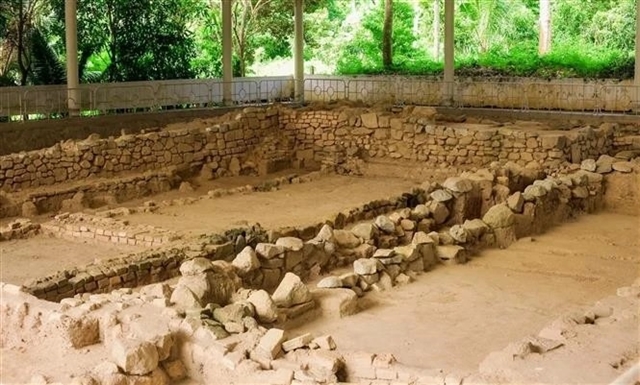
| An excavation site of the Óc Eo – Ba Thê special national relic site in An Giang Province. — VNA/VNS Photo |
HÀ NỘI — Deputy Prime Minister Mai Văn Chính has approved the submission of the scientific dossier on the Óc Eo – Ba Thê archaeological site in southern An Giang province to the United Nations Educational, Scientific and Cultural Organisation (UNESCO) for consideration and inclusion on the world heritage list.
The Minister of Culture, Sports and Tourism was authorised to thoroughly review, finalise, and sign the dossier before submitting it to the UNESCO World Heritage Centre, ensuring compliance with quality standards and deadlines.
The Ministry of Foreign Affairs and the Việt Nam National Commission for UNESCO will collaborate with relevant agencies to carry out necessary procedures for submitting the dossier to the UNESCO World Heritage Centre before January 30, 2026, in accordance with the 1972 World Heritage Convention and Việt Nam's cultural heritage law.
They will bring into play Việt Nam's role within UNESCO governance mechanisms and actively support the Ministry of Culture, Sports and Tourism, the People’s Committee of An Giang province, and related agencies in implementing measures to garner international consensus in favour of the Óc Eo – Ba Thê recognition.
The An Giang People’s Committee will review and take full responsibility for the content, data, and accuracy of the scientific dossier. It is also tasked with coordinating with relevant ministries and agencies to support UNESCO’s evaluation and recognition of the site and promptly report any matters beyond its authority.
The special national relic, representing the ancient Óc Eo Civilisation, spans 433.1 hectares in Óc Eo Commune. The civilisation, which flourished in southern Việt Nam from the 1st to the 7th centuries, was first discovered in 1942 by French archaeologist Louis Malleret through artefacts unearthed in Ba Thê Mountain area, now part of Óc Eo Commune.
Currently, An Giang is home to more than 80 Óc Eo relic sites. Among them, Óc Eo – Ba Thê stands out as a key location as it is believed to once serve as a bustling urban centre, port city, and major economic and cultural hub of the ancient Kingdom of Phù Nam. It was recognised as a special national relic site in 2012.
In October 2021, the Prime Minister approved the submission of a brief report to UNESCO, proposing the site for inclusion in the tentative list of world heritage sites.
On January 4, 2022, the UNESCO World Heritage Centre officially added the Óc Eo – Ba Thê site to its tentative list for world heritage nominations. — VNA/VNS
Life & Style
 Life & Style
 Life & Style
 Life & Style
 Life & Style
 Life & Style
 Life & Style
 Life & Style
 Life & Style
 Life & Style
 Life & Style
 Life & Style
 Life & Style
 Life & Style
 Life & Style