 Life & Style

Lending rates cut by up to 3%, to lower borrowing costs for businesses and priority sectors
1.
|
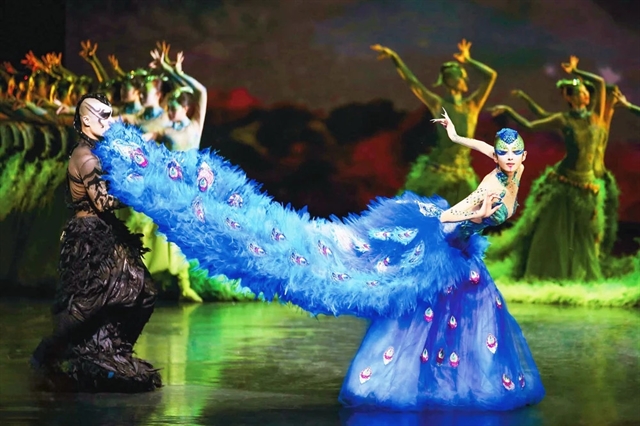
| Dancers perform the peacock in a scene from the ballet The Peacock Hanoi 2026, created by renowned Chinese choreographer Yang Liping and recently staged in Hà Nội. — Photo courtesy of the organisers |
HÀ NỘI — With the first notes of music rising softly in the theatre, the stage transforms into a dreamlike landscape where movement replaces words and emotions unfold through dance.
The ballet The Peacock Hanoi 2026, created and choreographed by celebrated Chinese dancer Yang Liping, has captivated audiences in the capital with its elegant choreography, evocative stage design and philosophical reflections on life and nature.
Beyond its artistic appeal, the arrival of such a large-scale international production also reflects a broader cultural context. Bringing world-class performances to Việt Nam is increasingly seen as part of the country’s efforts to deepen international cultural exchange and integration.
These initiatives resonate with the spirit of Resolution 80-NQ/TW on the development of Vietnamese culture, which emphasises proactive global cultural engagement while promoting national values and absorbing the cultural achievements of humanity. High-quality international productions like The Peacock therefore, represent not only artistic events but also meaningful contributions to enhancing Việt Nam’s cultural vitality and soft power.
A poetic journey through the seasons
Structured in four chapters – Spring, Summer, Autumn and Winter – the ballet traces the cyclical rhythm of life. Each season symbolises a stage of existence, from birth and growth to decline and eventual renewal.
At the centre of the story stands the symbolic figure of the peacock, portrayed as both bird and human. Through fluid movements and expressive gestures, the dancers evoke the beauty and fragility of living beings, inviting audiences to reflect on love, nature and the essence of life.
Graceful choreography blends seamlessly with music, lighting and visual design, transforming the stage into a living painting filled with colour and poetic imagery.
The audience remained almost silent throughout the performance, absorbed in the unfolding visual narrative. When the curtain finally fell, the theatre erupted in sustained applause.
“It was absolutely beautiful and deeply moving,” said Minh Hằng, a resident of Hà Nội who attended the performance.
“The choreography, the costumes and the atmosphere were breathtaking.”
|
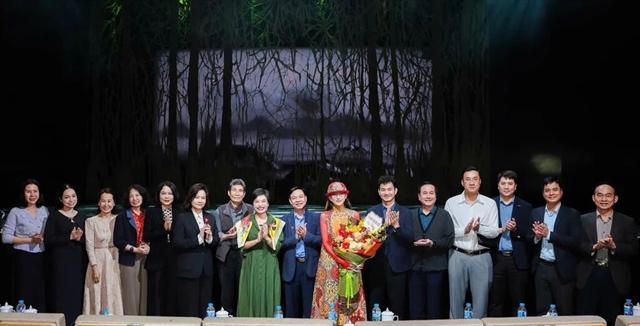
| Officials from the Performing Arts Department and representatives of Hà Nội’s cultural authorities congratulate choreographer Yang Liping following a performance of The Peacock Hanoi 2026. — Photo courtesy of VietAr |
The spirit of the peacock
At 68, Yang Liping still appears on stage in the Winter chapter – perhaps the most symbolic moment of the entire production.
In this scene, the stage becomes a frozen landscape. Amid swirling snow-like visuals, the peacock emerges and dances alone, embodying resilience, awakening and rebirth. The sequence feels both intimate and powerful, reflecting the artist’s enduring devotion to dance.
Often referred to as China’s 'Peacock Princess', Yang Liping was born into the Bai ethnic group in Dali, Yunnan Province in southwest China. Growing up in a culture where music, festivals and dance are woven into everyday life, she developed her distinctive artistic language outside the traditional academic training system.
Premiered in 2012, The Peacock is widely regarded as the pinnacle of her artistic career and quickly became an international sensation.
A revived version launched in 2022 further enhanced the production’s scale and stage aesthetics, incorporating modern visual technologies while preserving the essence of the original choreography. Since then, the ballet has toured numerous cities around the world with thousands of performances.
Art as a cultural bridge
The Hà Nội performances involved nearly 70 dancers and technicians, with stage equipment, costumes and props transported to Việt Nam to preserve the original artistic standards of the production.
Months of preparation and coordination between Vietnamese and international partners were required to bring the show to the capital, demonstrating the growing professionalism of large-scale performing arts collaborations.
For audiences, the ballet offered not only an evening of artistic enjoyment but also a rare opportunity to experience world-class dance without leaving the country - an experience that cultural officials hope will further position Hà Nội as an emerging artistic destination in the region.
Director of the Performing Arts Department, Nguyễn Xuân Bắc said he hopes Khổng Tước – The Peacock Hanoi 2026 will bring audiences in Hà Nội a distinctive artistic experience while fostering cultural exchange and enriching the city’s performing arts scene.
In a broader sense, international productions such as The Peacock highlight the role of art as a universal language. Beyond borders and cultural differences, dance becomes a powerful medium for connection, understanding and dialogue between cultures. — VNS
Life & Style
 Life & Style
 Life & Style
 Life & Style
 Life & Style
 Life & Style
 Life & Style
.jfif) Life & Style
Life & Style
 Life & Style
 Life & Style
 Life & Style
 Life & Style
 Life & Style
 Life & Style
 Life & Style