 Life & Style
NA draft resolution proposes special mechanisms to attract, retain talent, including foreigners
1.
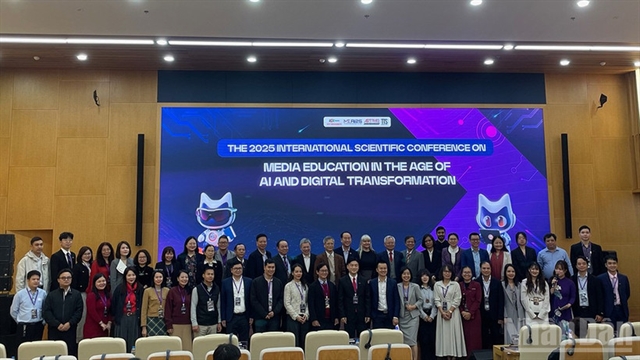 |
| Delegates and speakers take part in the 2025 International Scientific Conference on Media Education in the Age of AI and Digital Transformation. Photos nhandan.vn |
HÀ NỘI — Educators and experts have shared their views at a conference that aimed to enhance capacity and promote research in the field of media training and education in Việt Nam amid impacts from artificial intelligence (AI) and the digital transformation.
The event was also an academic space for exchanging ideas and proposing directions and solutions to challenges in integrating AI into teaching, learning and curriculum development.
Around 200 delegates from a wide variety of backgrounds attended the 2025 International Scientific Conference on Media Education in the Age of AI and Digital Transformation (ME.AI25) held on December 25 in Hà Nội.
In his opening remarks, Vice Rector of FPT University Trần Ngọc Tuấn said the world is witnessing an unprecedented period of profound transformation, as AI, big data and the digital transformation are rapidly penetrating every aspect of life, from economics, education and culture to media and content creation.
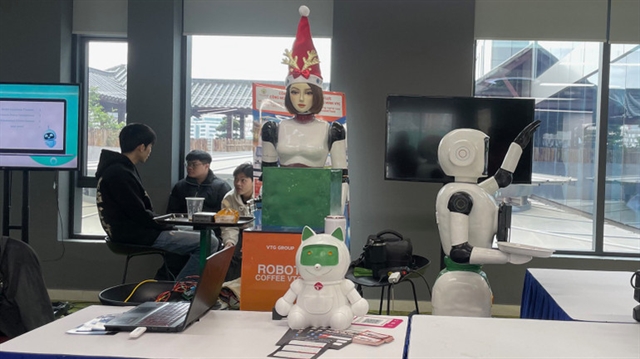 |
| Many products using Al technology are exhibited at the ME.AI25 conference. |
In this context, media training must not only equip individuals with the skills to use tools, but also develop competencies in understanding AI, critical thinking, professional ethics and social responsibility in the digital media environment.
The conference consisted of three main sessions, featuring presentations sharing research, solutions and visions on innovation in media training by both Vietnamese and international speakers from Australia, China, India and the Philippines, contributing to a multi-faceted academic dialogue.
Among the major topics were the context and theory of media education in the age of AI; designing programmes and training methods related to AI; applying AI technology in teaching, learning, research and practice in media; ethical, legal, copyright and social responsibility issues when using AI; as well as models of cooperation between schools, businesses and media organisations.
“Artificial Intelligence is ushering in a new era for journalism and communications. However, the crux of the matter lies not in training journalists solely to operate AI, but in training them how to live, how to create and how to uphold and respect professional ethics and integrity in a world co-inhabited by AI,” said Professor Dr Tạ Ngọc Tấn from the Communist Party of Việt Nam’s Central Theory Council.
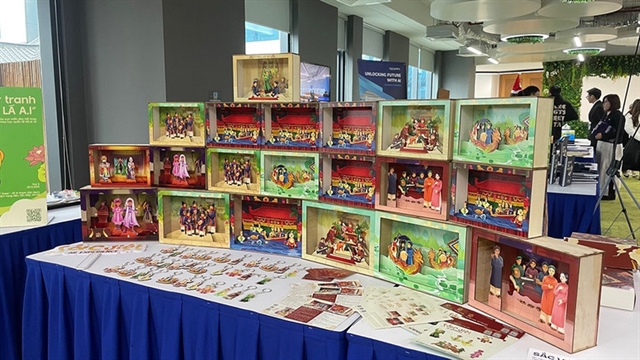 |
| A product created by FPT students that uses AI to promote traditional Vietnamese music genres. |
Associate Professor Catherine Earl from RMIT Vietnam said generative AI influences personalised learning and student capabilities in higher education.
In universities around the world, AI not only offers opportunities for new and exciting learning methods and assessment tasks, but also raises a number of challenges for students, educators and institutions.
Undergraduate teaching programmes are forced to adjust to generative AI developments across multiple areas, including its wide availability, novelty and the attraction of its productivity and efficiency.
"The amazing contribution of highly specialised AI features in certain disciplinary contexts supports expertise on the one hand, but on the other presents a challenge for novices to understand its limitations and ethical concerns when applied broadly and widely," she said.
Professor Dr Maria Diosa Labiste from the University of the Philippines Diliman said: "Since the use of generative AI in journalism schools impacts the future of the profession, educators must navigate this development thoughtfully and ethically to ensure an informed integration of generative AI in the classrooms.
"In the Philippines, journalism schools are beginning to revise and calibrate their curriculum with generative AI in mind. Judging from their practice, journalism students are considered moderate to heavy users of AI tools for writing, editing, data visualisation, research and investigative journalism."
She went on to note: "In my university, students use AI despite the absence of clear AI policies. This is not the fault of the students. The university has not created yet its AI policy framework, but plans to release one next year. This year, consultations among student, faculty and staff are ongoing to ensure that this AI policy framework will lead to responsible and ethical use of AI."
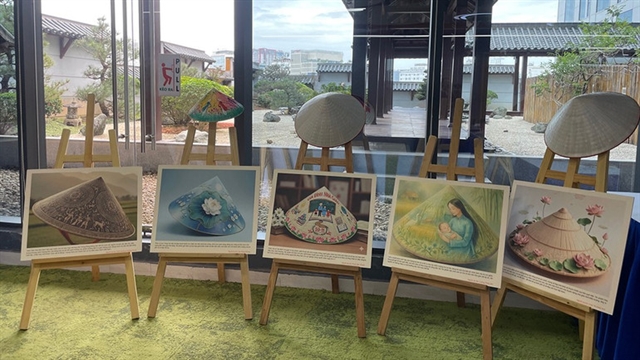 |
| Traditional Vietnamese conical hats that have been designed with AI technology. |
As an expert in media and communications, Lê Quốc Vinh, chairman of Le Bros and president of CSMO Vietnam, said the accelerating integration of AI into communications practices demands a fundamental reorientation of how communications professionals are educated and developed.
"The future of the discipline does not lie in producing graduates capable of executing tasks that AI now performs with speed and precision, but in cultivating communications designers – individuals equipped to interpret human complexity, construct meaning, design experiences and build trust within an increasingly volatile and technologically mediated environment," he said.
"Ultimately, the aim of communications education in the AI era is profoundly humanistic: to empower future practitioners to collaborate intelligently with technology while safeguarding the roles of empathy, ethics, cultural understanding and strategic foresight.
"By embracing this paradigm shift, universities and educators can prepare a generation of communications designers capable not only of navigating the uncertainties of the digital future, but of shaping that future with responsibility, creativity and integrity."
ME.AI25 was jointly organised by FPT University in collaboration with Literature and Arts Times and the Digital Knowledge Corporation. OVN/VNS
Life & Style
 Life & Style
 Life & Style
 Life & Style
 Life & Style
 Life & Style
 Life & Style
 Life & Style
 Life & Style
 Life & Style
 Life & Style
 Life & Style
 Life & Style
 Life & Style
 Life & Style