 Life & Style

AI and EV Boom Draws $690 Million in Advanced Materials Investment Plans to Thailand
1.
|
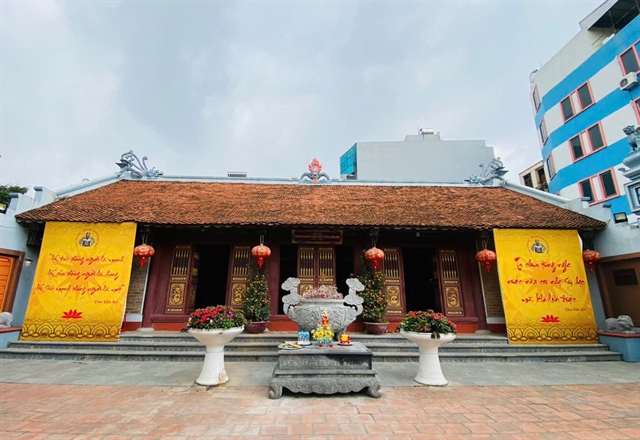
| Nội Communal House, the worshiping place of Vietnamese eminent teacher Chu Văn An. Photo qdnd.vn |
Thanh Hà
HÀ NỘI — Home to a dense concentration of national spiritual relics, Thanh Liệt Ward is being positioned as a major centre for cultural and spiritual tourism in southern Hà Nội, according to experts, officials and tourism representatives who met on December 9 to discuss how to improve service quality and strengthen links between the ward’s many heritage sites.
The conference was organised by local authorities and Hà Nội’s Department of Tourism after delegates joined a field trip to several of Thanh Liệt’s key attractions, underscoring growing interest in developing the area into one of the capital’s must-visit destinations.
Following the two-tier local administration reform, Thanh Liệt now comprises most of the former Thanh Liệt and Tân Triều communes along with parts of Thanh Oai, Đại Kim, Hạ Đình, Thanh Xuân Bắc and Văn Quán communes. The enlarged area has made the ward a gathering place of distinctive tangible and intangible heritage.
“Our ward is a homeland of outstanding people. Many famous people and national heroes were born and grew up here,” said Nguyễn Anh Tuấn, vice chairman of Thanh Liệt People’s Committee.
“This is the birthplace of three great Vietnamese celebrities: eminent teacher Chu Văn An, the World Cultural Celebrity recognised by UNESCO in 2020; Phạm Tu, a general and founding hero of the Early Lý Dynasty; and Venerable Master Vĩnh Nghiêm Thích Thanh Hanh, one of the influential monks of Vietnamese Buddhism.
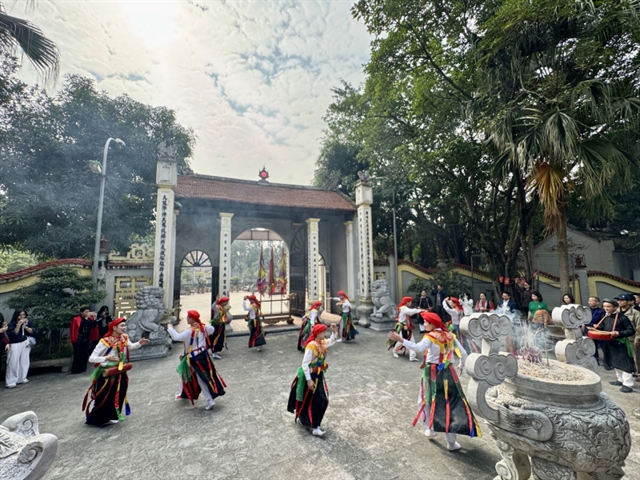
“In our land, there are many national relics such as the Nội and Ngoại communal houses, Quang Ân Pagoda and the Triều Khúc relic cluster, along with the characteristic Triều Khúc festival and Trống Bồng dance which became National Intangible Cultural Heritage in 2019.”
|
| Trống Bồng Dance, a unique art performance of Thanh Liệt Ward. |
Besides this heritage, the ward retains the traditional craft of weaving and making quai thao, a decorative silk string used for hats.
“All these elements together allowed us to make unique resources to develop tourism in Thanh Liệt and we are building and implementing three tourism products: cultural and spiritual tourism; school tourism and historical and cultural education; and traditional craft village and culinary tourism,” Tuấn said.
He added that the ward had proposed a project to develop the 100ha Chu Văn An Memorial Park, which would include memorial structures, museums, relic sites and ecological zones to meet the recreational and tourism needs of both residents and visitors.
Despite these advantages, Tuấn acknowledged that Thanh Liệt still faced significant challenges such as unsynchronised traffic infrastructure, limited parking facilities and ancillary services, underdeveloped experiential models and a shortage of trained local human resources.
Relic-based tourism
Deputy Director of the Hà Nội Department of Tourism Trần Trung Hiếu said the ward had unique resources that could contribute to the city’s strategy of developing new tourism products.
Hiếu suggested Thanh Liệt promote the value of its tangible and intangible cultural heritage and link it with various tourism models such as cultural tourism, craft village tourism with creativity and cultural industries and festival and traditional arts experiences.
He added that tourism staff needed to strengthen cooperation with travel businesses, expand tours and routes, and build connections with nearby destinations to create a chain of distinctive products that appeal to both domestic and international visitors.
“With such resources of relics, heritages and planned works, Thanh Liệt should target to become a new bright spot on the map of cultural tourism - spiritual beliefs - festivals - craft villages of the capital, helping diversify Hà Nội's tourism products,” Hiếu said.
Tourism experts and travel agencies at the conference contributed numerous ideas and solutions to support the ward’s tourism development.
Associate Professor Dương Văn Sáu said that to improve the quality of the destination it was essential to raise the standard of tour guides then clarify the value of local relics and culture.
“Thanh Liệt can become an attractive destination suitable for spiritual tourism and school tourism. In the future, Thanh Liệt needs to closely coordinate with the city's departments, branches and sectors to clean up the Tô Lịch and Kim Giang rivers to make up an attractive and unique river tourism product that can be connected with other existed ones to make perfect chain,” said Sáu, former Head of the Faculty of Tourism, University of Culture.
Vũ Văn Tuyên, Director of Travelogy Việt Nam, said the historical relic system in the ward was a “gold mine” for Hà Nội tourism.
“Thanh Liệt is the southern gateway of Hà Nội, quite convenient for inbound travel businesses to exploit, bringing guests in on the journey from Ninh Bình Province to Hà Nội,” he said.
“However, to develop professional tourism, that the relic sites need more cultural experience spaces such as opening classes on Hán Nôm writing, calligraphy, experiencing craft villages in the area of communal houses, temples, pagodas, especially at the Chu Văn An Memorial Park.”
Meanwhile, Nguyễn Thành Luân, Director of Hạt Dẻ Tourism Company, said Thanh Liệt needed stronger communication on digital platforms to increase visibility and better promote the destination to international visitors.
According to Nguyễn Thị Lan Hương of the Việt Nam Institute of Culture, Arts, Sports and Tourism, longer visitor stays would depend on developing a comprehensive culinary map that identifies dining locations capable of serving large tour groups. VNS
Life & Style
 Life & Style
 Life & Style
 Life & Style
 Life & Style
 Life & Style
 Life & Style
 Life & Style
 Life & Style
 Life & Style
 Life & Style
 Life & Style
 Life & Style
 Life & Style
 Life & Style