 Life & Style

AIMCONNECT 2026 Held in Singapore, Bringing Global Automotive Leaders Together to Explore the Future of AI, Trust and Connected Mobility
1.
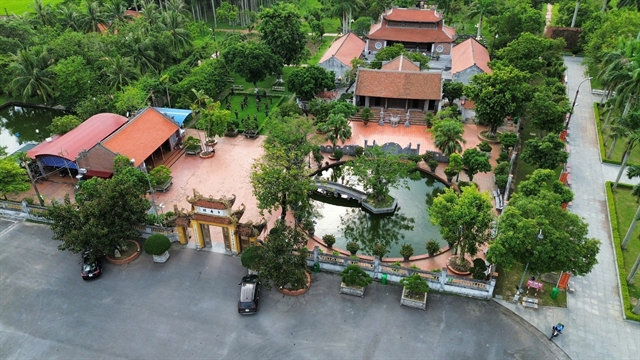 |
| The aerial view of the special national heritage site, the Nguyễn Bỉnh Khiêm Temple in Hải Phòng City. — VNA/VNS Photo Tiến Vĩnh |
HẢI PHÒNG — The coastal city of Hải Phòng has embarked on a series of activities aimed at seeking UNESCO recognition for cultural figure Nguyễn Bỉnh Khiêm (1491–1586) to affirm his international stature and promote his philosophy to the world.
Nguyễn Bỉnh Khiêm, also known by his pen name Hanh Phủ and courtesy name Bạch Vân cư sĩ, was born in Trung Am Village, Vĩnh Lại District (now part of Nguyễn Bỉnh Khiêm Ward), Hải Phòng City.
After passing the imperial examinations, he served as a Mạc Dynasty (1527–1677) official, rising to the position of Minister and being granted the title Trình Quốc Công. He was also commonly referred to as Trạng Trình (Scholar Trình).
However, after just eight years in office, he requested to return to his homeland to focus on Scholarly pursuits. The Mạc emperor revered him as a trusted adviser. Renowned for his prophetic abilities, Nguyễn Bỉnh Khiêm was consulted on significant historical events.
The latter part of his life was dedicated to teaching, nurturing talent for the nation, reflecting on contemporary issues and composing poetry and literature.
The extensive literary legacy of Nguyễn Bỉnh Khiêm comprises of thousands of poems, prominently featuring philosophical and secular themes, leaving a vibrant mark on the medieval literature of Việt Nam. Many of his works have been introduced in the United States, China, Japan, South Korea and Russia.
According to the Deputy Chairman of Hải Phòng City People's Committee, Nguyễn Minh Hùng, Nguyễn Bỉnh Khiêm is one of the most distinguished figures of the 16th century. He was a well-rounded Scholar with significant contributions in the fields of politics, philosophy, education, and literature.
“The Scholar not only left a vast treasure of Hán Nôm (the Chinese version and ancient Vietnamese ideographic scripts) poetry for future generations but also a legacy of timeless philosophical thought,” he said.
“He is regarded as the embodiment of Vietnamese intellect and ethics, combining the essence of scholarly knowledge with popular wisdom, as reflected in his literary works, prophecies, teachings, anecdotes and the cultural and spiritual life of the people.”
In recent years, Hải Phòng City has collected related documents, organised a themed tour, planned the restoration of heritage sites and organised numerous in-depth scientific workshops on the celebrated Scholar’s life, career, and contributions to the nation’s history.
The special national heritage site, the Nguyễn Bỉnh Khiêm Temple, has been planned, restored, and enhanced with a focus on sustainable preservation. The Trạng Trình Festival has also been recognised as a national intangible cultural heritage, becoming a significant cultural highlight for the locality.
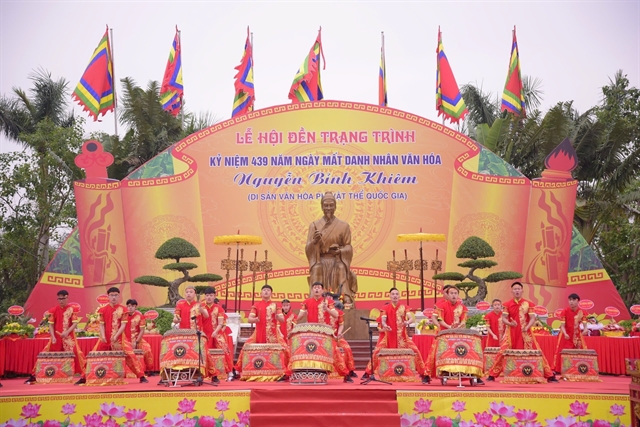 |
| The Trạng Trình Festival has been recognised as a national intangible cultural heritage. — VNA/VNS Photo Hoàng Ngọc |
Alongside this, the city has collected 500 documents, including 48 works by Nguyễn Bỉnh Khiêm and hundreds of related studies and articles. This serves as an important foundation for the scientific dossier to be submitted to UNESCO in the near future.
A UNESCO Campaign Committee to honour Scholar Nguyễn Bỉnh Khiêm on the occasion of the 450th anniversary of his death (1585-2035) has been established. The committee is tasked with providing advice on constructing a scientific dossier to submit to UNESCO for his recognition.
The activities of the committee include organising scientific workshops, promoting literary creation, restoring the special national heritage site of the Nguyễn Bỉnh Khiêm Temple, and finalising the dossier while coordinating with relevant authorities to prepare for the proposal for UNESCO recognition.
The most notable highlight in this series of activities is the survey of the Hải Phòng – Spirit of Trạng Trình tour, which connects the Mạc Dynasty, the Trạng Trình Temple, and the Mao Điền Temple of Literature.
This journey reimagines the cultural spaces in which he lived, studied and taught, while also creating a culturally rich tourism product that helps promote the values of this eminent figure to a wider audience.
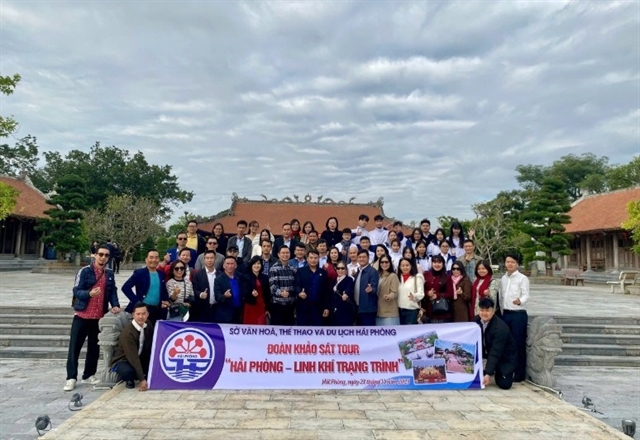 |
| The Hải Phòng – Spirit of Trạng Trình tour enables participants to explore the cultural spaces in which the Vietnamese Scholar lived, studied, and taught. — Photo courtesy of Hải Phòng Department of Culture, Sports, and Tourism |
The tour, combining culture, history, and cuisine, is expected to become a distinctive and unique tourism product for Hải Phòng that attracts a large number of domestic and international visitors.
The Hải Phòng Department of Culture, Sports, and Tourism has also announced that it would continue to collaborate with localities, heritage management units, and cultural experts to refine explanatory materials, enhance visitor infrastructure, and provide accompanying services. This aims to ensure the highest quality for the tourism products associated with this significant historical figure of the country. — VNS
Life & Style
 Life & Style
 Life & Style
 Life & Style
 Life & Style
 Life & Style
 Life & Style
 Life & Style
 Life & Style
 Life & Style
 Life & Style
 Life & Style
 Life & Style
 Life & Style
 Life & Style