 Economy
SBV to curb property price inflation, enforce lending rate rules
1.
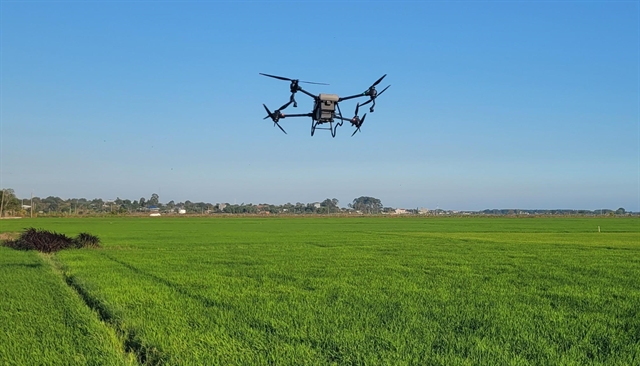 |
| A drone is used to spray pesticides on a rice field in Long Điền Commune, HCM City. — VNA/VNS Photo |
HÀ NỘI — HCM City is cementing its position as a prime destination for technology-driven foreign direct investment (FDI) as global corporations redraw their networks and chase new Asian growth hubs.
In the first months of 2026, a cluster of high-tech projects spanning semiconductors, artificial intelligence and data centres has been launched or expanded.
The latest wave is heavily concentrated in data centres, AI, semiconductors and R&D – the core pillars of the digital economy, said Nguyễn Kỳ Phùng, head of the Saigon Hi-Tech Park management board.
In late April alone, the municipal People’s Committee granted investment certificates to four high-tech projects at SHTP worth a combined US$1.23 billion.
Two hyperscale data centres are worth nearly $1 billion in total, including the Evolution DC VN HCMC Data Centre, developed by a Singaporean consortium of Hathor, Frontier and Evolution Data Centres, and the Starmason Data Center Complex, backed by Starmason JSC. The projects will supply critical infrastructure for AI, cloud computing and big data processing.
Darren Webb, CEO of the Evolution DC VN HCMC Data Centre project, said while industrial parks once competed primarily on labour and land, data infrastructure is now a key determinant of economic competitiveness.
Large-scale investments in data centres, he said, will both meet rising demand for data processing and lay the groundwork for the next phase of digital growth.
Alongside digital infrastructure, global tech companies are expanding their production footprint.
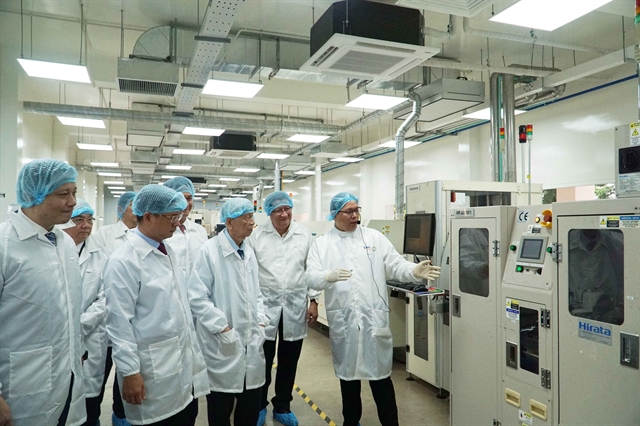
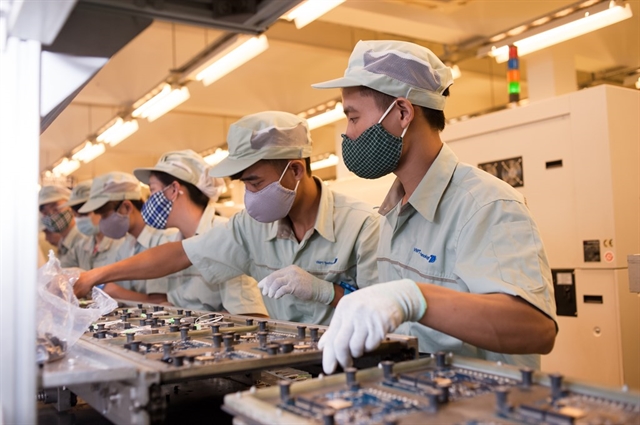
Techtronic Industries Company Pte. Ltd (Singapore) has invested an $81 million to its Techtronic Tools Vietnam factory at SHTP. The plant makes smart electronic devices, IoT-enabled mechatronics, high-performance lithium batteries and precision circuit boards, feeding a high-tech “Make in Vietnam” supply chain.
Earlier, the city secured major digital infrastructure and semiconductor pledges. The UAE-based G42 plans to invest about $2 billion in data centres, while Intel is considering relocating part of its operations from Costa Rica to HCM City to produce high-performance computing chips.
As of early June, the city attracted more than $6.6 billion in FDI, or 60 per cent of its full-year target. It now hosts over 20,800 active FDI projects worth roughly $142 billion from 152 countries and territories.
Notably, almost all newly registered projects cluster in high-tech fields such as AI, data centres, semiconductors, digital infrastructure and logistics, marking a sharp pivot from chasing volume to securing projects with higher technological content and greater added value.
From passive to proactive
Nguyễn Lộc Hà, permanent vice chairman of the municipal People’s Committee, recently told a business delegation from China’s Zhejiang province, that the city is actively refining special policy mechanisms, including a proposed Law on Special Urban Areas, to create more room for development, sharper competitiveness, and better quality FDI projects.
At the same time, the city is working to build a transparent and investor-friendly climate supported by increasingly international-standard infrastructure. A suite of ongoing support policies is also greasing the wheels for strategic investors.
Outlining the local investment strategy, Phùng said the city is giving priority to integrated circuits, semiconductors, AI, IoT, blockchain, robotics, 5G, data centers and smart urban development. It also plans to develop about 3,800 ha of smart technology zones and more than 1,000 ha of concentrated IT and digital technology parks.
In parallel, it is also forging tighter collaboration among government agencies, universities, research institutes and businesses to build a highly skilled workforce for strategic tech sectors.
In a break from the past, when authorities largely waited for investors to show up, the city is now proactively engaging the world’s top tech corporations to pitch opportunities. Alongside accelerating administrative procedure reforms and shortening approval timelines, it has rolled out incentives covering taxation, land rental fees, hi-tech equipment imports and R&D activities. — VNA/VNS
Economy
 Economy
 Economy
 Economy
 Economy
 Economy
 Economy
 Economy
 Economy
 Economy
 Economy
 Economy
 Economy
 Economy
 Economy